




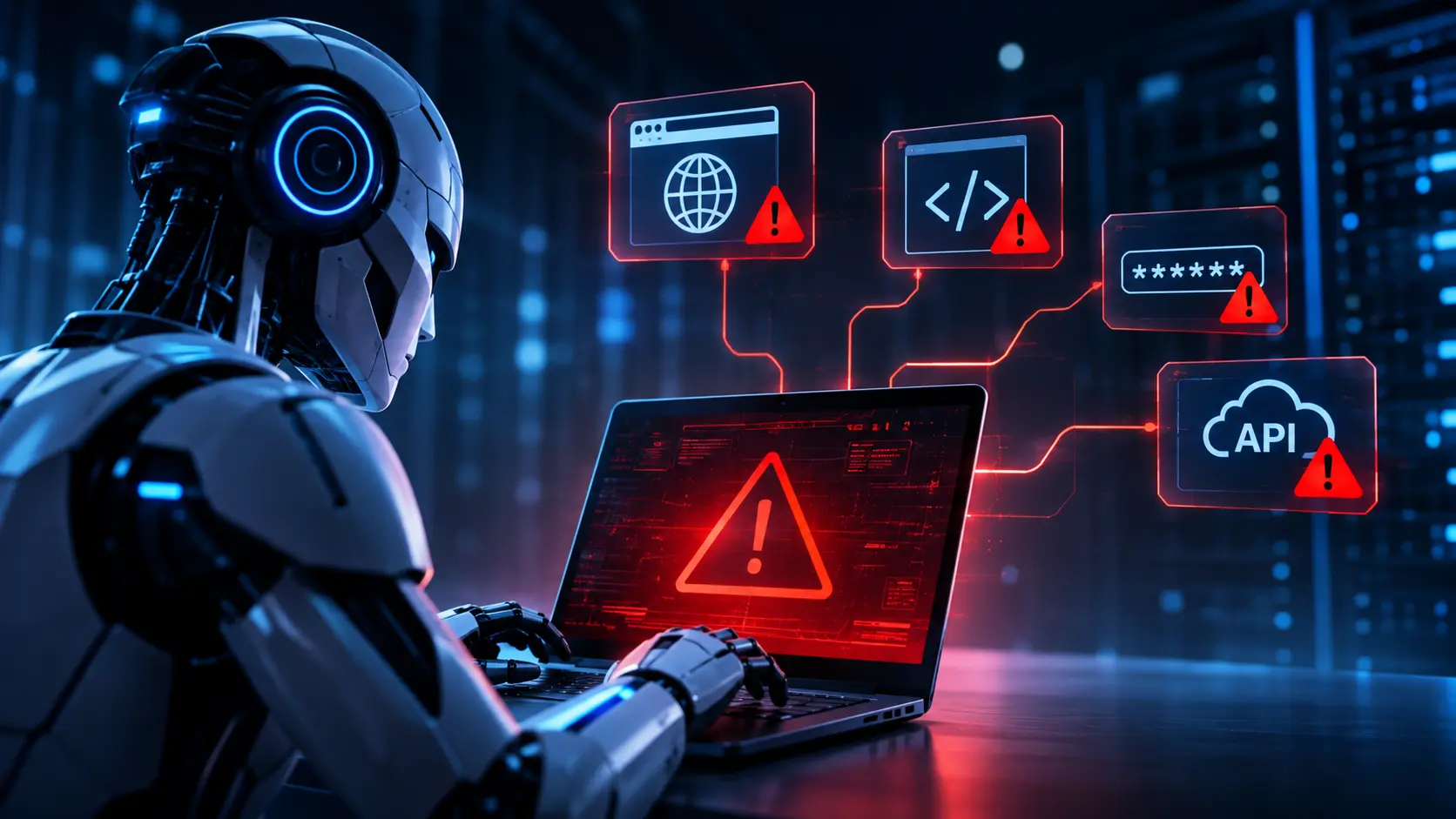

























In this weekly roundup, autonomous AI agents moved firmly from warning to reality. Amazon exposed an AI-run hacking campaign against universities, and Switzerland confirmed its first AI agent attacks on critical infrastructure. Meanwhile, two US states took xAI to court over Grok’s image tools, the White House named a new top cyber official, and a ransomware group put NVIDIA on a countdown clock.
Two patterns stand out. First, AI agents are no longer just assisting attackers; they are running intrusions themselves, around the clock and with little human input. The second is growing pressure on the companies behind AI tools, as regulators and prosecutors ask whether safety promises match reality.
The Cyber Express Weekly Roundup
AI Agents Hack University Server With Almost No Human Help, Amazon Says
Amazon Threat Intelligence discovered an unsecured instance of Cairn, an open-source AI penetration-testing tool, being used by a likely China-linked actor against universities in East Asia. Given one goal, “obtain shell access,” the AI agents worked for about two days, adapting as they went. Most of their attempts failed. On one server, however, they found a previously unknown flaw and gained full root control within minutes. Read more…
Pentagon CIO Kirsten Davies Named White House National Cyber Director
President Trump has chosen Kirsten Davies, currently the Pentagon’s Chief Information Officer, to lead the Office of the National Cyber Director. The White House said she will drive an “America First” cyber strategy that treats cybersecurity as national security. Senior officials, including Secretary of State Marco Rubio and Secretary of War Pete Hegseth, welcomed the appointment. Read more…
Oregon and Virginia Sue xAI Over Grok’s “Spicy Mode”
The attorneys general of Oregon and Virginia have filed separate lawsuits against xAI, alleging that X and its Grok AI assistant were promoted as safe while Grok was used to create non-consensual sexualized images, including child sexual abuse material. The states claim a “spicy mode” feature was built to allow such content. They cite research estimating that Grok posted roughly three million sexualized images on X in 11 days, about 23,000 of which appeared to show children. Read more…
NVIDIA Investigates Possible Third-Party Breach After Ransomware Threat
The ransomware group The Gentlemen listed NVIDIA on its leak site on November 18, alongside a countdown pointing to a possible data release on November 28. The group has shared no proof of a breach. NVIDIA says it is looking into a possible incident at a third-party partner but has found no evidence that its own systems were compromised. Read more…

Switzerland Confirms First AI Agent Cyberattacks on Critical Infrastructure
Switzerland’s National Cyber Security Centre (NCSC) has confirmed the country’s first attacks by autonomous AI agents, hitting organizations and critical infrastructure operators in at least two sectors. Every reported incident resulted in a successful breach. The agents hunted for weak passwords and unpatched systems, switched tactics when blocked, and moved far faster than human attackers. Read more…
This Week’s Takeaway
AI agents dominated the week, and the evidence is now concrete. Amazon watched agents persist for hours without rest before finding a zero-day, while Switzerland recorded agent-led breaches with a perfect success rate across reported cases. These tools are freely available and easy to use, which means the gap between a vulnerability existing and being exploited is shrinking fast.
At the same time, the xAI lawsuits show that the risks of AI are not limited to hacking. When safeguards are weakened or oversold, real people pay the price. Add a ransomware threat against one of the world’s most valuable tech companies, and the message for defenders is clear: patch fast, lock down internet-facing systems, enforce multi-factor authentication, and plan for attackers that never stop to sleep.