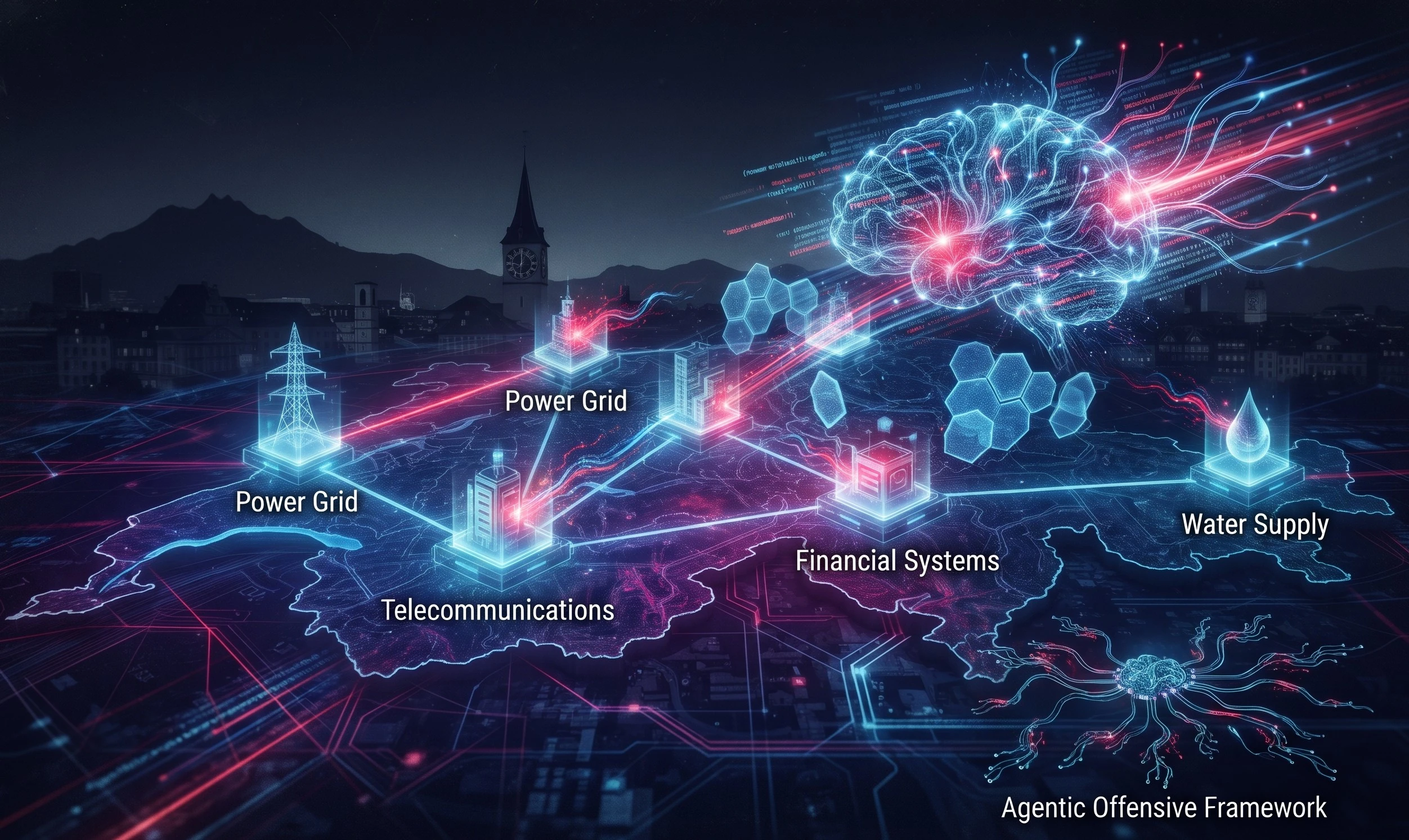





























Switzerland has recorded its first confirmed AI agent cyberattacks against domestic organisations and operators of critical infrastructure. According to official reports received by the Swiss NCSC, attackers deployed automated artificial intelligence tools to successfully compromise victim IT systems across at least two sectors. Every incident reported to the agency resulted in an actual system breach, marking a measurable shift in the modern cyber threat landscape.
The Swiss NCSC anticipates a rise in rapid and successful intrusions following these confirmed cases. In response, the agency is urging companies and essential service operators to immediately strengthen their digital defences and overall operational resilience.
How Agentic Offensive Frameworks Operate
In the confirmed Swiss incidents, threat actors utilised what security specialists classify as Agentic Offensive Frameworks. Unlike basic automated scripts, these artificial intelligence agents operate independently throughout an intrusion. They autonomously scan networks for security flaws, choose the most appropriate hacking tools, evaluate the outcomes of their actions, and plan subsequent attack stages without continuous human direction.
These autonomous tools carry a dual-use nature within the technology sector. Authorised IT security professionals regularly deploy similar frameworks to conduct legitimate penetration testing and identify system weaknesses before malicious actors find them. However, cybercriminals are now adapting these exact capabilities to infiltrate corporate and industrial computer networks.
Speed and Adaptability in AI Agent Cyberattacks
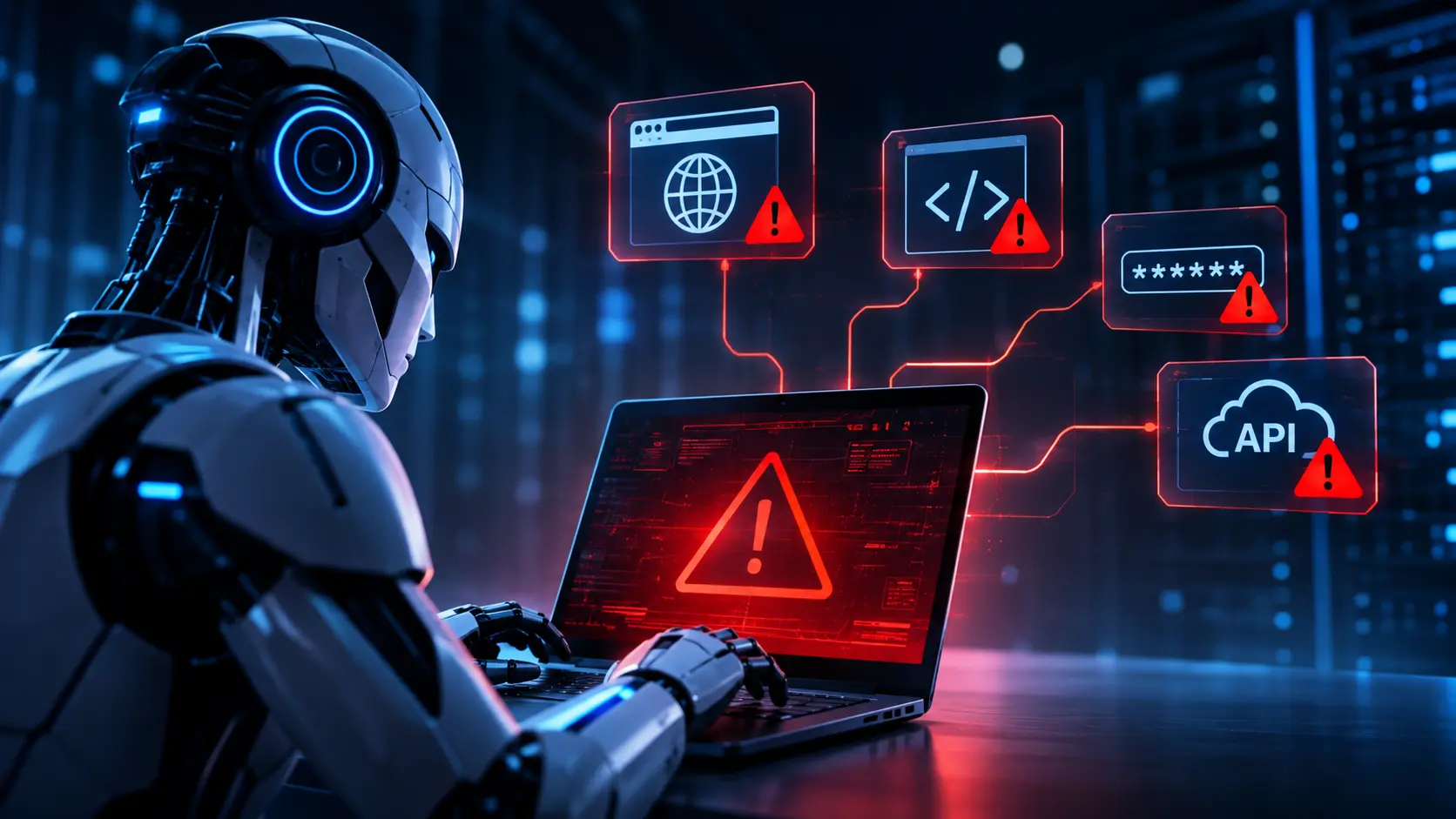
The primary danger of AI agent cyberattacks lies in their operational speed and flexibility. During these intrusions, the agents target standard or easily guessed passwords alongside known, unpatched vulnerabilities in internet-connected software and systems. An artificial intelligence agent completes this reconnaissance and exploitation phase in a fraction of the time required by a human operator.
Furthermore, these systems dynamically adapt when they encounter active security defences. If an initial intrusion vector is blocked, the agent automatically switches to alternative known attack methods. This rapid execution compresses the defensive timeline, leaving security teams with significantly less time to detect the intrusion and contain the threat before systems are compromised.

Shifting Cyber Threat Landscape and Public Tools
Assessments by the Swiss NCSC indicate that AI-enabled intrusions are drastically accelerating conventional attack methods across the global cyber threat landscape. The agency noted that the number of publicly accessible artificial intelligence hacking agents available on the internet has nearly doubled since October 2026. Tools such as ARTEX and CyberStrikeAI highlight the growing availability of these autonomous frameworks.
Because these tools are freely accessible and simple to deploy, automated attacks are becoming more frequent and achieving higher success rates. While operators of critical infrastructure face heightened risks, the agency warns that organisations of all sizes and industries are potential targets.
To counter this trend, the Swiss NCSC is actively monitoring emerging threats, coordinating with national and international cybersecurity partners, and sharing technical detection indicators directly with infrastructure operators.
Security Measures Against AI Agent Cyberattacks
Given the rapid proliferation of autonomous hacking tools, the Swiss NCSC advises all companies in Switzerland to implement six specific defensive measures without delay:
-
Limit internet-exposed systems: Organisations should reduce their overall attack surface by minimising the number of systems accessible via the public internet. Access to necessary external systems should be restricted using geo-blocking or strict allow lists for verified IP addresses and network segments.
-
Accelerate patch management: Security teams must install critical security updates on all internet-facing systems as quickly as possible, strictly within 24 hours of release.
-
Enforce multi-factor authentication: Every internal resource reachable over the internet, including webmail portals and virtual private networks, must be protected with multi-factor authentication or passkeys without exception.
-
Apply the principle of least privilege: Administrators should restrict user and system permissions, granting only the lowest level of access rights required to perform specific tasks.
-
Monitor behavioural and data anomalies: Organisations need active detection systems capable of flagging unusual deviations in identity usage, application behaviour, workloads, and network data volumes.
-
Conduct regular penetration testing: Companies should routinely evaluate their own IT infrastructure for hidden vulnerabilities using internal security teams or external specialists.