






















• About Us
  • Contact Us
  • Editorial Calendar
  • Careers
  • The Cyber Express by Cyble Vulnerability Disclosure Policy
  • Cyble Trust Portal
The Cyber Express
  • MagazineDownload
  • Firewall Daily
    • All
    • Bug Bounty & Rewards
    • Dark Web News
    • Data Breach News
    • Hacker News
    • Ransomware News
    • Vulnerabilities
    telecommunication sector

    Telecommunications Sector Sees a Four-fold Jump in Ransomware Attacks in last 4 Years: Report

    TOTOLINK EX200 CVE-2025-65606

    Unpatched TOTOLINK EX200 Flaw Enables Root-Level Telnet Access, CERT/CC Warns

    Martha Root deletes white supremacist websites at conference

    Hacktivist Exposes and Deletes White Supremacist Websites Live at Conference

    Cyber action plan, UK, cyber threats targeting political candidates

    UK Unveils £210M Cyber Overhaul as Nation Faces “Critically High” Digital Threat

    European Commission Grok Investigation

    European Commission Investigates Grok AI After Explicit Images of Minors Surface

    CVE-2025-68668

    Critical n8n Vulnerability Allows Arbitrary Command Execution (CVE-2025-68668)

    Chinese cyberattacks

    Taiwan Reports 2.6 Million Chinese Cyberattacks Per Day in 2025

    Higham Lane School

    Higham Lane School Cyberattack Disrupts IT Systems, Forcing Temporary Closure

    CISA Known Exploited Vulnerabilities (KEV) Soared 20% in 2025

    CISA Known Exploited Vulnerabilities Soared 20% in 2025

    Trending Tags

    • blackbyte ransomware
    • Ransomware
    • lapsus$ ransomware
    • Apple
    • Apple vulnerability
  • Essentials
    • All
    • Compliance
    • Governance
    • Policy Updates
    • Regulations
    Cyber action plan, UK, cyber threats targeting political candidates

    UK Unveils £210M Cyber Overhaul as Nation Faces “Critically High” Digital Threat

    MongoBleed, MongoDB, CVE-2025-14847

    Critical ‘MongoBleed’ Flaw Exploited in the Wild to Leak Database Secrets

    DPDP Act Is Reshaping the Cyber Insurance Landscape

    Beyond Compliance: How India’s DPDP Act Is Reshaping the Cyber Insurance Landscape

    FBI Seizes E-Note Crypto Exchange

    FBI Seizes E-Note Crypto Exchange Linked to Ransomware Money Laundering

    DPDP Act

    8 Ways the DPDP Act Will Change How Indian Companies Handle Data in 2026 

    FBI Warns

    FBI Cautions Alaskans Against Phone Scams Using Fake Arrest Threats

    City of Cambridge

    City of Cambridge Advises Password Reset After Nationwide CodeRED Data Breach

    Digital Arrest, CBI, Digital Arrest Fraud, Cyber Fraud

    CBI Files Charges Against 13 in Digital Arrest Fraud Case Linked to Myanmar Cyber Slave Compounds

    Government Contractor Fraud

    Federal Grand Jury Charges Former Manager with Government Contractor Fraud

    • Regulations
    • Compliance
    • Governance
    • Policy Updates
  • Knowledge Hub
    • All
    • How to
    • What is
    DPDP Rules, Cyble, DPDP Act, Cyble Vantage

    How Cyble’s Front-Row Vantage Can Help You in Complying to India’s DPDP Act

    Cybersecurity Countries

    The Top 8 Countries Leading the Cyber Defense Race in 2025

    link building

    The Link Building Secrets Your Competitors Don’t Want You to Know

    Supply Chain Attack

    Supply Chain Resilience and Physical Security: Lessons for 2025

    Healthcare cybersecurity trends of 2024

    Healthcare Cybersecurity: 2024 Was Tough, 2025 May Be Better

    CEO's Guide to Take-Down Services

    Shield Your Organization: CEO’s Perspective on Take-Down Services

    Azure sign-in Microsoft

    Microsoft Announces Mandatory MFA for Azure Sign-ins to Bolster Cloud Defenses

    Signal Proxy, Signal, Signal Ban in Russia, Signal Ban in Venezuela, Bypass Signal Ban, How to Activate Signal Proxy, Signal Proxy Server

    How to Set Up Signal Proxy to Help Bypass Censorship in Russia and Venezuela

    Third-Party Risk Management in Healthcare

    Why Healthcare CISOs Must Prioritize Third-Party Risk Management

  • Features
    • Cyber Warfare
    • Espionage
    • Workforce
      • Learning & Development
  • Business
    • All
    • Appointments
    • Budgets
    • Mergers & Aquisitions
    • Partnerships
    • Press Release
    • Startups
    Shinhan Card data breach

    South Korea’s Shinhan Card Data Breach Affects 192,000 Merchants

    Cyble's Beenu-Recognized-by-ET-Edge-as-an-Impactful-CEO-2025_

    Beenu Arora, CEO & Co-Founder of Cyble, Recognized by ET Edge as an Impactful CEO 2025

    LastPass UK

    Password Manager LastPass Penalized £1.2m by ICO for Security Failures

    Coupang CEO Resigns

    Coupang CEO Resigns After Massive Data Breach Exposes Millions of Users

    Black Friday

    Black Friday Cybersecurity Survival Guide: Protect Yourself from Scams & Attacks

    Cyble and BOCRA Sign MoU

    Cyble and BOCRA Sign MoU to Strengthen Botswana’s National Cybersecurity Framework

    ARC Data Sale

    ARC Data Sale Scandal: Airlines’ Travel Records Used for Warrantless Surveillance

    NYT, ChatGPT, The New York Times, Voice Mode, OpenAI Voice Mode

    OpenAI Battles Court Order to Indefinitely Retain User Chat Data in NYT Copyright Dispute

    Telegram Bots, HTML phishing attack, Telegram bot credential theft, self-contained phishing malware, JavaScript credential harvesting, email security bypass techniques, RFQ phishing scams, invoice phishing attacks, Adobe login phishing, Microsoft credential theft, FedEx phishing campaign, DHL impersonation attack, Central Europe phishing 2025, Eastern Europe cyber threats, Cyble threat intelligence, CryptoJS AES obfuscation, anti-forensics phishing, F12 developer tools blocking, Telegram Bot API abuse, api.telegram.org malicious traffic, credential phishing 2025, HTML attachment malware, business email compromise, targeted phishing campaign, Czech Republic cyber threats, Slovakia phishing attacks, Hungary cybersecurity threats, Germany phishing campaign, Telekom Deutschland phishing, manufacturing sector attacks, automotive industry phishing, government agency phishing, energy utility cyber threats, telecommunications phishing, professional services attacks, garclogtools_bot, v8one_bot, dollsman_bot, dual-capture credential theft, fake login error messages, IP address harvesting, api.ipify.org abuse, ip-api.com malicious use, YARA phishing detection, phishing IOCs 2025, HTML file security risks, RFC-compliant filename spoofing, blurred document phishing, modal login phishing, brand impersonation attacks, CryptoJS malware obfuscation, right-click blocking malware, keyboard shortcut interception, multi-stage credential theft, decentralized phishing infrastructure, phishing toolkit generators, modular phishing templates, German language phishing, Spanish phishing variants

    Cyble Detects Phishing Campaign Using Telegram Bots to Siphon Corporate Credentials

    • Startups
    • Mergers & Aquisitions
    • Partnerships
    • Appointments
    • Budgets
    • Research
      • Whitepapers
      • Sponsored Content
      • Market Reports
    • Interviews
      • Podcast
  • Events
    • Conference
    • Webinar
    • Endorsed Events
  • Advisory Board
No Result
View All Result
  • MagazineDownload
  • Firewall Daily
    • All
    • Bug Bounty & Rewards
    • Dark Web News
    • Data Breach News
    • Hacker News
    • Ransomware News
    • Vulnerabilities
    telecommunication sector

    Telecommunications Sector Sees a Four-fold Jump in Ransomware Attacks in last 4 Years: Report

    TOTOLINK EX200 CVE-2025-65606

    Unpatched TOTOLINK EX200 Flaw Enables Root-Level Telnet Access, CERT/CC Warns

    Martha Root deletes white supremacist websites at conference

    Hacktivist Exposes and Deletes White Supremacist Websites Live at Conference

    Cyber action plan, UK, cyber threats targeting political candidates

    UK Unveils £210M Cyber Overhaul as Nation Faces “Critically High” Digital Threat

    European Commission Grok Investigation

    European Commission Investigates Grok AI After Explicit Images of Minors Surface

    CVE-2025-68668

    Critical n8n Vulnerability Allows Arbitrary Command Execution (CVE-2025-68668)

    Chinese cyberattacks

    Taiwan Reports 2.6 Million Chinese Cyberattacks Per Day in 2025

    Higham Lane School

    Higham Lane School Cyberattack Disrupts IT Systems, Forcing Temporary Closure

    CISA Known Exploited Vulnerabilities (KEV) Soared 20% in 2025

    CISA Known Exploited Vulnerabilities Soared 20% in 2025

    Trending Tags

    • blackbyte ransomware
    • Ransomware
    • lapsus$ ransomware
    • Apple
    • Apple vulnerability
  • Essentials
    • All
    • Compliance
    • Governance
    • Policy Updates
    • Regulations
    Cyber action plan, UK, cyber threats targeting political candidates

    UK Unveils £210M Cyber Overhaul as Nation Faces “Critically High” Digital Threat

    MongoBleed, MongoDB, CVE-2025-14847

    Critical ‘MongoBleed’ Flaw Exploited in the Wild to Leak Database Secrets

    DPDP Act Is Reshaping the Cyber Insurance Landscape

    Beyond Compliance: How India’s DPDP Act Is Reshaping the Cyber Insurance Landscape

    FBI Seizes E-Note Crypto Exchange

    FBI Seizes E-Note Crypto Exchange Linked to Ransomware Money Laundering

    DPDP Act

    8 Ways the DPDP Act Will Change How Indian Companies Handle Data in 2026 

    FBI Warns

    FBI Cautions Alaskans Against Phone Scams Using Fake Arrest Threats

    City of Cambridge

    City of Cambridge Advises Password Reset After Nationwide CodeRED Data Breach

    Digital Arrest, CBI, Digital Arrest Fraud, Cyber Fraud

    CBI Files Charges Against 13 in Digital Arrest Fraud Case Linked to Myanmar Cyber Slave Compounds

    Government Contractor Fraud

    Federal Grand Jury Charges Former Manager with Government Contractor Fraud

    • Regulations
    • Compliance
    • Governance
    • Policy Updates
  • Knowledge Hub
    • All
    • How to
    • What is
    DPDP Rules, Cyble, DPDP Act, Cyble Vantage

    How Cyble’s Front-Row Vantage Can Help You in Complying to India’s DPDP Act

    Cybersecurity Countries

    The Top 8 Countries Leading the Cyber Defense Race in 2025

    link building

    The Link Building Secrets Your Competitors Don’t Want You to Know

    Supply Chain Attack

    Supply Chain Resilience and Physical Security: Lessons for 2025

    Healthcare cybersecurity trends of 2024

    Healthcare Cybersecurity: 2024 Was Tough, 2025 May Be Better

    CEO's Guide to Take-Down Services

    Shield Your Organization: CEO’s Perspective on Take-Down Services

    Azure sign-in Microsoft

    Microsoft Announces Mandatory MFA for Azure Sign-ins to Bolster Cloud Defenses

    Signal Proxy, Signal, Signal Ban in Russia, Signal Ban in Venezuela, Bypass Signal Ban, How to Activate Signal Proxy, Signal Proxy Server

    How to Set Up Signal Proxy to Help Bypass Censorship in Russia and Venezuela

    Third-Party Risk Management in Healthcare

    Why Healthcare CISOs Must Prioritize Third-Party Risk Management

  • Features
    • Cyber Warfare
    • Espionage
    • Workforce
      • Learning & Development
  • Business
    • All
    • Appointments
    • Budgets
    • Mergers & Aquisitions
    • Partnerships
    • Press Release
    • Startups
    Shinhan Card data breach

    South Korea’s Shinhan Card Data Breach Affects 192,000 Merchants

    Cyble's Beenu-Recognized-by-ET-Edge-as-an-Impactful-CEO-2025_

    Beenu Arora, CEO & Co-Founder of Cyble, Recognized by ET Edge as an Impactful CEO 2025

    LastPass UK

    Password Manager LastPass Penalized £1.2m by ICO for Security Failures

    Coupang CEO Resigns

    Coupang CEO Resigns After Massive Data Breach Exposes Millions of Users

    Black Friday

    Black Friday Cybersecurity Survival Guide: Protect Yourself from Scams & Attacks

    Cyble and BOCRA Sign MoU

    Cyble and BOCRA Sign MoU to Strengthen Botswana’s National Cybersecurity Framework

    ARC Data Sale

    ARC Data Sale Scandal: Airlines’ Travel Records Used for Warrantless Surveillance

    NYT, ChatGPT, The New York Times, Voice Mode, OpenAI Voice Mode

    OpenAI Battles Court Order to Indefinitely Retain User Chat Data in NYT Copyright Dispute

    Telegram Bots, HTML phishing attack, Telegram bot credential theft, self-contained phishing malware, JavaScript credential harvesting, email security bypass techniques, RFQ phishing scams, invoice phishing attacks, Adobe login phishing, Microsoft credential theft, FedEx phishing campaign, DHL impersonation attack, Central Europe phishing 2025, Eastern Europe cyber threats, Cyble threat intelligence, CryptoJS AES obfuscation, anti-forensics phishing, F12 developer tools blocking, Telegram Bot API abuse, api.telegram.org malicious traffic, credential phishing 2025, HTML attachment malware, business email compromise, targeted phishing campaign, Czech Republic cyber threats, Slovakia phishing attacks, Hungary cybersecurity threats, Germany phishing campaign, Telekom Deutschland phishing, manufacturing sector attacks, automotive industry phishing, government agency phishing, energy utility cyber threats, telecommunications phishing, professional services attacks, garclogtools_bot, v8one_bot, dollsman_bot, dual-capture credential theft, fake login error messages, IP address harvesting, api.ipify.org abuse, ip-api.com malicious use, YARA phishing detection, phishing IOCs 2025, HTML file security risks, RFC-compliant filename spoofing, blurred document phishing, modal login phishing, brand impersonation attacks, CryptoJS malware obfuscation, right-click blocking malware, keyboard shortcut interception, multi-stage credential theft, decentralized phishing infrastructure, phishing toolkit generators, modular phishing templates, German language phishing, Spanish phishing variants

    Cyble Detects Phishing Campaign Using Telegram Bots to Siphon Corporate Credentials

    • Startups
    • Mergers & Aquisitions
    • Partnerships
    • Appointments
    • Budgets
    • Research
      • Whitepapers
      • Sponsored Content
      • Market Reports
    • Interviews
      • Podcast
  • Events
    • Conference
    • Webinar
    • Endorsed Events
  • Advisory Board
No Result
View All Result
The Cyber Express
No Result
View All Result
Home Features

A Tale of Two US Audits: Why Does Government Cybersecurity Preparedness Fail Miserably?

Alarm bells should go off when a significant number of government bodies refuse to participate in cybersecurity audit. Apparently, it didn’t, over years!

Chandu Gopalakrishnan by Chandu Gopalakrishnan
October 23, 2025
in Features, Firewall Daily
0
Government Cybersecurity Preparedness
779
SHARES
4.3k
VIEWS
Share on LinkedInShare on Twitter

Of all factors, government cybersecurity preparedness plays a greater role in saving a country’s critical national infrastructure. However, nothing much seems to change when it comes to government and cybersecurity.

The recent audit of the government cybersecurity preparedness at the state of Utah highlighted a series of ongoing deficiencies in protecting sensitive data and establishing robust cyber defenses within the US state.

Interestingly, similar issues were highlighted in another state audit conducted in Mississippi in 2019. 

This interim period of about four years saw an overhaul in global cybersecurity perspectives, preparedness, and the nature of threats. However, a closer look at both audits makes one ask: what’s wrong with government cybersecurity preparedness?

The findings, spanning a period of nearly four years, reveal concerning shortcomings in two distinct US states, Mississippi, and Utah.  

Despite the increasing prevalence of cyberattacks and the urgent need for robust cybersecurity measures, these government entities have fallen short in safeguarding residents’ personal data and establishing comprehensive security frameworks. 

report-ad-banner

It is not a question of budgets or technology, but policy. The government cybersecurity preparedness in the US needs to shed its pre-pandemic methods and policies.

Why does government cybersecurity preparedness fall short? 

Starting in October 2019, the first-ever statewide survey in Mississippi on the government cybersecurity preparedness revealed unsettling results, exposing significant gaps in the state’s cybersecurity policies.  

The survey exposed alarming lapses in the protection of personal data, a lack of written procedures to respond to cyberattacks, and numerous state agencies neglecting the legally mandated review process altogether.  

These revelations showcased a troubling disregard for cybersecurity best practices and a failure to adequately address the growing threat landscape. 

Fast forward to May 2023, where the situation on government cybersecurity preparedness remains dishearteningly similar.  

A report published by the state legislature’s watchdog office in Utah has highlighted widespread deficiencies in cybersecurity planning and training across multiple branches of government.  

The comprehensive audit on government cybersecurity preparedness conducted by the Office of the Legislative Auditor General’s performance audit of public-sector privacy practices revealed that numerous agencies had failed to implement essential cybersecurity frameworks, neglecting industry-standard controls recommended by organizations such as the Center for Internet Security.  

Furthermore, routine cyber hygiene training for employees was not consistently mandated, perpetuating vulnerabilities and leaving government systems exposed to potential breaches. 

These revelations are particularly alarming given the multitude of events, including the unprecedented rise in cybersecurity incidents associated with the ongoing pandemic, that have occurred between 2019 and 2023.  

Despite the pressing need for enhanced cybersecurity measures and the potential consequences of data breaches, the latest audit serves as a stark reminder of the lack of progress made by government entities in fortifying their cyber defenses. 

Government cybersecurity: Changing times, unchanged ways 

The Office of State Auditor Shad White conducted a cybersecurity audit in 2019 revealing alarming deficiencies in cybersecurity practices within Mississippi government institutions.  

The examination f the government cybersecurity preparedness in the state aimed at verifying compliance with the Mississippi Enterprise Security Program and industry-standard cybersecurity protocols, highlighted a concerning lack of adherence to essential security measures.  

Fissures started popping up right from the participation of government agencies. 

government cybersecurity preparedness government cybersecurity preparedness The Office of State Auditor conducted a comprehensive survey involving 125 state entities that connect to the State of Mississippi computer network to ensure compliance with the State of Mississippi Enterprise Security Program.  

“As required by state law, the Auditor’s office sent a cyber security survey to 125 state agencies, boards, commissions, and universities,” observed Mississippi State Auditor Shad White. 

“Only 71 state entities responded to the survey, and several respondents did not complete it. This leaves the status of cyber security in more than 50 state entities completely unknown,” 

A situation where state-funded institutions choosing not to respond to the audit should have raised serious concerns about their commitment to cybersecurity and their duty to protect the interests of the State and its citizens.

Among the key requirements highlighted in the analysis is the importance of documenting policies and procedures.

government cybersecurity preparedness

Such documentation serves as a vital framework for establishing effective cybersecurity practices, including infrastructure documentation, risk mitigation procedures, incident reporting and response protocols, and general rules for end-user behavior.  

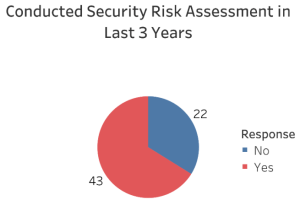
Astonishingly, out of the 71 agencies that did respond to the survey, 11 reported a complete absence of security policy plans or disaster recovery plans. This failure to implement foundational cybersecurity measures leaves these agencies ill-equipped to tackle potential threats and places sensitive information at risk. 

One alarming finding is that 22 agencies have not had a third-party Security Risk Assessment conducted, leaving them vulnerable to hacking and non-compliant with state law. 

Encryption is crucial for protecting this sensitive data, as it prevents unauthorized access even in the event of a security breach. However, the survey indicates that 38% of agencies reported not encrypting sensitive information, putting the data at high risk. 

“The State of Mississippi creates, stores, and maintains a wealth of sensitive information. Health data, tax data, student data, and any number of personally identifiable data are examples of sensitive information,” noted the report. 

“It is critical that sensitive information is encrypted when stored or transmitted.” 

The survey consisted of 59 questions related to the Enterprise Security Program requirements. The findings presented here highlight only a fraction of the identified problems, serving as examples of the cybersecurity issues within state government.  

“In short, the survey found over half of all respondents are less than 75% compliant with state cyber security laws,” said the government auditor’s note. 

The audit brought out the failure of numerous state agencies, boards, commissions, and universities to meet these requirements, while the reluctance of several bodies in participating in the audit process revealed concerning systemic apathy. 

Government cybersecurity preparedness: Different state, same problems 

Flash forward to 2023, this time Utah. 

The Office of the Legislative Auditor General, Utah, conducted a performance audit on public-sector privacy practices encompassing the state legislature, judicial branch, local governments, and the education sector. 

The deficiencies in establishing cybersecurity frameworks and ensuring routine cyber hygiene training for employees was widespread. 

Among the key findings of the report is the breakdown of communication between IT staff and administration regarding the associated risks of cybersecurity.

The lack of effective communication has resulted in costly cyber incidents, with entities that experienced attacks reportedly paying hundreds of thousands to over a million dollars as a consequence.  

However, the report also notes a low response rate to the audit, raising concerns about the overall risk to the state.  

Harking back to the Mississippi situation, only 37% of over 600 entities returned the survey, potentially indicating a lack of secure cybersecurity networks as a reason for the low response rate.  

At the local government level, the audit revealed varying levels of adoption of cybersecurity frameworks. Of the 223 respondents, 57 percent stated that they have adopted a cybersecurity framework. 

While 75% of school districts and 56% of county governments reported having adopted a cyber framework, only 39% of towns and cities indicated the same.  

“With a response rate of only 37 percent, we are concerned that we were unable to determine the totality of cybersecurity risk to the state,” said the audit report.

“We are concerned about the entities that did not respond to our survey. They may not have adopted a cybersecurity framework and may not have implemented proper controls to decrease cybersecurity attacks,” said the report.

Most alarming was the scale of shortcomings traced to the state level administration.  

The Utah Legislature lacked a strategic cybersecurity plan based on industry standards and does not have an incident response planning document.  

The legislative IT office, which recently established a cybersecurity division, previously relied on the executive branch’s Division of Technology Services for cyber support.  

The Utah judiciary also faced challenges, as it lacks a current strategic plan, with the last cyber plan being published in 2014. The audit also identifies a decline in the number of employees completing the required annual cyber hygiene training within the state court system. 

“Many entities can decrease the likelihood of serious cyberattacks through a few simple and effective methods. These include adopting a cybersecurity framework, improving communication between IT leadership and administrative leadership, and requiring employees to complete annual cybersecurity training,” said the Utah audit report. 

“Despite the entities’ best efforts to prevent cyberattacks, they can still occur. Therefore, several entities need to adopt an incident response plan to minimize the cost of a potential successful attack,” it added. 

However, the common troubles of non-compliance, lack of preparedness, and administrative apathy seems to be running in almost any organization associated with the government. 

Faulty cybersecurity preparedness: Beyond state administrations  

Government agencies at both the federal and state levels were found falling short in their cybersecurity measures, leaving sensitive data and critical infrastructure vulnerable to attacks.  

A yearly audit of NASA’s information security capabilities and practices revealed an overall rating of “Not Effective.”  

The audit, conducted by the NASA Office of Inspector General, assessed the agency’s infosec maturity across nine capabilities and found that NASA did not reach the benchmark level of effective infosec program for any of them.  

“In order for NASA to reach a higher maturity level, additional controls and processes need to be designed and implemented,” the report said. 

Issues identified include a lack of tools and data to understand the state of IT infrastructure, inadequate processes to frame and respond to risks, incomplete network device identification, outdated cybersecurity workforce assessment, and gaps in data protection and privacy standards. 

Similarly, the U.S. Government Accountability Office (GAO) released a report highlighting the inadequate response to ransomware threats against public school districts by the Education and Homeland Security departments.  

Ransomware attacks against K-12 schools have resulted in significant learning disruptions, with recovery times ranging from two to nine months. Despite the increasing number of incidents, the federal government has not provided sufficient resources to combat the threat.  

The Education Department and the Cybersecurity and Infrastructure Security Agency (CISA) have fallen short in establishing a coordinating council and developing metrics to track the effectiveness of their services to K-12 schools. 

The recent audits and reports on cybersecurity practices within government agencies at various levels paint a concerning picture.  

Significant shortcomings were revealed in each of these audits, each situation posing risks to sensitive data as well as civic and critical infrastructure. 

Government cybersecurity preparedness: Where to patch 

The Mississippi audit revealed that numerous state agencies failed to comply with the state’s cybersecurity program, leaving personal data unprotected and lacking written procedures to respond to cyberattacks.  

The lack of participation by some agencies in the audit itself is a clear failure of duty, as it hinders the identification and mitigation of potential risks.  

It is crucial for government institutions to prioritize cybersecurity and implement robust policies and procedures to safeguard taxpayer funds and sensitive information. 

Similarly, the audit in Utah shed light on the insufficient cybersecurity planning and training across multiple branches of government.  

Many agencies have not established cybersecurity frameworks or required employees to undergo routine cyber hygiene training, leaving them vulnerable to cyber threats.  

The breakdown in communication between IT staff and administration about the associated risks of cybersecurity worsens the already faulty government cybersecurity preparedness, leading to costly incidents and potential breaches. 

The audit of NASA’s information security capabilities also indicates a lack of effectiveness in its cybersecurity practices.  

The agency’s failure to understand the disposition and state of its IT infrastructure, inadequate data protection and privacy standards, and incomplete network device identification are just a few examples of the vulnerabilities identified.  

These weaknesses within NASA’s cybersecurity posture raise concerns about the agency’s ability to protect sensitive information and critical systems. 

Taken together, these audits underscore the urgent need for government agencies to prioritize cybersecurity as a fundamental aspect of their operations.

Cyber threats are evolving and becoming increasingly sophisticated, and it is essential for the administration to stay ahead of the curve by improving the government cybersecurity preparedness.  

This requires comprehensive cybersecurity frameworks, regular assessments, robust policies and procedures, adequate training for employees, and effective communication between IT staff and administration. 

Furthermore, it is crucial for governments to allocate sufficient resources to address cybersecurity risks effectively.  

Funding and support should be provided to establish coordinating councils, develop metrics for tracking the effectiveness of cybersecurity services, and enhance overall cyber resilience.  

The consequences of neglecting cybersecurity can be severe, ranging from financial losses to compromised data integrity and potential disruptions to critical services. 

Governments have a responsibility to protect the interests and well-being of their citizens. Strengthening cybersecurity measures and prioritizing proactive risk management are imperative to maintain public trust, safeguard sensitive information, and ensure the continued functioning of essential government services in the face of ever-evolving cyber threats.

Share this:

  • Click to share on LinkedIn (Opens in new window) LinkedIn
  • Click to share on Reddit (Opens in new window) Reddit
  • Click to share on X (Opens in new window) X
  • Click to share on Facebook (Opens in new window) Facebook
  • More
  • Click to email a link to a friend (Opens in new window) Email
  • Click to share on WhatsApp (Opens in new window) WhatsApp

Related

Previous Post

Longhorn Cyber Attack Puts Data of 28000 Patients at Risk

Next Post

When Hackers Take the Bait: ‘Sex Championship’ Ruse Sparks Operation OpSweden

Next Post
Operation OpSweden

When Hackers Take the Bait: 'Sex Championship' Ruse Sparks Operation OpSweden

Threat Landscape Reports 2025

❮ ❯
Cyble-Vision


Follow Us On Google News

Latest Cyber News

telecommunication sector
Firewall Daily

Telecommunications Sector Sees a Four-fold Jump in Ransomware Attacks in last 4 Years: Report

January 7, 2026
TOTOLINK EX200 CVE-2025-65606
Firewall Daily

Unpatched TOTOLINK EX200 Flaw Enables Root-Level Telnet Access, CERT/CC Warns

January 7, 2026
Martha Root deletes white supremacist websites at conference
Cyber News

Hacktivist Exposes and Deletes White Supremacist Websites Live at Conference

January 6, 2026
Cyber action plan, UK, cyber threats targeting political candidates
Cyber News

UK Unveils £210M Cyber Overhaul as Nation Faces “Critically High” Digital Threat

January 6, 2026

Categories

Web Stories

Do This on Telegram, Your Bank Account Will Become Zero
If You Install the iOS 18 Beta, Your iPhone Could Be Hacked
Cricket World Cup Ticketing Systems Under Cybersecurity
Cyber Threats and Online Ticket Scams During the NBA Finals
Biometric Data Security: Protecting Sensitive Information

About

The Cyber Express

#1 Trending Cybersecurity News and Magazine

The Cyber Express is a handbook for all stakeholders of the internet that provides information security professionals with the latest news, updates and knowledge they need to combat cyber threats.


Contact

For editorial queries: [email protected]

For marketing and Sales: [email protected]


Quick Links

  • About Us
  • Contact Us
  • Editorial Calendar
  • Careers
  • The Cyber Express by Cyble Vulnerability Disclosure Policy
  • Cyble Trust Portal

Our Address

We’re remote friendly, with office locations around the world:

San Francisco, Atlanta, Rome,
Dubai, Mumbai, Bangalore, Hyderabad,  Singapore, Jakarta, Sydney, and Melbourne


Headquarters:

The Cyber Express LLC
10080 North Wolfe Road, Suite SW3-200, Cupertino, CA, US 95014


India Office:

Cyber Express Media Network
HD-021, 4th Floor, C Wing, Building No.4. Nesco IT Park, WE Highway, Goregaon East, Mumbai, Maharashtra, India – 4000063

  • Privacy Statement
  • Terms of Use
  • Write For Us

© 2026 The Cyber Express - Cybersecurity News and Magazine.

Welcome Back!

Login to your account below

Forgotten Password?

Retrieve your password

Please enter your username or email address to reset your password.

Log In

Add New Playlist

No Result
View All Result
  • Magazine
  • Firewall Daily
  • Essentials
    • Regulations
    • Compliance
    • Governance
    • Policy Updates
  • Knowledge Hub
  • Features
    • Cyber Warfare
    • Espionage
    • Workforce
      • Learning & Development
  • Business
    • Startups
    • Mergers & Aquisitions
    • Partnerships
    • Appointments
    • Budgets
    • Research
      • Whitepapers
      • Sponsored Content
      • Market Reports
    • Interviews
      • Podcast
  • Events
    • Conference
    • Webinar
    • Endorsed Events
  • Advisory Board

© 2026 The Cyber Express - Cybersecurity News and Magazine.

Are you sure want to unlock this post?
Unlock left : 0
Are you sure want to cancel subscription?
-
00:00
00:00

Queue

Update Required Flash plugin
-
00:00
00:00
Do This on Telegram, Your Bank Account Will Become Zero If You Install the iOS 18 Beta, Your iPhone Could Be Hacked Cricket World Cup Ticketing Systems Under Cybersecurity Cyber Threats and Online Ticket Scams During the NBA Finals Biometric Data Security: Protecting Sensitive Information