















• Magazine
  • Firewall Daily
  • Essentials
    • Regulations
    • Compliance
    • Governance
    • Policy Updates
  • Knowledge Hub
  • Features
    • Cyber Warfare
    • Espionage
    • Workforce
      • Learning & Development
  • Business
    • Startups
    • Mergers & Aquisitions
    • Partnerships
    • Appointments
    • Budgets
    • Research
      • Whitepapers
      • Sponsored Content
      • Market Reports
    • Interviews
      • Podcast
  • Events
    • Conference
    • Webinar
    • Endorsed Events
  • Advisory Board
The Cyber Express
  • MagazineDownload
  • Firewall Daily
    • All
    • Bug Bounty & Rewards
    • Dark Web News
    • Data Breach News
    • Hacker News
    • Ransomware News
    • Vulnerabilities
    New Zealand cyber incidents

    New Zealanders Lost $5.9 Million to Cyber Attacks in Just Three Months

    Entra Connect Health data breach

    Microsoft Confirms Attackers Accessed Customer Data Through Entra Connect Health

    Agentic cyber attacks

    AI Hacking Tools Are Finding Old Security Mistakes in Minutes, UK’s NCSC Warns

    CVE-2026-123910

    23 VMware Vulnerabilities Disclosed as Broadcom Flags Critical vCenter and ESX Flaws

    Nvidia cyberattack

    NVIDIA Investigates Possible Third-Party Breach After Ransomware Group Threat

    EU Academy data breach

    European Commission Shuts Down EU Academy After Hackers Leak User Data

    Grok lawsuit

    Oregon and Virginia Take xAI to Court Over Grok’s “Spicy Mode”

    National Cyber Director

    Pentagon Tech Chief Kirsten Davies Picked to Lead White House Cyber Office

    Autonomous AI Agents

    No Sleep, No Breaks, No Human Help. Amazon Watched AI Agents Hack a Server

    Trending Tags

    • blackbyte ransomware
    • Ransomware
    • lapsus$ ransomware
    • Apple
    • Apple vulnerability
  • Essentials
    • All
    • Compliance
    • Governance
    • Policy Updates
    • Regulations
    SEC, Misleading Cyber Disclosures, Financial data, financial data protection, SEC

    SEC Enforcement Fell 24% in Fiscal 2026

    ASD Essentials

    The Essential Eight Is Being Replaced: What Australian Organisations Need to Know

    SICW 2026

    AI Is Now Fighting on Both Sides of the Cyber War, Singapore Warns

    Morocco cybersecurity strategy

    Morocco Flags AI Threats, Prioritizes Critical Infrastructure Defense

    European Police Chiefs Convention 2026

    Europe’s Police Chiefs Face Growing Threat of AI-Driven Crime

    AI service security

    Hackers Are Stealing AI Keys. The Cost Can Reach $600,000

    AI security risks

    Sam Altman at UN Security Council: 6 AI Security Risks the World Cannot Ignore

    AI-enabled cyber attacks

    AI Gives Hackers an Edge Defenders Still Can’t Match, NCSC Warns

    Fraudulent SIM cards

    India’s DoT Warns Citizens Over SIM Fraud and IMEI Tampering

    • Regulations
    • Compliance
    • Governance
    • Policy Updates
  • Knowledge Hub
    • All
    • How to
    • What is
    Infostealer Intelligence

    The 2026 Infostealer Intelligence Shortlist: Top 10 Vendors Security Teams Should Know

    Google Chrome

    How to Remove Saved Passwords From Google Chrome (And Why You Should)

    DPDP Rules, Cyble, DPDP Act, Cyble Vantage

    How Cyble’s Front-Row Vantage Can Help You in Complying to India’s DPDP Act

    Cybersecurity Countries

    The Top 8 Countries Leading the Cyber Defense Race in 2025

    link building

    The Link Building Secrets Your Competitors Don’t Want You to Know

    Supply Chain Attack

    Supply Chain Resilience and Physical Security: Lessons for 2025

    Healthcare cybersecurity trends of 2024

    Healthcare Cybersecurity: 2024 Was Tough, 2025 May Be Better

    CEO's Guide to Take-Down Services

    Shield Your Organization: CEO’s Perspective on Take-Down Services

    Azure sign-in Microsoft

    Microsoft Announces Mandatory MFA for Azure Sign-ins to Bolster Cloud Defenses

  • Features
    • Cyber Warfare
    • Espionage
    • Workforce
      • Learning & Development
  • Business
    • All
    • Appointments
    • Budgets
    • Mergers & Aquisitions
    • Partnerships
    • Press Release
    • Startups
    National Cyber Director

    Pentagon Tech Chief Kirsten Davies Picked to Lead White House Cyber Office

    Kerala Police Signs MoU With Cyble

    Kerala Police Signs MoU With Cyble to Use Threat Intelligence in Cybercrime Probes

    Gemini 4 Argon

    Gemini 4 Argon Restricted Over Cybersecurity Misuse Risks

    weekly roundup September 18 2026

    The Cyber Express Weekly Roundup: Hiscox’s SMB Warning, a Nintendo Switch Flaw, and a Record Deepfake Takedown

    threat intelligence

    Cyble, UAE Cyber Security Council Unite Against Rising Cyber Threats

    Ukraine cybersecurity

    Zelensky Appoints Ihor Klymenko to Lead Ukraine’s Cybersecurity Center

    UK cyberattack rate

    UK Small Firms Bear Brunt of Rising Cyberattacks, Hiscox Finds

    Cyber Yodha Campaign

    Cyble and DRONA Launch New Push to Close India’s Cybersecurity Gap

    UK Ukraine AI partnership

    Britain Gains Access to Ukraine’s ‘Goldmine’ of Battlefield AI Data

    • Startups
    • Mergers & Aquisitions
    • Partnerships
    • Appointments
    • Budgets
    • Research
      • Whitepapers
      • Sponsored Content
      • Market Reports
    • Interviews
      • Podcast
  • Events
    • Conference
    • Webinar
    • Endorsed Events
  • Advisory Board
No Result
View All Result
The Cyber Express
No Result
View All Result

Apple Devices Become First Consumer Products Cleared for NATO Classified Data—But Questions Remain

Mihir Bagwe by Mihir Bagwe
February 27, 2026
in Cyber Essentials, Cyber News, Firewall Daily
0
iphone, ipad, apple devices
585
SHARES
3.2k
VIEWS
Share on LinkedInShare on Twitter

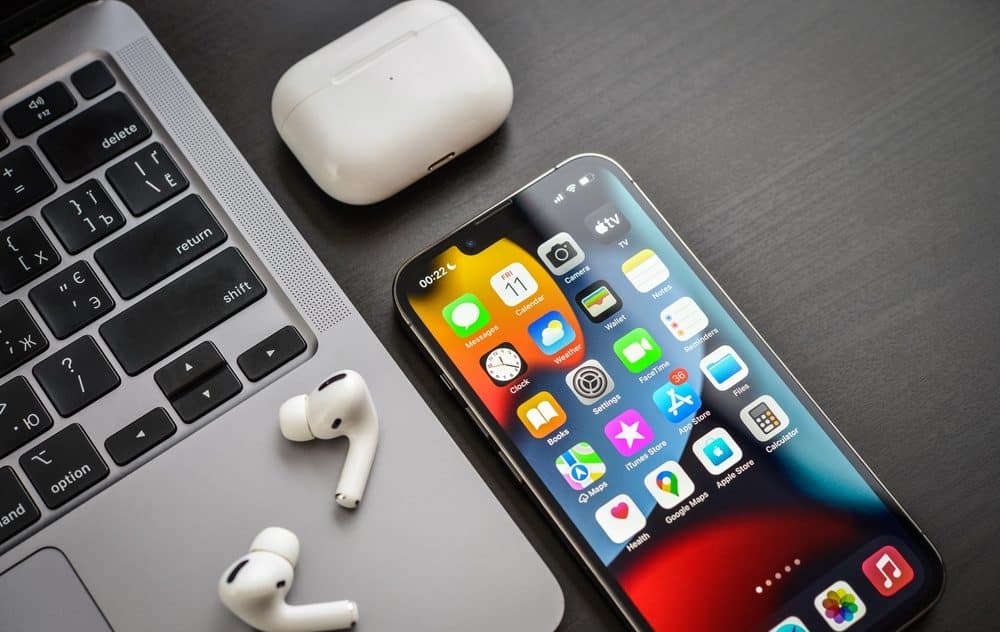
iPhone and iPad running iOS 26 can now handle restricted NATO information without special software, though security experts warn consumer devices create new attack surfaces.

Apple announced Thursday that iPhone and iPad became the first consumer mobile devices approved to handle classified NATO information up to the restricted level, following extensive security testing by Germany’s Federal Office for Information Security.

The certification enables NATO personnel across all member nations to use standard iOS 26 and iPadOS 26 devices for restricted data without requiring specialized software, containerization or additional security layers—a milestone no other consumer device manufacturer has achieved.

Germany’s BSI conducted exhaustive technical assessments, comprehensive testing and deep security analysis to verify Apple’s built-in platform security capabilities met NATO nations’ operational and assurance requirements. The devices now appear on NATO’s Information Assurance Product Catalogue, formally recognizing that Apple’s hardware-software integration provides adequate protections for restricted classified information.

Also read: NATO Faces Escalating Cyberthreats: From Espionage to Disinformation

“Secure digital transformation is only successful if information security is considered from the beginning in the development of mobile products,” said Claudia Plattner, BSI’s president. The certification builds on Apple’s previous approval to handle classified German government data using native iOS and iPadOS security measures without third-party modifications.

Apple stressed that its security architecture differs fundamentally from traditional approaches requiring bespoke solutions. “Prior to iPhone, secure devices were only available to sophisticated government and enterprise organizations after a massive investment in bespoke security solutions,” said Ivan Krstić, Apple’s vice president of Security Engineering and Architecture. “Instead, Apple has built the most secure devices in the world for all its users, and those same protections are now uniquely certified under assurance requirements for NATO nations.”

The certification relies on Apple’s integrated security features including hardware-based encryption through the Secure Enclave processor, biometric authentication via Face ID, Memory Integrity Enforcement preventing code injection attacks, and comprehensive device encryption that protects data at rest and in transit. These capabilities operate across Apple’s custom silicon, operating system and applications without requiring users to enable special modes or install government-specific software.

NATO’s “restricted” classification represents the alliance’s lowest tier for classified information, covering data requiring protection but not meeting thresholds for confidential, secret or top secret designations. Restricted information typically includes operational planning details, logistics coordination and administrative documents that could aid adversaries if disclosed but would not directly compromise critical security operations.

The approval marks a pragmatic shift in how governments balance security requirements against operational flexibility. NATO personnel can now use familiar consumer devices rather than specialized hardened phones that typically cost thousands of dollars per unit, offer limited functionality and create friction in daily workflows. The consumer device approval potentially saves member nations substantial procurement costs while improving user adoption.

However, security experts note that consumer devices certified for government use introduce considerations absent from purpose-built secure communications platforms. Unlike specialized government phones designed exclusively for classified communications, iPhones and iPads run consumer applications, connect to public networks and integrate with cloud services creating expanded attack surfaces.

A cryptography professor at a known U.S. University, told The Cyber Express that he would still want to be cautious on this since in the past few years, Apple’s security architecture has been proven to have consumer threats, including nation-state adversaries targeting NATO countries. “The question isn’t whether Apple has good security—they do. It’s whether consumer devices designed for billions of users can adequately protect against targeted attacks by adversaries specifically hunting for NATO intelligence,” he said.

Also read: Apple Patches Actively Exploited iOS Zero-Day CVE-2025-24200 in Emergency Update

The certification also raises questions about long-term support and update requirements. Consumer devices receive operating system updates for limited periods before Apple designates them obsolete. Government security requirements typically demand decades-long support commitments that conflict with consumer product lifecycles where devices become outdated within five years.

Apple has not disclosed whether NATO members negotiated extended support agreements, how the company will handle security vulnerabilities discovered in iOS 26 after consumer support ends, or whether classified data handling requires organizations to prevent users from installing consumer applications that could introduce risks.

The announcement follows Apple’s decade-long effort to gain U.S. government security clearances. The U.S. Department of War (formerly know as Department of Defense) approved iPhones for handling certain classified information in 2013-14, though those implementations required mobile device management software and container applications separating classified data from personal use—requirements NATO’s certification explicitly eliminates.

Despite concerns, the NATO approval represents validation that Apple’s security-by-design approach can meet rigorous government standards for protecting sensitive information, potentially encouraging other consumer technology manufacturers to prioritize security architecture capable of government certification rather than relying on post-hoc security layers.


Share this:

  • Share on LinkedIn (Opens in new window) LinkedIn
  • Share on Reddit (Opens in new window) Reddit
  • Share on X (Opens in new window) X
  • Share on Facebook (Opens in new window) Facebook
  • More
  • Email a link to a friend (Opens in new window) Email
  • Share on WhatsApp (Opens in new window) WhatsApp

Related

Tags: AppleiPadiPhoneNATO
Previous Post

OpenClaw Vulnerability Exposes How an Open-Source AI Agent Can Be Hijacked

Next Post

National Cyber Security Bill and NIS2: Senior Management’s Compliance Guide

Next Post
NIS2 Directive

National Cyber Security Bill and NIS2: Senior Management’s Compliance Guide

Cyble-Vision


Follow Us On Google News

Categories

  • Privacy Statement
  • Terms of Use
  • Write For Us

© 2026 The Cyber Express - Cybersecurity News and Magazine.

Welcome Back!

Login to your account below

Forgotten Password?

Retrieve your password

Please enter your username or email address to reset your password.

Log In

Add New Playlist

No Result
View All Result
  • Magazine
  • Firewall Daily
  • Essentials
    • Regulations
    • Compliance
    • Governance
    • Policy Updates
  • Knowledge Hub
  • Features
    • Cyber Warfare
    • Espionage
    • Workforce
      • Learning & Development
  • Business
    • Startups
    • Mergers & Aquisitions
    • Partnerships
    • Appointments
    • Budgets
    • Research
      • Whitepapers
      • Sponsored Content
      • Market Reports
    • Interviews
      • Podcast
  • Events
    • Conference
    • Webinar
    • Endorsed Events
  • Advisory Board

© 2026 The Cyber Express - Cybersecurity News and Magazine.

-
00:00
00:00

Queue

Update Required Flash plugin
-
00:00
00:00