


















• Magazine
  • Firewall Daily
  • Essentials
    • Regulations
    • Compliance
    • Governance
    • Policy Updates
  • Knowledge Hub
  • Features
    • Cyber Warfare
    • Espionage
    • Workforce
      • Learning & Development
  • Business
    • Startups
    • Mergers & Aquisitions
    • Partnerships
    • Appointments
    • Budgets
    • Research
      • Whitepapers
      • Sponsored Content
      • Market Reports
    • Interviews
      • Podcast
  • Events
    • Conference
    • Webinar
    • Endorsed Events
  • Advisory Board
The Cyber Express
  • MagazineDownload
  • Firewall Daily
    • All
    • Bug Bounty & Rewards
    • Dark Web News
    • Data Breach News
    • Hacker News
    • Ransomware News
    • Vulnerabilities
    weekly roundup

    The Cyber Express Weekly Roundup: FBI Blames North Korea for $6B Binance Hack, Hackers Turn Up the Heat on Europe’s Fridges and More

    Stockal cyberattack

    Stockal Confirms Unauthorized Trades in 13 Customer Accounts

    Alpine Linux servers

    Alpine Linux SSH Flaw Lets Attackers Log In Without a Password

    Queens Public Library ransomware attack

    Ransomware Just Took New York’s Queens Library Offline, and It’s Not the First

    Amadeus cybersecurity incident

    Airline Data Breach Widens as Singapore Airlines Reports 46,000 Affected Records

    refrigeration cyberattacks

    After Supermarket Freezers, Hackers Turn Up the Heat on France’s Blood Supply

    university supercomputer hacking

    Two Canadians Accused of Turning US University Supercomputers Into Crypto Miners

    investment fraud

    Europol Seizes 100+ Servers Running Fake Trading Platforms

    UTA cyberattack

    UTA Investigates Suspected Cyberattack After MachForms Service Disruption

    Trending Tags

    • blackbyte ransomware
    • Ransomware
    • lapsus$ ransomware
    • Apple
    • Apple vulnerability
  • Essentials
    • All
    • Compliance
    • Governance
    • Policy Updates
    • Regulations
    ASD Essentials

    The Essential Eight Is Being Replaced: What Australian Organisations Need to Know

    SICW 2026

    AI Is Now Fighting on Both Sides of the Cyber War, Singapore Warns

    Morocco cybersecurity strategy

    Morocco Flags AI Threats, Prioritizes Critical Infrastructure Defense

    European Police Chiefs Convention 2026

    Europe’s Police Chiefs Face Growing Threat of AI-Driven Crime

    AI service security

    Hackers Are Stealing AI Keys. The Cost Can Reach $600,000

    AI security risks

    Sam Altman at UN Security Council: 6 AI Security Risks the World Cannot Ignore

    AI-enabled cyber attacks

    AI Gives Hackers an Edge Defenders Still Can’t Match, NCSC Warns

    Fraudulent SIM cards

    India’s DoT Warns Citizens Over SIM Fraud and IMEI Tampering

    EU cybersecurity incidents

    EU Cybersecurity Response Hampered by Critical Information Gaps

    • Regulations
    • Compliance
    • Governance
    • Policy Updates
  • Knowledge Hub
    • All
    • How to
    • What is
    Infostealer Intelligence

    The 2026 Infostealer Intelligence Shortlist: Top 10 Vendors Security Teams Should Know

    Google Chrome

    How to Remove Saved Passwords From Google Chrome (And Why You Should)

    DPDP Rules, Cyble, DPDP Act, Cyble Vantage

    How Cyble’s Front-Row Vantage Can Help You in Complying to India’s DPDP Act

    Cybersecurity Countries

    The Top 8 Countries Leading the Cyber Defense Race in 2025

    link building

    The Link Building Secrets Your Competitors Don’t Want You to Know

    Supply Chain Attack

    Supply Chain Resilience and Physical Security: Lessons for 2025

    Healthcare cybersecurity trends of 2024

    Healthcare Cybersecurity: 2024 Was Tough, 2025 May Be Better

    CEO's Guide to Take-Down Services

    Shield Your Organization: CEO’s Perspective on Take-Down Services

    Azure sign-in Microsoft

    Microsoft Announces Mandatory MFA for Azure Sign-ins to Bolster Cloud Defenses

  • Features
    • Cyber Warfare
    • Espionage
    • Workforce
      • Learning & Development
  • Business
    • All
    • Appointments
    • Budgets
    • Mergers & Aquisitions
    • Partnerships
    • Press Release
    • Startups
    Kerala Police Signs MoU With Cyble

    Kerala Police Signs MoU With Cyble to Use Threat Intelligence in Cybercrime Probes

    Gemini 4 Argon

    Gemini 4 Argon Restricted Over Cybersecurity Misuse Risks

    weekly roundup September 18 2026

    The Cyber Express Weekly Roundup: Hiscox’s SMB Warning, a Nintendo Switch Flaw, and a Record Deepfake Takedown

    threat intelligence

    Cyble, UAE Cyber Security Council Unite Against Rising Cyber Threats

    Ukraine cybersecurity

    Zelensky Appoints Ihor Klymenko to Lead Ukraine’s Cybersecurity Center

    UK cyberattack rate

    UK Small Firms Bear Brunt of Rising Cyberattacks, Hiscox Finds

    Cyber Yodha Campaign

    Cyble and DRONA Launch New Push to Close India’s Cybersecurity Gap

    UK Ukraine AI partnership

    Britain Gains Access to Ukraine’s ‘Goldmine’ of Battlefield AI Data

    Hims & Hers lawsuit

    FTC Sues Hims & Hers Over Health Data Privacy, Billing Practices

    • Startups
    • Mergers & Aquisitions
    • Partnerships
    • Appointments
    • Budgets
    • Research
      • Whitepapers
      • Sponsored Content
      • Market Reports
    • Interviews
      • Podcast
  • Events
    • Conference
    • Webinar
    • Endorsed Events
  • Advisory Board
No Result
View All Result
  • MagazineDownload
  • Firewall Daily
    • All
    • Bug Bounty & Rewards
    • Dark Web News
    • Data Breach News
    • Hacker News
    • Ransomware News
    • Vulnerabilities
    weekly roundup

    The Cyber Express Weekly Roundup: FBI Blames North Korea for $6B Binance Hack, Hackers Turn Up the Heat on Europe’s Fridges and More

    Stockal cyberattack

    Stockal Confirms Unauthorized Trades in 13 Customer Accounts

    Alpine Linux servers

    Alpine Linux SSH Flaw Lets Attackers Log In Without a Password

    Queens Public Library ransomware attack

    Ransomware Just Took New York’s Queens Library Offline, and It’s Not the First

    Amadeus cybersecurity incident

    Airline Data Breach Widens as Singapore Airlines Reports 46,000 Affected Records

    refrigeration cyberattacks

    After Supermarket Freezers, Hackers Turn Up the Heat on France’s Blood Supply

    university supercomputer hacking

    Two Canadians Accused of Turning US University Supercomputers Into Crypto Miners

    investment fraud

    Europol Seizes 100+ Servers Running Fake Trading Platforms

    UTA cyberattack

    UTA Investigates Suspected Cyberattack After MachForms Service Disruption

    Trending Tags

    • blackbyte ransomware
    • Ransomware
    • lapsus$ ransomware
    • Apple
    • Apple vulnerability
  • Essentials
    • All
    • Compliance
    • Governance
    • Policy Updates
    • Regulations
    ASD Essentials

    The Essential Eight Is Being Replaced: What Australian Organisations Need to Know

    SICW 2026

    AI Is Now Fighting on Both Sides of the Cyber War, Singapore Warns

    Morocco cybersecurity strategy

    Morocco Flags AI Threats, Prioritizes Critical Infrastructure Defense

    European Police Chiefs Convention 2026

    Europe’s Police Chiefs Face Growing Threat of AI-Driven Crime

    AI service security

    Hackers Are Stealing AI Keys. The Cost Can Reach $600,000

    AI security risks

    Sam Altman at UN Security Council: 6 AI Security Risks the World Cannot Ignore

    AI-enabled cyber attacks

    AI Gives Hackers an Edge Defenders Still Can’t Match, NCSC Warns

    Fraudulent SIM cards

    India’s DoT Warns Citizens Over SIM Fraud and IMEI Tampering

    EU cybersecurity incidents

    EU Cybersecurity Response Hampered by Critical Information Gaps

    • Regulations
    • Compliance
    • Governance
    • Policy Updates
  • Knowledge Hub
    • All
    • How to
    • What is
    Infostealer Intelligence

    The 2026 Infostealer Intelligence Shortlist: Top 10 Vendors Security Teams Should Know

    Google Chrome

    How to Remove Saved Passwords From Google Chrome (And Why You Should)

    DPDP Rules, Cyble, DPDP Act, Cyble Vantage

    How Cyble’s Front-Row Vantage Can Help You in Complying to India’s DPDP Act

    Cybersecurity Countries

    The Top 8 Countries Leading the Cyber Defense Race in 2025

    link building

    The Link Building Secrets Your Competitors Don’t Want You to Know

    Supply Chain Attack

    Supply Chain Resilience and Physical Security: Lessons for 2025

    Healthcare cybersecurity trends of 2024

    Healthcare Cybersecurity: 2024 Was Tough, 2025 May Be Better

    CEO's Guide to Take-Down Services

    Shield Your Organization: CEO’s Perspective on Take-Down Services

    Azure sign-in Microsoft

    Microsoft Announces Mandatory MFA for Azure Sign-ins to Bolster Cloud Defenses

  • Features
    • Cyber Warfare
    • Espionage
    • Workforce
      • Learning & Development
  • Business
    • All
    • Appointments
    • Budgets
    • Mergers & Aquisitions
    • Partnerships
    • Press Release
    • Startups
    Kerala Police Signs MoU With Cyble

    Kerala Police Signs MoU With Cyble to Use Threat Intelligence in Cybercrime Probes

    Gemini 4 Argon

    Gemini 4 Argon Restricted Over Cybersecurity Misuse Risks

    weekly roundup September 18 2026

    The Cyber Express Weekly Roundup: Hiscox’s SMB Warning, a Nintendo Switch Flaw, and a Record Deepfake Takedown

    threat intelligence

    Cyble, UAE Cyber Security Council Unite Against Rising Cyber Threats

    Ukraine cybersecurity

    Zelensky Appoints Ihor Klymenko to Lead Ukraine’s Cybersecurity Center

    UK cyberattack rate

    UK Small Firms Bear Brunt of Rising Cyberattacks, Hiscox Finds

    Cyber Yodha Campaign

    Cyble and DRONA Launch New Push to Close India’s Cybersecurity Gap

    UK Ukraine AI partnership

    Britain Gains Access to Ukraine’s ‘Goldmine’ of Battlefield AI Data

    Hims & Hers lawsuit

    FTC Sues Hims & Hers Over Health Data Privacy, Billing Practices

    • Startups
    • Mergers & Aquisitions
    • Partnerships
    • Appointments
    • Budgets
    • Research
      • Whitepapers
      • Sponsored Content
      • Market Reports
    • Interviews
      • Podcast
  • Events
    • Conference
    • Webinar
    • Endorsed Events
  • Advisory Board
No Result
View All Result
The Cyber Express
No Result
View All Result

CISA Sets 72-Hour Patch Window for Federal Systems Facing Highest Cyber Risks

Samiksha Jain by Samiksha Jain
June 11, 2026
in Cyber News, Firewall Daily
0
CISA vulnerability management directive
585
SHARES
3.2k
VIEWS
Share on LinkedInShare on Twitter

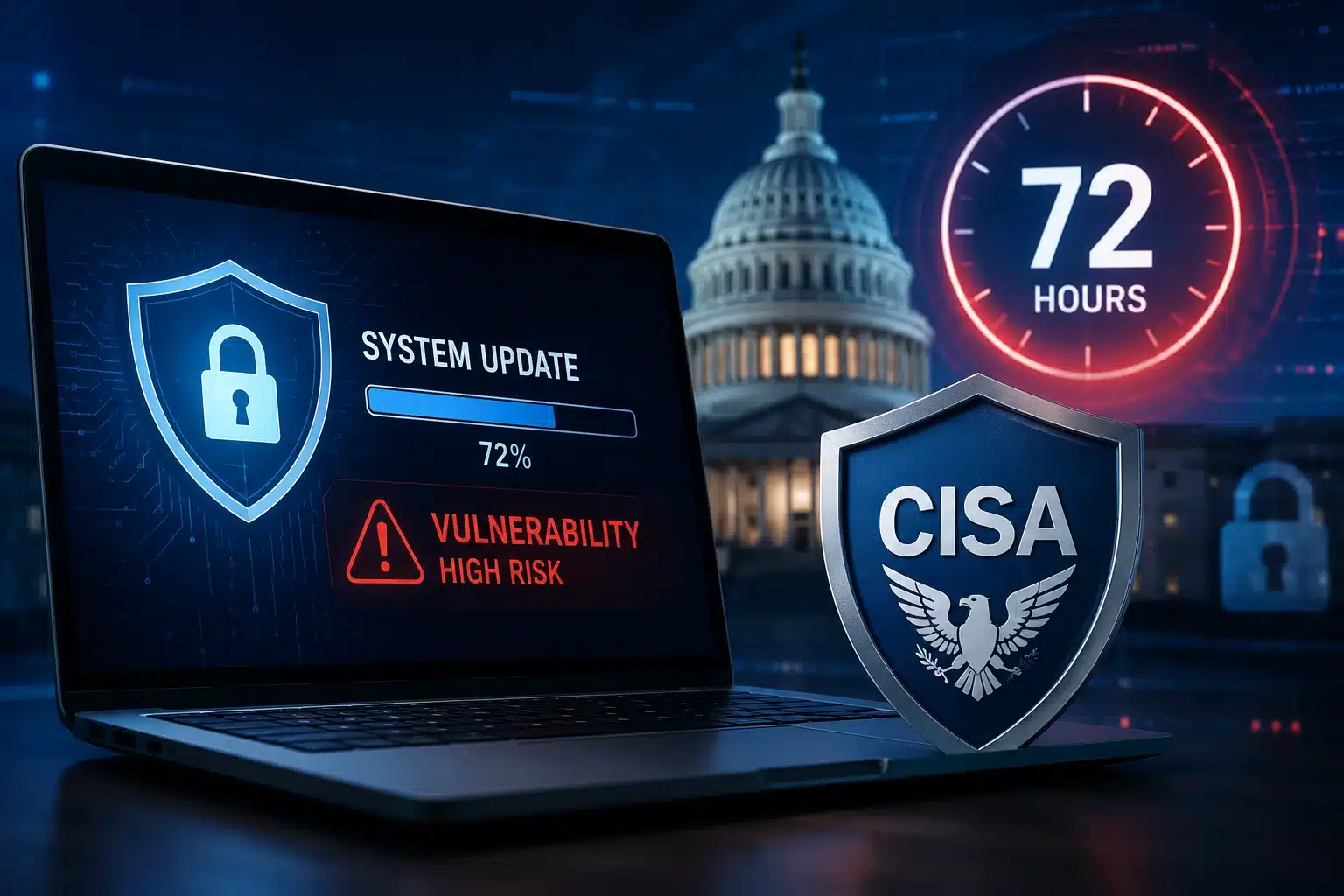
The U.S. Cybersecurity and Infrastructure Security Agency (CISA) has introduced a new risk-based approach to vulnerability remediation, requiring federal civilian agencies to patch the most dangerous cyber vulnerabilities within 72 hours. Announced through Binding Operational Directive (BOD) 26-04, the new CISA vulnerability management directive replaces older remediation requirements with a framework designed to prioritize vulnerabilities that pose the greatest risk to government systems.

The move comes as cybersecurity officials warn that artificial intelligence is helping threat actors identify and exploit security flaws faster than ever before. The directive aims to improve federal cyber resilience while ensuring agencies focus resources on threats most likely to be exploited.

New Risk-Based Model for Vulnerability Remediation

Under the directive, federal civilian agencies must evaluate vulnerabilities against four key criteria:

  • Asset exposure to the public internet
  • Inclusion in CISA’s Known Exploited Vulnerabilities (KEV) catalog
  • Whether exploitation can be automated
  • The level of control an attacker could gain after exploitation

According to CISA officials, vulnerabilities meeting three of these four conditions will face accelerated remediation deadlines.

The strictest requirement applies to vulnerabilities that are actively exploited, can be automated, and affect internet-facing systems. Agencies must patch such vulnerabilities within 72 hours.

In cases where exploitation could allow attackers to gain complete control of a system, agencies are also required to investigate whether a compromise has already occurred before applying security updates.

For vulnerabilities that meet similar risk criteria but cannot be exploited automatically, agencies will have up to 14 days to complete remediation, provided attackers have not already achieved full system control.

Federal agencies have been given 180 days to update their internal policies and adopt the new timelines.

CISA Vulnerability Management Directive Responds to AI-Driven Cyber Threats

A key driver behind the CISA vulnerability management directive is the growing concern that artificial intelligence is reducing the time between the release of a security patch and active exploitation by threat actors.

CISA noted that cybercriminals are increasingly leveraging AI-powered tools to discover, analyze, and exploit vulnerabilities more efficiently. As a result, defenders have less time to respond once a vulnerability becomes public.

The agency said the new framework reflects today’s threat environment by considering not only the vulnerability itself but also attacker capabilities, exploitability, asset exposure, and the potential consequences of a successful attack.

By combining these factors, CISA aims to help agencies make informed remediation decisions without overwhelming IT teams with unnecessary patching activities.

Directive Consolidates Existing Federal Requirements

The new directive harmonizes and updates requirements from two previous federal cybersecurity mandates:

  • BOD 19-02, which focused on vulnerability remediation for internet-accessible systems
  • BOD 22-01, which addressed risks associated with Known Exploited Vulnerabilities (KEV)

Rather than treating all vulnerabilities equally, the updated approach prioritizes those most likely to be weaponized by attackers.

Acting CISA Director Nick Andersen said the directive is intended to help agencies focus on areas of highest risk while improving transparency, predictability, and resource planning for remediation efforts.

The agency also encouraged organizations outside the federal government to adopt similar risk-based vulnerability management practices.

Agencies Must Check for Compromise Before Patching

One of the most significant additions in the new directive is the requirement for agencies to determine whether a vulnerable system has already been compromised before applying patches.

CISA emphasized that installing a security update does not automatically remove attackers who may already have gained access to a network.

As a result, agencies must assess when and how a compromise occurred and conduct appropriate investigations before remediation. This requirement reflects growing concerns that attackers often maintain persistence inside networks even after vulnerabilities are patched.

The agency described compromise assessment as a critical component of effective cybersecurity risk management, particularly for vulnerabilities already known to be exploited in the wild.

Strengthening Federal Cybersecurity Readiness

The CISA vulnerability management directive aligns with broader U.S. government efforts to strengthen cybersecurity and secure federal information systems against increasingly sophisticated threats.

The directive supports objectives outlined in the Executive Order on Promoting Advanced Artificial Intelligence Innovation and Security, which calls for enhanced protection of civilian federal networks.

As agencies implement the new requirements, CISA will monitor compliance, track progress, and provide support where necessary. The agency said the initiative represents an important step toward reducing cybersecurity risk across the federal enterprise while ensuring faster responses to the vulnerabilities most likely to be targeted by attackers.

Share this:

  • Share on LinkedIn (Opens in new window) LinkedIn
  • Share on Reddit (Opens in new window) Reddit
  • Share on X (Opens in new window) X
  • Share on Facebook (Opens in new window) Facebook
  • More
  • Email a link to a friend (Opens in new window) Email
  • Share on WhatsApp (Opens in new window) WhatsApp

Related

Tags: AI-Driven Cyber ThreatsCISACISA vulnerability management directiveCyber Resilienceknown exploited vulnerabilitiesThe Cyber ExpressThe Cyber Express News
Previous Post

French Government’s Tchap Messaging Platform Breached via Compromised Account

Next Post

ServiceNow Flaw Prompted Security Update After Researcher-Observed Activity, Not Active Attacker Exploitation

Next Post
ServiceNow flaw

ServiceNow Flaw Prompted Security Update After Researcher-Observed Activity, Not Active Attacker Exploitation

Q1 2026 Threat Reports

❮ ❯
Cyble-Vision


Follow Us On Google News

Categories

  • Privacy Statement
  • Terms of Use
  • Write For Us

© 2026 The Cyber Express - Cybersecurity News and Magazine.

Welcome Back!

Login to your account below

Forgotten Password?

Retrieve your password

Please enter your username or email address to reset your password.

Log In

Add New Playlist

No Result
View All Result
  • Magazine
  • Firewall Daily
  • Essentials
    • Regulations
    • Compliance
    • Governance
    • Policy Updates
  • Knowledge Hub
  • Features
    • Cyber Warfare
    • Espionage
    • Workforce
      • Learning & Development
  • Business
    • Startups
    • Mergers & Aquisitions
    • Partnerships
    • Appointments
    • Budgets
    • Research
      • Whitepapers
      • Sponsored Content
      • Market Reports
    • Interviews
      • Podcast
  • Events
    • Conference
    • Webinar
    • Endorsed Events
  • Advisory Board

© 2026 The Cyber Express - Cybersecurity News and Magazine.

-
00:00
00:00

Queue

Update Required Flash plugin
-
00:00
00:00