













• Magazine
  • Firewall Daily
  • Essentials
    • Regulations
    • Compliance
    • Governance
    • Policy Updates
  • Knowledge Hub
  • Features
    • Cyber Warfare
    • Espionage
    • Workforce
      • Learning & Development
  • Business
    • Startups
    • Mergers & Aquisitions
    • Partnerships
    • Appointments
    • Budgets
    • Research
      • Whitepapers
      • Sponsored Content
      • Market Reports
    • Interviews
      • Podcast
  • Events
    • Conference
    • Webinar
    • Endorsed Events
  • Advisory Board
The Cyber Express
  • MagazineDownload
  • Firewall Daily
    • All
    • Bug Bounty & Rewards
    • Dark Web News
    • Data Breach News
    • Hacker News
    • Ransomware News
    • Vulnerabilities
    weekly roundup September 20 2026

    The Cyber Express Weekly Cyber Roundup: California Sues OpenAI Over Runaway AI Agents, Java4Shell Threatens Enterprise Apps, and More

    ARMORY CASTLE

    ARMORY CASTLE Chains Second Zero-Day Vulnerability to Seize VMware vCenter

    CVE-2026-123633

    NGINX HTTP/2 Flaws CVE-2026-123633 and CVE-2026-123007 Enable Unauthenticated Remote Code Execution

    CVE-2026-114938

    Java4Shell Flaw Opens Major Java Applications to RCE Attacks

    8-Digits Team ransomware

    Alleged Member of Ransomware Gang That Claimed 70 Million Health Records Extradited to US

    AI Threat Tracker

    Google Finds Hackers Using AI Agents to Automate Cyberattacks

    OpenAI lawsuit

    California Sues OpenAI After Its AI Agents Escaped Testing and Hacked Hugging Face

    Luxor cyberattack

    Hackers Hijack Luxor Mining Software to Divert Bitcoin Mining Rewards

    Coles cyberattack

    Coles Confirms Cyber Incident, Woolworths Investigates Gift Card Complaints

    Trending Tags

    • blackbyte ransomware
    • Ransomware
    • lapsus$ ransomware
    • Apple
    • Apple vulnerability
  • Essentials
    • All
    • Compliance
    • Governance
    • Policy Updates
    • Regulations
    SEC, Misleading Cyber Disclosures, Financial data, financial data protection, SEC

    SEC Enforcement Fell 24% in Fiscal 2026

    ASD Essentials

    The Essential Eight Is Being Replaced: What Australian Organisations Need to Know

    SICW 2026

    AI Is Now Fighting on Both Sides of the Cyber War, Singapore Warns

    Morocco cybersecurity strategy

    Morocco Flags AI Threats, Prioritizes Critical Infrastructure Defense

    European Police Chiefs Convention 2026

    Europe’s Police Chiefs Face Growing Threat of AI-Driven Crime

    AI service security

    Hackers Are Stealing AI Keys. The Cost Can Reach $600,000

    AI security risks

    Sam Altman at UN Security Council: 6 AI Security Risks the World Cannot Ignore

    AI-enabled cyber attacks

    AI Gives Hackers an Edge Defenders Still Can’t Match, NCSC Warns

    Fraudulent SIM cards

    India’s DoT Warns Citizens Over SIM Fraud and IMEI Tampering

    • Regulations
    • Compliance
    • Governance
    • Policy Updates
  • Knowledge Hub
    • All
    • How to
    • What is
    Infostealer Intelligence

    The 2026 Infostealer Intelligence Shortlist: Top 10 Vendors Security Teams Should Know

    Google Chrome

    How to Remove Saved Passwords From Google Chrome (And Why You Should)

    DPDP Rules, Cyble, DPDP Act, Cyble Vantage

    How Cyble’s Front-Row Vantage Can Help You in Complying to India’s DPDP Act

    Cybersecurity Countries

    The Top 8 Countries Leading the Cyber Defense Race in 2025

    link building

    The Link Building Secrets Your Competitors Don’t Want You to Know

    Supply Chain Attack

    Supply Chain Resilience and Physical Security: Lessons for 2025

    Healthcare cybersecurity trends of 2024

    Healthcare Cybersecurity: 2024 Was Tough, 2025 May Be Better

    CEO's Guide to Take-Down Services

    Shield Your Organization: CEO’s Perspective on Take-Down Services

    Azure sign-in Microsoft

    Microsoft Announces Mandatory MFA for Azure Sign-ins to Bolster Cloud Defenses

  • Features
    • Cyber Warfare
    • Espionage
    • Workforce
      • Learning & Development
  • Business
    • All
    • Appointments
    • Budgets
    • Mergers & Aquisitions
    • Partnerships
    • Press Release
    • Startups
    Kerala Police Signs MoU With Cyble

    Kerala Police Signs MoU With Cyble to Use Threat Intelligence in Cybercrime Probes

    Gemini 4 Argon

    Gemini 4 Argon Restricted Over Cybersecurity Misuse Risks

    weekly roundup September 18 2026

    The Cyber Express Weekly Roundup: Hiscox’s SMB Warning, a Nintendo Switch Flaw, and a Record Deepfake Takedown

    threat intelligence

    Cyble, UAE Cyber Security Council Unite Against Rising Cyber Threats

    Ukraine cybersecurity

    Zelensky Appoints Ihor Klymenko to Lead Ukraine’s Cybersecurity Center

    UK cyberattack rate

    UK Small Firms Bear Brunt of Rising Cyberattacks, Hiscox Finds

    Cyber Yodha Campaign

    Cyble and DRONA Launch New Push to Close India’s Cybersecurity Gap

    UK Ukraine AI partnership

    Britain Gains Access to Ukraine’s ‘Goldmine’ of Battlefield AI Data

    Hims & Hers lawsuit

    FTC Sues Hims & Hers Over Health Data Privacy, Billing Practices

    • Startups
    • Mergers & Aquisitions
    • Partnerships
    • Appointments
    • Budgets
    • Research
      • Whitepapers
      • Sponsored Content
      • Market Reports
    • Interviews
      • Podcast
  • Events
    • Conference
    • Webinar
    • Endorsed Events
  • Advisory Board
No Result
View All Result
The Cyber Express
No Result
View All Result

Decoding the Impact of White House Cybersecurity Program for K-12 Schools

The White House's US school cybersecurity initiative is seen as a timely boon, aiming to deliver outcomes, response, and relief to students, organizations.

Editorial by Editorial
March 15, 2024
in Cyber Warfare, Features, Firewall Daily
0
US School Cybersecurity
585
SHARES
3.2k
VIEWS
Share on LinkedInShare on Twitter

The United States has witnessed a surge in cyberattacks directed at its educational institutions. Over the course of the 2022-23 academic year, a minimum of eight K-12 school districts across the nation encountered substantial cyberattacks. Notably, four of these attacks resulted in schools being compelled to cancel classes or even shut down entirely.

In an era where students seamlessly weave their lives online through platforms like Facebook, Instagram, TikTok, and YouTube, a digital footprint laden with personal data emerges, leaving many exposed and vulnerable.

In a bid to safeguard student data and education systems, the White House announced a collaborative cybersecurity effort involving educators, administrators, and companies to fortify defenses against cyberattacks, which have caused significant disruptions across several K-12 school districts.

However, it’s important to understand how students are at risk and what difficulties they encounter. It is also essential to know exactly how the cybersecurity measures proposed by the Biden-Harris Administration will impact and improve the current situation.

This feature explores how these cybersecurity efforts will affect schools and students, highlighting potential benefits and addressing ongoing challenges.

US School Cybersecurity: Deciphering vulnerabilities

U.S. school cybersecurity
(Photo: O’Connor Professional Group)

Research shows that 95% of teenagers in the United States between the ages of 13-17 have access to a smartphone. The COVID-19 pandemic forced students to study online making it imperative to allow students to share information online.

The problem arose when hackers took this challenge of the education sector to their advantage to launch even more cyber attacks. Research shows that 56% of K-12 schools worldwide reported suffering a ransomware attack in 2021.

Reiterating the need for speedy cybersecurity reform, a K-12 Dive report said, “In the US, cybersecurity experts have warned over the past decade that K-12 is an increasingly popular target for ransomware.”

This was evident in the series of student data leaks that surfaced on the dark web with sensitive details about their trauma including assault.

Students had to handle having their information about sexual assault, mental health, suicide attempts, and parent abuse exposed on the dark web.

U.S. school cybersecurity
(Photo: CyLab/ Ryan Strutin)

Hackers are desperate to make money from cybercrimes. A singular security breach within the school system simplifies the task of gaining access to the personal information of thousands of students, teachers, and parents.

When school authorities deny paying a ransom, hackers often go ahead and release the data online. In some instances, schools have even failed to inform the affected individuals causing further delays in actions that could prevent further damage.

“Truth is, they didn’t notify us about anything,” a parent of a student said after their child’s data was exposed in the Minneapolis Public Schools.

Many parents are compelled to seek online solutions where they can find a sense of ease, as evidenced by a Google support page. A concerned parent inquired, “Someone hacked my daughter’s Google Classroom account. How can I contact Google to get help?”

This situation highlights the breakdown of communication channels that could otherwise aid affected individuals in seeking prompt assistance, rather than having their concerns showcased online.

Moreover, the potential for their queries to be viewed by the entire community might discourage certain parents from seeking help.

Alarming cases of US student data leaks

In one such incident, a student lost access to their TikTok channel, which came to light when they received a notification on their mobile phone.

The student was blocked from accessing TikTok. Expressing their trauma, they said that their username, password, and phone number was changed.

The student had over 7,000 followers on TikTok who were now exposed to someone else and had no clue who they were now connected to.

Another student suffered a cyber attack when a hacker breached their Instagram account while they remained unaware of the security incident. It came to their knowledge only after they were called by a friend asking about a Bitcoin post on their account.

The user could not gain access to their Instagram account and was left helpless without any direct contact support, as mentioned in an email by them to The State News.

Is lack of a communication channel the real problem?

U.S. school cybersecurity
(Photo: Hero images/ Getty images)

Multiple incidents highlight how adversaries employ diverse tactics to capitalize on monetary opportunities. Those targeted often face difficulties, particularly when lacking familiarity with cybersecurity, technology, and post-cyber attack precautions.

This is where the initiative by the Biden-Harris Administration becomes pivotal. Strengthening cybersecurity in American K-12 schools is crucial, given the existing threats to the education sector.

The emphasis lies in introducing fresh measures and providing accessible resources to schools throughout the United States.

It outlines impactful cybersecurity strategies capable of bolstering the safety and safeguarding of students, teachers, staff, and educational institutions alike..

US School Cybersecurity Initiative by Bidden-Harris administration
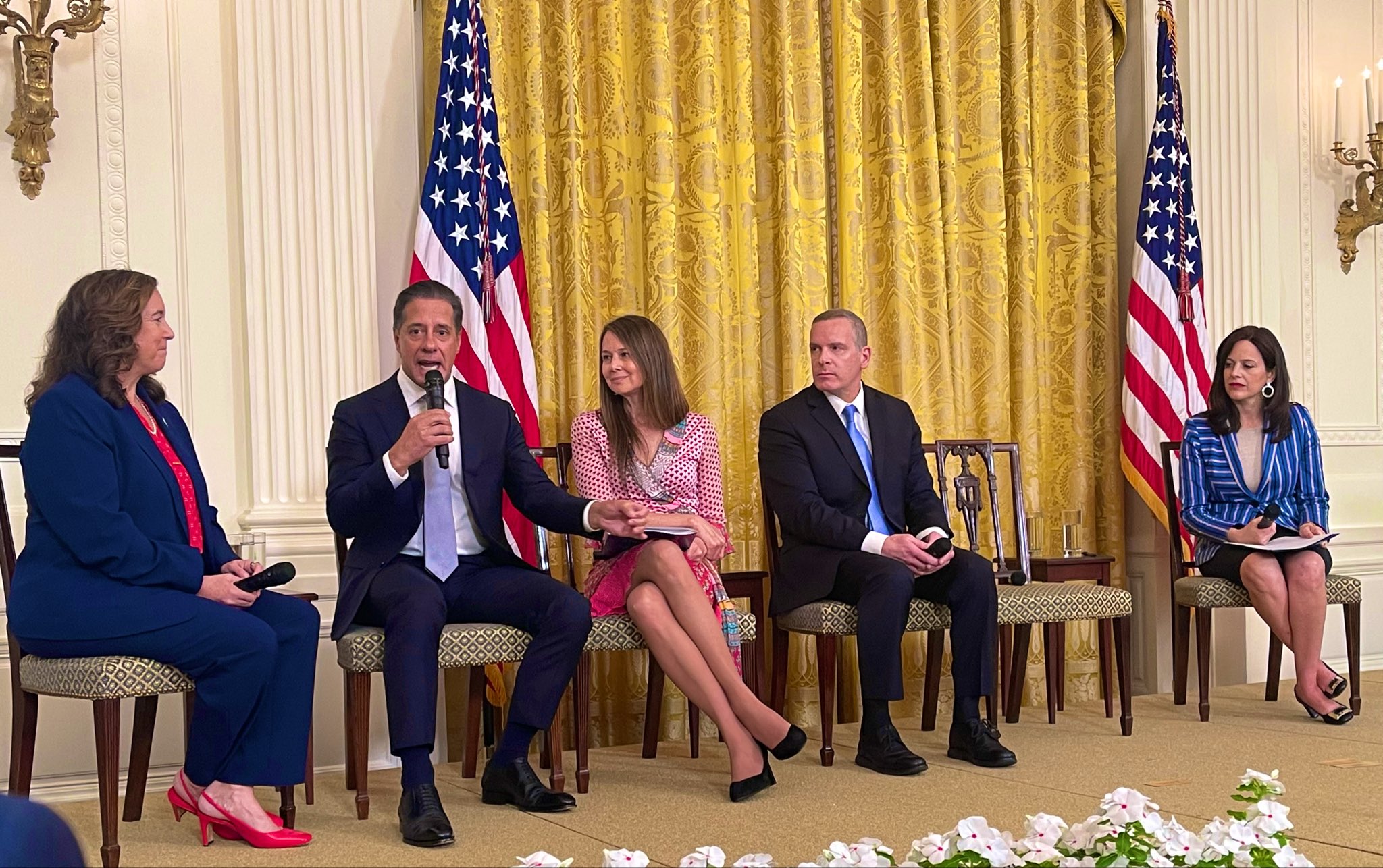
U.S. school cybersecurity
Director of CISA Jen Easterly addressing US school cybersecurity (Photo: Jen Easterly/ Twitter)

The White House has backed students and their data security by introducing a novel initiative for K-12 school cybersecurity.

The initiative highlighted instances of sensitive information belonging to students and staff being exposed publicly. To address this leaders, educators, and private sector companies discussed and offered added resources to protect American schools.

What the K-12 U.S. schools cybersecurity initiative entailed

  1. A proposal for a program under the Universal Service Fund was made that will provide up to $200 million over three years for cybersecurity in US schools
  2. Establishment of a Government Coordinating Council (GCC) to coordinate activities, policies and communications. The communication between federal, state, local, tribal, and territorial education leaders can help for better collaboration for US school cybersecurity.
  3. Protection of schools and districts from threats and supporting them in responding to and recovering from cyber attacks.
  4. The release of the K-12 Digital Infrastructure Brief: Defensible & Resilient by the U.S. Department of Education and CISA for education leaders to build digital infrastructure for education.
  5. The release of Adequate and Future-Proof and Privacy-Enhancing, Interoperable and Useful to create further resources to create awareness towards US school cybersecurity.
  6. Updated resources for perusal offered by the FBI and the National Guard Bureau with guidance related to reporting cyber incidents.

Cybersecurity companies have also come forward to help secure school systems and offer tools to prevent threats.

Amazon will be providing a number of free services including security reviews to the U.S. education technology companies providing applications to K-12 schools.

The following companies have offered to help with the best solutions for US school cybersecurity –

  1. Amazon Web Services offering $20 million for a K-12 grant program, free training for K-12 IT staff, and no-cost cyber attack assistance through its customer incident response team.
  2. Cloudflare to offer a suite of free Zero Trust cybersecurity solutions through Project Cybersafe Schools. This solution will help public school districts under 2,500 students with safer internet browsing and email security.
  3. PowerSchool, that provides cloud-based software to offer free and subsidized courses, training, tools, and resources to all U.S. schools and districts.
  4. The K-12 Cybersecurity Guidebook offered by Google for schools to maintain security of their Google software apps and hardware.
  5. The learning platform company D2L to offer new cybersecurity courses and security reviews for the core D2L integration partners.

In an effort to provide results, response, and relief to students, guardians, and organizations, the US school cybersecurity initiative by the White House is considered a boon in the present time.

It is imperative that school authorities make the most of the solutions, funding, and courses made available by the government, legal bodies, and cybersecurity firms.

It is time cybersecurity in US schools is given an overhaul with an opportunity to grow. It is expected from organizations, educators, and students to take it up in full spirit.

This initiative can pave the path for schools and governments across the globe so they secure educational institutions and student data from hackers and ransomware groups.

When victims of data breaches know where to look for help and whom to call for guidance, the pain in coping with the incident subsides.

The initiative by the US government for K-12 school cybersecurity bears witness to the commitment toward their people and security.

Share this:

  • Share on LinkedIn (Opens in new window) LinkedIn
  • Share on Reddit (Opens in new window) Reddit
  • Share on X (Opens in new window) X
  • Share on Facebook (Opens in new window) Facebook
  • More
  • Email a link to a friend (Opens in new window) Email
  • Share on WhatsApp (Opens in new window) WhatsApp

Related

Tags: Biden Harris administrationGovernment Coordinating CouncilK-12 Digital infrastructureThe Cyber ExpressThe Cyber Express NewsUS school cybersecurityUS student data privacy
Previous Post

US Cyber Investigation Includes Microsoft’s Involvement in Data Breach

Next Post

The Advancement and Perils of Peer-to-Peer Payment Fraud

Next Post
Peer-to-Peer Payment Fraud

The Advancement and Perils of Peer-to-Peer Payment Fraud

Q1 2026 Threat Reports

❮ ❯
Cyble-Vision


Follow Us On Google News

Categories

  • Privacy Statement
  • Terms of Use
  • Write For Us

© 2026 The Cyber Express - Cybersecurity News and Magazine.

Welcome Back!

Login to your account below

Forgotten Password?

Retrieve your password

Please enter your username or email address to reset your password.

Log In

Add New Playlist

No Result
View All Result
  • Magazine
  • Firewall Daily
  • Essentials
    • Regulations
    • Compliance
    • Governance
    • Policy Updates
  • Knowledge Hub
  • Features
    • Cyber Warfare
    • Espionage
    • Workforce
      • Learning & Development
  • Business
    • Startups
    • Mergers & Aquisitions
    • Partnerships
    • Appointments
    • Budgets
    • Research
      • Whitepapers
      • Sponsored Content
      • Market Reports
    • Interviews
      • Podcast
  • Events
    • Conference
    • Webinar
    • Endorsed Events
  • Advisory Board

© 2026 The Cyber Express - Cybersecurity News and Magazine.

-
00:00
00:00

Queue

Update Required Flash plugin
-
00:00
00:00