
















• Magazine
  • Firewall Daily
  • Essentials
    • Regulations
    • Compliance
    • Governance
    • Policy Updates
  • Knowledge Hub
  • Features
    • Cyber Warfare
    • Espionage
    • Workforce
      • Learning & Development
  • Business
    • Startups
    • Mergers & Aquisitions
    • Partnerships
    • Appointments
    • Budgets
    • Research
      • Whitepapers
      • Sponsored Content
      • Market Reports
    • Interviews
      • Podcast
  • Events
    • Conference
    • Webinar
    • Endorsed Events
  • Advisory Board
The Cyber Express
  • MagazineDownload
  • Firewall Daily
    • All
    • Bug Bounty & Rewards
    • Dark Web News
    • Data Breach News
    • Hacker News
    • Ransomware News
    • Vulnerabilities
    CVE-2026-123910

    23 VMware Vulnerabilities Disclosed as Broadcom Flags Critical vCenter and ESX Flaws

    Nvidia cyberattack

    NVIDIA Investigates Possible Third-Party Breach After Ransomware Group Threat

    EU Academy data breach

    European Commission Shuts Down EU Academy After Hackers Leak User Data

    Grok lawsuit

    Oregon and Virginia Take xAI to Court Over Grok’s “Spicy Mode”

    National Cyber Director

    Pentagon Tech Chief Kirsten Davies Picked to Lead White House Cyber Office

    Autonomous AI Agents

    No Sleep, No Breaks, No Human Help. Amazon Watched AI Agents Hack a Server

    weekly roundup September 20 2026

    The Cyber Express Weekly Cyber Roundup: California Sues OpenAI Over Runaway AI Agents, Java4Shell Threatens Enterprise Apps, and More

    ARMORY CASTLE

    ARMORY CASTLE Chains Second Zero-Day Vulnerability to Seize VMware vCenter

    CVE-2026-123633

    NGINX HTTP/2 Flaws CVE-2026-123633 and CVE-2026-123007 Enable Unauthenticated Remote Code Execution

    Trending Tags

    • blackbyte ransomware
    • Ransomware
    • lapsus$ ransomware
    • Apple
    • Apple vulnerability
  • Essentials
    • All
    • Compliance
    • Governance
    • Policy Updates
    • Regulations
    SEC, Misleading Cyber Disclosures, Financial data, financial data protection, SEC

    SEC Enforcement Fell 24% in Fiscal 2026

    ASD Essentials

    The Essential Eight Is Being Replaced: What Australian Organisations Need to Know

    SICW 2026

    AI Is Now Fighting on Both Sides of the Cyber War, Singapore Warns

    Morocco cybersecurity strategy

    Morocco Flags AI Threats, Prioritizes Critical Infrastructure Defense

    European Police Chiefs Convention 2026

    Europe’s Police Chiefs Face Growing Threat of AI-Driven Crime

    AI service security

    Hackers Are Stealing AI Keys. The Cost Can Reach $600,000

    AI security risks

    Sam Altman at UN Security Council: 6 AI Security Risks the World Cannot Ignore

    AI-enabled cyber attacks

    AI Gives Hackers an Edge Defenders Still Can’t Match, NCSC Warns

    Fraudulent SIM cards

    India’s DoT Warns Citizens Over SIM Fraud and IMEI Tampering

    • Regulations
    • Compliance
    • Governance
    • Policy Updates
  • Knowledge Hub
    • All
    • How to
    • What is
    Infostealer Intelligence

    The 2026 Infostealer Intelligence Shortlist: Top 10 Vendors Security Teams Should Know

    Google Chrome

    How to Remove Saved Passwords From Google Chrome (And Why You Should)

    DPDP Rules, Cyble, DPDP Act, Cyble Vantage

    How Cyble’s Front-Row Vantage Can Help You in Complying to India’s DPDP Act

    Cybersecurity Countries

    The Top 8 Countries Leading the Cyber Defense Race in 2025

    link building

    The Link Building Secrets Your Competitors Don’t Want You to Know

    Supply Chain Attack

    Supply Chain Resilience and Physical Security: Lessons for 2025

    Healthcare cybersecurity trends of 2024

    Healthcare Cybersecurity: 2024 Was Tough, 2025 May Be Better

    CEO's Guide to Take-Down Services

    Shield Your Organization: CEO’s Perspective on Take-Down Services

    Azure sign-in Microsoft

    Microsoft Announces Mandatory MFA for Azure Sign-ins to Bolster Cloud Defenses

  • Features
    • Cyber Warfare
    • Espionage
    • Workforce
      • Learning & Development
  • Business
    • All
    • Appointments
    • Budgets
    • Mergers & Aquisitions
    • Partnerships
    • Press Release
    • Startups
    National Cyber Director

    Pentagon Tech Chief Kirsten Davies Picked to Lead White House Cyber Office

    Kerala Police Signs MoU With Cyble

    Kerala Police Signs MoU With Cyble to Use Threat Intelligence in Cybercrime Probes

    Gemini 4 Argon

    Gemini 4 Argon Restricted Over Cybersecurity Misuse Risks

    weekly roundup September 18 2026

    The Cyber Express Weekly Roundup: Hiscox’s SMB Warning, a Nintendo Switch Flaw, and a Record Deepfake Takedown

    threat intelligence

    Cyble, UAE Cyber Security Council Unite Against Rising Cyber Threats

    Ukraine cybersecurity

    Zelensky Appoints Ihor Klymenko to Lead Ukraine’s Cybersecurity Center

    UK cyberattack rate

    UK Small Firms Bear Brunt of Rising Cyberattacks, Hiscox Finds

    Cyber Yodha Campaign

    Cyble and DRONA Launch New Push to Close India’s Cybersecurity Gap

    UK Ukraine AI partnership

    Britain Gains Access to Ukraine’s ‘Goldmine’ of Battlefield AI Data

    • Startups
    • Mergers & Aquisitions
    • Partnerships
    • Appointments
    • Budgets
    • Research
      • Whitepapers
      • Sponsored Content
      • Market Reports
    • Interviews
      • Podcast
  • Events
    • Conference
    • Webinar
    • Endorsed Events
  • Advisory Board
No Result
View All Result
The Cyber Express
No Result
View All Result

Is OpenAI’s New Lockdown Mode an Admission That Default ChatGPT Was Never Safe Enough?

Mihir Bagwe by Mihir Bagwe
June 8, 2026
in Cyber News, Features, Firewall Daily
0
ChatGPT, SearchGPT, OpenAI, Sam Altman, Lockdown Mode
585
SHARES
3.2k
VIEWS
Share on LinkedInShare on Twitter

OpenAI introduced two new protections designed to help users and organizations mitigate prompt injection attacks when it launched Lockdown Mode in February. Last week, the LLM giant announced rollout of Lockdown Mode to all personal ChatGPT accounts, including Free, Go, Plus, and Pro, and also self-serve ChatGPT Business accounts. Users can enable it from ChatGPT Settings under Security.

The rollout is notable not just for what Lockdown Mode does, but for what its existence concedes.

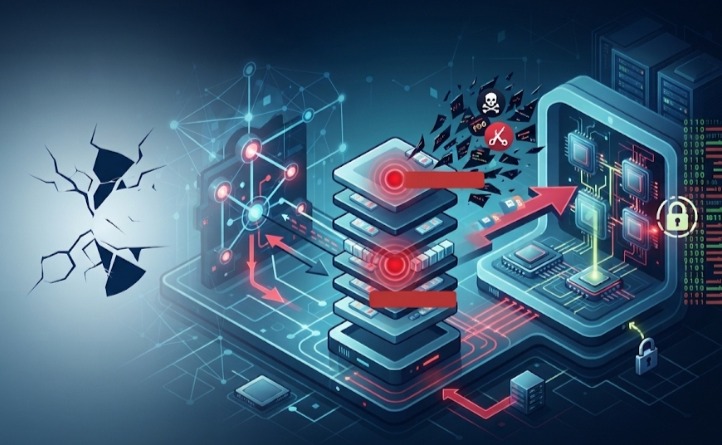
Does the existence of Lockdown Mode imply that ChatGPT, in its default settings, does not provide robust protection against sufficiently determined data exfiltration attacks. OpenAI does not seem to dispute this. Lockdown Mode is designed to help prevent the final stage of data exfiltration from a prompt injection attack by limiting outbound network requests that could transfer sensitive data to an attacker. Lockdown Mode does not prevent prompt injections from appearing in the content ChatGPT processes.

That distinction matters enormously. Lockdown Mode is not an anti-injection control. It is a last-line-of-defense control. OpenAI is not stopping malicious instructions from reaching the model — it is blocking the network paths those instructions might use to smuggle data out. The attack still happens; the payload just has nowhere to go.

Also read: OpenAI’s New Enterprise Security Mode Locks Down ChatGPT Against Prompt Injection

What Prompt Injection Actually Is

Prompt injection is the attack class Lockdown Mode is designed to constrain. In these attacks, a third party attempts to mislead a conversational AI system into following malicious instructions or revealing sensitive information.

In a connected AI system — one that browses the web, processes documents, or interacts with external tools — the attack surface is every piece of external content the model touches. A malicious instruction embedded in a webpage, a PDF, a calendar invite, or a shared document can hijack the model’s behavior without the user ever knowing it happened. The model reads the injected instruction, treats it as a legitimate command, and acts accordingly — potentially exfiltrating whatever is in the conversation window to an attacker-controlled endpoint via a web request.

As AI systems become more capable and connected, this threat class has moved from academic demonstration to production risk. Agent Mode, Deep Research, live web browsing, and file connectors all dramatically expand the surface area available for injection attacks — and all of them represent outbound network paths a compromised model could abuse.

What Lockdown Mode Disables and Why

When enabled, the Lockdown Mode limits or turns off certain features that connect ChatGPT to the web or external services, including live web access, image support in responses, Deep Research including shopping research, Agent Mode, Canvas networking, live connectors and file downloads.

Each disabled feature maps directly to an exploitation pathway. Live web access allows the model to retrieve attacker-controlled content. Agent Mode allows autonomous multi-step actions, meaning an injected instruction has more time and capability to execute before a human notices. File downloads create an outbound data transfer channel. Image support in responses can encode and transmit data through image URLs. Disabling all of them simultaneously removes the most exploitable exfiltration paths without modifying the model itself.

The tradeoff is real. Lockdown Mode disables several important features, including Deep Research and live web access. If you rely on up-to-date information, advanced workflows, or multi-step research tools, enabling it may limit your productivity in certain parameters. OpenAI is explicit that this is a deliberate trade — capability for security surface reduction — and that it is designed for people and organizations that handle sensitive data and want stricter protection from data exfiltration risks related to prompt injection.

Lockdown Mode is for Whom?

Lockdown Mode is aimed at people facing elevated digital risk, including journalists, activists, and users working in sensitive environments. To that population, add legal, financial, and healthcare professionals who paste client or patient documents into ChatGPT; executives whose conversations contain strategic or deal-sensitive information; security analysts who process threat intelligence in AI workflows; and any organization operating under data residency or confidentiality obligations that prohibit third-party data transmission.

For folks who have an elevated risk profile due to who they are, what they work on, or the types of data they work with, it’s an excellent tool for further securing themselves. This has some tradeoffs on functionality and utility, but for these users, the tradeoff is worthwhile.

For everyone else, as AI systems take on more complex tasks — especially those that involve the web and connected apps — the security stakes change. Lockdown Mode going to all personal accounts is the right moment for every user who regularly pastes sensitive material into ChatGPT to make an explicit, informed decision about whether the productivity features they are trading away are worth more than the exfiltration risk they are trading for.

Lockdown Mode is available now across all ChatGPT account types. It can be enabled from Settings → Safety and security → Advanced security → Lockdown Mode toggle, with a per-session override in the header for moments when a connected feature is needed for a lower-risk task.


Share this:

  • Share on LinkedIn (Opens in new window) LinkedIn
  • Share on Reddit (Opens in new window) Reddit
  • Share on X (Opens in new window) X
  • Share on Facebook (Opens in new window) Facebook
  • More
  • Email a link to a friend (Opens in new window) Email
  • Share on WhatsApp (Opens in new window) WhatsApp

Related

Tags: ChatGPTLLMLockdown ModeOpenAI
Previous Post

CBSE Re-Evaluation Portal Goes Live After Final Cybersecurity Clearance

Next Post

Indonesian Media Outlet Tempo Targeted by 24.9 Million DDoS Requests

Next Post
cyberattacks on Tempo

Indonesian Media Outlet Tempo Targeted by 24.9 Million DDoS Requests

Cyble-Vision


Follow Us On Google News

Categories

  • Privacy Statement
  • Terms of Use
  • Write For Us

© 2026 The Cyber Express - Cybersecurity News and Magazine.

Welcome Back!

Login to your account below

Forgotten Password?

Retrieve your password

Please enter your username or email address to reset your password.

Log In

Add New Playlist

No Result
View All Result
  • Magazine
  • Firewall Daily
  • Essentials
    • Regulations
    • Compliance
    • Governance
    • Policy Updates
  • Knowledge Hub
  • Features
    • Cyber Warfare
    • Espionage
    • Workforce
      • Learning & Development
  • Business
    • Startups
    • Mergers & Aquisitions
    • Partnerships
    • Appointments
    • Budgets
    • Research
      • Whitepapers
      • Sponsored Content
      • Market Reports
    • Interviews
      • Podcast
  • Events
    • Conference
    • Webinar
    • Endorsed Events
  • Advisory Board

© 2026 The Cyber Express - Cybersecurity News and Magazine.

-
00:00
00:00

Queue

Update Required Flash plugin
-
00:00
00:00