














• Magazine
  • Firewall Daily
  • Essentials
    • Regulations
    • Compliance
    • Governance
    • Policy Updates
  • Knowledge Hub
  • Features
    • Cyber Warfare
    • Espionage
    • Workforce
      • Learning & Development
  • Business
    • Startups
    • Mergers & Aquisitions
    • Partnerships
    • Appointments
    • Budgets
    • Research
      • Whitepapers
      • Sponsored Content
      • Market Reports
    • Interviews
      • Podcast
  • Events
    • Conference
    • Webinar
    • Endorsed Events
  • Advisory Board
The Cyber Express
  • MagazineDownload
  • Firewall Daily
    • All
    • Bug Bounty & Rewards
    • Dark Web News
    • Data Breach News
    • Hacker News
    • Ransomware News
    • Vulnerabilities
    Jensen Huang resigns

    Jensen Huang Exits Nvidia Days After the Board Said It Backed Him

    FaceStealer

    US Disrupts North Korea’s FaceStealer Campaign, Targets $1.2 Billion in Stolen Crypto

    SignDrop zero-day exploit

    New SignDrop Exploit Claims SYSTEM Access on Windows Through CLFS

    Microsoft 365 Outage

    Why Did Outlook Go Down? Microsoft Traced It to Its Own Servers

    WorkOS, AI Agent, Prompt Injection, Grok, Grok AI, Gemini, Fraud, Agentic AI, AI-assisted Cyberattacks

    WorkOS Says a Researcher’s Runaway AI Pentest Agent Copied Customer Sales Records

    Nvidia board investigation

    Why Is Nvidia Investigating Its Own CEO, and Can the Board Remove Him?

    weekly roundup

    The Cyber Express Weekly Roundup: FBI Blames North Korea for $6B Binance Hack, Hackers Turn Up the Heat on Europe’s Fridges and More

    Stockal cyberattack

    Stockal Confirms Unauthorized Trades in 13 Customer Accounts

    Alpine Linux servers

    Alpine Linux SSH Flaw Lets Attackers Log In Without a Password

    Trending Tags

    • blackbyte ransomware
    • Ransomware
    • lapsus$ ransomware
    • Apple
    • Apple vulnerability
  • Essentials
    • All
    • Compliance
    • Governance
    • Policy Updates
    • Regulations
    SEC, Misleading Cyber Disclosures, Financial data, financial data protection, SEC

    SEC Enforcement Fell 24% in Fiscal 2026

    ASD Essentials

    The Essential Eight Is Being Replaced: What Australian Organisations Need to Know

    SICW 2026

    AI Is Now Fighting on Both Sides of the Cyber War, Singapore Warns

    Morocco cybersecurity strategy

    Morocco Flags AI Threats, Prioritizes Critical Infrastructure Defense

    European Police Chiefs Convention 2026

    Europe’s Police Chiefs Face Growing Threat of AI-Driven Crime

    AI service security

    Hackers Are Stealing AI Keys. The Cost Can Reach $600,000

    AI security risks

    Sam Altman at UN Security Council: 6 AI Security Risks the World Cannot Ignore

    AI-enabled cyber attacks

    AI Gives Hackers an Edge Defenders Still Can’t Match, NCSC Warns

    Fraudulent SIM cards

    India’s DoT Warns Citizens Over SIM Fraud and IMEI Tampering

    • Regulations
    • Compliance
    • Governance
    • Policy Updates
  • Knowledge Hub
    • All
    • How to
    • What is
    Infostealer Intelligence

    The 2026 Infostealer Intelligence Shortlist: Top 10 Vendors Security Teams Should Know

    Google Chrome

    How to Remove Saved Passwords From Google Chrome (And Why You Should)

    DPDP Rules, Cyble, DPDP Act, Cyble Vantage

    How Cyble’s Front-Row Vantage Can Help You in Complying to India’s DPDP Act

    Cybersecurity Countries

    The Top 8 Countries Leading the Cyber Defense Race in 2025

    link building

    The Link Building Secrets Your Competitors Don’t Want You to Know

    Supply Chain Attack

    Supply Chain Resilience and Physical Security: Lessons for 2025

    Healthcare cybersecurity trends of 2024

    Healthcare Cybersecurity: 2024 Was Tough, 2025 May Be Better

    CEO's Guide to Take-Down Services

    Shield Your Organization: CEO’s Perspective on Take-Down Services

    Azure sign-in Microsoft

    Microsoft Announces Mandatory MFA for Azure Sign-ins to Bolster Cloud Defenses

  • Features
    • Cyber Warfare
    • Espionage
    • Workforce
      • Learning & Development
  • Business
    • All
    • Appointments
    • Budgets
    • Mergers & Aquisitions
    • Partnerships
    • Press Release
    • Startups
    Kerala Police Signs MoU With Cyble

    Kerala Police Signs MoU With Cyble to Use Threat Intelligence in Cybercrime Probes

    Gemini 4 Argon

    Gemini 4 Argon Restricted Over Cybersecurity Misuse Risks

    weekly roundup September 18 2026

    The Cyber Express Weekly Roundup: Hiscox’s SMB Warning, a Nintendo Switch Flaw, and a Record Deepfake Takedown

    threat intelligence

    Cyble, UAE Cyber Security Council Unite Against Rising Cyber Threats

    Ukraine cybersecurity

    Zelensky Appoints Ihor Klymenko to Lead Ukraine’s Cybersecurity Center

    UK cyberattack rate

    UK Small Firms Bear Brunt of Rising Cyberattacks, Hiscox Finds

    Cyber Yodha Campaign

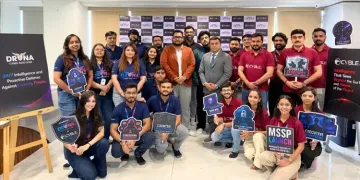
    Cyble and DRONA Launch New Push to Close India’s Cybersecurity Gap

    UK Ukraine AI partnership

    Britain Gains Access to Ukraine’s ‘Goldmine’ of Battlefield AI Data

    Hims & Hers lawsuit

    FTC Sues Hims & Hers Over Health Data Privacy, Billing Practices

    • Startups
    • Mergers & Aquisitions
    • Partnerships
    • Appointments
    • Budgets
    • Research
      • Whitepapers
      • Sponsored Content
      • Market Reports
    • Interviews
      • Podcast
  • Events
    • Conference
    • Webinar
    • Endorsed Events
  • Advisory Board
No Result
View All Result
  • MagazineDownload
  • Firewall Daily
    • All
    • Bug Bounty & Rewards
    • Dark Web News
    • Data Breach News
    • Hacker News
    • Ransomware News
    • Vulnerabilities
    Jensen Huang resigns

    Jensen Huang Exits Nvidia Days After the Board Said It Backed Him

    FaceStealer

    US Disrupts North Korea’s FaceStealer Campaign, Targets $1.2 Billion in Stolen Crypto

    SignDrop zero-day exploit

    New SignDrop Exploit Claims SYSTEM Access on Windows Through CLFS

    Microsoft 365 Outage

    Why Did Outlook Go Down? Microsoft Traced It to Its Own Servers

    WorkOS, AI Agent, Prompt Injection, Grok, Grok AI, Gemini, Fraud, Agentic AI, AI-assisted Cyberattacks

    WorkOS Says a Researcher’s Runaway AI Pentest Agent Copied Customer Sales Records

    Nvidia board investigation

    Why Is Nvidia Investigating Its Own CEO, and Can the Board Remove Him?

    weekly roundup

    The Cyber Express Weekly Roundup: FBI Blames North Korea for $6B Binance Hack, Hackers Turn Up the Heat on Europe’s Fridges and More

    Stockal cyberattack

    Stockal Confirms Unauthorized Trades in 13 Customer Accounts

    Alpine Linux servers

    Alpine Linux SSH Flaw Lets Attackers Log In Without a Password

    Trending Tags

    • blackbyte ransomware
    • Ransomware
    • lapsus$ ransomware
    • Apple
    • Apple vulnerability
  • Essentials
    • All
    • Compliance
    • Governance
    • Policy Updates
    • Regulations
    SEC, Misleading Cyber Disclosures, Financial data, financial data protection, SEC

    SEC Enforcement Fell 24% in Fiscal 2026

    ASD Essentials

    The Essential Eight Is Being Replaced: What Australian Organisations Need to Know

    SICW 2026

    AI Is Now Fighting on Both Sides of the Cyber War, Singapore Warns

    Morocco cybersecurity strategy

    Morocco Flags AI Threats, Prioritizes Critical Infrastructure Defense

    European Police Chiefs Convention 2026

    Europe’s Police Chiefs Face Growing Threat of AI-Driven Crime

    AI service security

    Hackers Are Stealing AI Keys. The Cost Can Reach $600,000

    AI security risks

    Sam Altman at UN Security Council: 6 AI Security Risks the World Cannot Ignore

    AI-enabled cyber attacks

    AI Gives Hackers an Edge Defenders Still Can’t Match, NCSC Warns

    Fraudulent SIM cards

    India’s DoT Warns Citizens Over SIM Fraud and IMEI Tampering

    • Regulations
    • Compliance
    • Governance
    • Policy Updates
  • Knowledge Hub
    • All
    • How to
    • What is
    Infostealer Intelligence

    The 2026 Infostealer Intelligence Shortlist: Top 10 Vendors Security Teams Should Know

    Google Chrome

    How to Remove Saved Passwords From Google Chrome (And Why You Should)

    DPDP Rules, Cyble, DPDP Act, Cyble Vantage

    How Cyble’s Front-Row Vantage Can Help You in Complying to India’s DPDP Act

    Cybersecurity Countries

    The Top 8 Countries Leading the Cyber Defense Race in 2025

    link building

    The Link Building Secrets Your Competitors Don’t Want You to Know

    Supply Chain Attack

    Supply Chain Resilience and Physical Security: Lessons for 2025

    Healthcare cybersecurity trends of 2024

    Healthcare Cybersecurity: 2024 Was Tough, 2025 May Be Better

    CEO's Guide to Take-Down Services

    Shield Your Organization: CEO’s Perspective on Take-Down Services

    Azure sign-in Microsoft

    Microsoft Announces Mandatory MFA for Azure Sign-ins to Bolster Cloud Defenses

  • Features
    • Cyber Warfare
    • Espionage
    • Workforce
      • Learning & Development
  • Business
    • All
    • Appointments
    • Budgets
    • Mergers & Aquisitions
    • Partnerships
    • Press Release
    • Startups
    Kerala Police Signs MoU With Cyble

    Kerala Police Signs MoU With Cyble to Use Threat Intelligence in Cybercrime Probes

    Gemini 4 Argon

    Gemini 4 Argon Restricted Over Cybersecurity Misuse Risks

    weekly roundup September 18 2026

    The Cyber Express Weekly Roundup: Hiscox’s SMB Warning, a Nintendo Switch Flaw, and a Record Deepfake Takedown

    threat intelligence

    Cyble, UAE Cyber Security Council Unite Against Rising Cyber Threats

    Ukraine cybersecurity

    Zelensky Appoints Ihor Klymenko to Lead Ukraine’s Cybersecurity Center

    UK cyberattack rate

    UK Small Firms Bear Brunt of Rising Cyberattacks, Hiscox Finds

    Cyber Yodha Campaign

    Cyble and DRONA Launch New Push to Close India’s Cybersecurity Gap

    UK Ukraine AI partnership

    Britain Gains Access to Ukraine’s ‘Goldmine’ of Battlefield AI Data

    Hims & Hers lawsuit

    FTC Sues Hims & Hers Over Health Data Privacy, Billing Practices

    • Startups
    • Mergers & Aquisitions
    • Partnerships
    • Appointments
    • Budgets
    • Research
      • Whitepapers
      • Sponsored Content
      • Market Reports
    • Interviews
      • Podcast
  • Events
    • Conference
    • Webinar
    • Endorsed Events
  • Advisory Board
No Result
View All Result
The Cyber Express
No Result
View All Result

Ghost in the Shell: Null-AMSI Bypasses Security to Deploy AsyncRAT

Ashish Khaitan by Ashish Khaitan
February 21, 2025
in Firewall Daily, Cyber News, Dark Web News
0
AsyncRAT
585
SHARES
3.2k
VIEWS
Share on LinkedInShare on Twitter

Cyble Research and Intelligence Labs (CRIL) has uncovered a stealthy campaign that uses malicious LNK files disguised as seemingly innocent wallpapers to deliver AsyncRAT—an infamous remote access trojan (RAT).  

This attack chain is designed to exploit various vulnerabilities, utilizing sophisticated techniques to evade detection and achieve persistence on the victim’s system. With advanced evasion methods like Null-AMSI, this campaign has the potential to bypass traditional security measures, posing a cyber risk to users worldwide. 

Overview of the AsyncRAT Campaign 

Cyble Research and Intelligence Labs have traced the origins of this campaign to a Portuguese-speaking threat actor. Evidence in the form of comments and error messages within the malicious scripts indicates that the attackers are likely native to a Portuguese-speaking region, potentially leveraging this to avoid detection or forensic analysis.

AsyncRAT Campaign 
Infection chain (Source: Cyble)

The campaign’s infection method is deceptively simple: attackers exploit the victim’s interests by offering a wallpaper featuring popular characters like Sasuke Uchiha from Naruto—or other anime characters like Itachi Uchiha—through a malicious LNK shortcut. These LNK files, once executed, unleash a multi-stage malware attack, eventually deploying AsyncRAT for remote control of the victim’s machine.

Upon activation, the LNK file runs an obfuscated PowerShell script that connects to external servers to retrieve additional malicious payloads. These payloads execute directly in memory, ensuring that they don’t leave traces on the disk, making it harder for antivirus software to detect them. The payloads downloaded by these scripts are encrypted and compressed, further hindering security researchers from analyzing them.

The Role of Null-AMSI 

Null-AMSI 
Malicious LNK file (Source: Cyble)

One of the most concerning aspects of this campaign is the use of Null-AMSI, an open-source tool that allows the attackers to bypass the AMSI—an important security feature built into Windows to detect and block malicious scripts. Null-AMSI enables malware to evade detection by disabling AMSI and ETW. This tool is critical for the attackers as it ensures their payloads can execute without triggering security alerts. 

Using techniques such as reflection and native .NET functions, Null-AMSI manipulates memory in real-time to bypass AMSI protections. The attackers exploit these memory manipulations to patch key system functions, thus avoiding detection and allowing their malware to run freely in the background without being flagged by security software.

Infection Chain and Payload Delivery 

AsyncRAT campaign Sasuke
Lure Image (Source: Cyble)

The infection chain begins when the victim unknowingly executes the malicious LNK file, often disguised as a sasuke wallpaper.lnk. This file executes an obfuscated PowerShell script via the command line, which fetches a secondary payload from an external URL and executes it directly in memory. This initial payload is an important step in the infection chain, as it retrieves more files, including batch scripts responsible for ensuring the malware’s persistence. 

lure image 2
Lure Image 2 (Source: Cyble)

Once the malware payload is downloaded, it further obfuscates its actions by employing AES encryption and GZIP compression. This makes it extremely difficult for security solutions to detect the malware before it is executed. Upon successful decryption and decompression, the final stage of the malware deployment involves the AsyncRAT payload, which is responsible for giving the attacker full remote control over the compromised system.

Technical Deep Dive 

The attacker’s use of AsyncRAT is crucial to the campaign’s success. AsyncRAT allows the threat actor to steal sensitive data, install additional malware, and execute arbitrary commands on the victim’s machine. The final payload is carefully hidden within encrypted files, such as a sasuke wallpaper, which serves as the lure to distract the victim. The wallpaper file contains hidden Base64-encoded malicious content that activates in the background, ultimately delivering the AsyncRAT payload.

The output.bat file is a particularly important part of this attack. It is highly obfuscated and contains Base64-encoded PowerShell code that, when executed, retrieves another PowerShell script designed to bypass AMSI and ETW. This step is crucial in ensuring that the attack is not detected by traditional security tools. 

Once the malware executes, it alters the system’s memory protections and patches key system functions, effectively disabling the AMSI and ETW. This ensures that the malicious activity remains hidden from security programs, allowing the attackers to maintain control over the system.

Reflection Loading and Persistence 

The final step in the infection chain involves reflection loading, a technique where the malware executes code directly within PowerShell memory. This allows the attackers to inject malicious code into memory without writing it to disk, making detection even more difficult. The AsyncRAT loader ensures persistence by copying itself to the startup folder, ensuring that it runs every time the system starts.

Once the AsyncRAT payload is loaded, it establishes control over the victim’s system, allowing the attacker to remotely control the machine, steal data, install additional malware, or launch further attacks.

Bypassing Traditional Security Measures 

The campaign’s use of Null-AMSI and other advanced techniques demonstrates a growing trend in the cyber threat landscape: attackers are increasingly leveraging sophisticated tools to bypass traditional security measures. By exploiting vulnerabilities in PowerShell, AMSI, and ETW, the attackers are able to stealthily deploy AsyncRAT without triggering any security alerts. 

The encryption and compression techniques further complicate the analysis, as the malicious payloads are hidden until they are decrypted and executed dynamically. This makes it difficult for security tools to catch the attack before it is fully deployed. 

Conclusion 

This campaign highlights the growing sophistication of cyberattacks, where advanced evasion techniques, like Null-AMSI, allow attackers to bypass traditional security and stealthily execute malware like AsyncRAT.

To protect against these threats, users should avoid downloading files or clicking links from untrusted sources. Antivirus and endpoint solutions must detect AMSI bypass techniques, and PowerShell policies should restrict unauthorized scripts. Regular network monitoring and timely system updates are essential for patching vulnerabilities.

Organizations should also educate users about phishing, social engineering, and safe browsing to reduce the risk of such attacks. Cyble, a leader in AI-powered cybersecurity, provides advanced threat intelligence through its Cyble Vision platform. This enables real-time monitoring and proactive defense, helping organizations stay protected from cyber threats.

Share this:

  • Share on LinkedIn (Opens in new window) LinkedIn
  • Share on Reddit (Opens in new window) Reddit
  • Share on X (Opens in new window) X
  • Share on Facebook (Opens in new window) Facebook
  • More
  • Email a link to a friend (Opens in new window) Email
  • Share on WhatsApp (Opens in new window) WhatsApp

Related

Tags: AsyncRATItachi UchihaNull-AMSIremote access trojanSasuke UchihaThe Cyber ExpressThe Cyber Express News
Previous Post

Improper Certificate Validation in RadiAnt DICOM Viewer Puts Healthcare Systems at Risk

Next Post

Bybit ETH Cold Wallet Compromised in Complex Cyberattack, Platform Secures Funds

Next Post
Bybit Cyberattack

Bybit ETH Cold Wallet Compromised in Complex Cyberattack, Platform Secures Funds

Q1 2026 Threat Reports

❮ ❯
Cyble-Vision


Follow Us On Google News

Categories

  • Privacy Statement
  • Terms of Use
  • Write For Us

© 2026 The Cyber Express - Cybersecurity News and Magazine.

Welcome Back!

Login to your account below

Forgotten Password?

Retrieve your password

Please enter your username or email address to reset your password.

Log In

Add New Playlist

No Result
View All Result
  • Magazine
  • Firewall Daily
  • Essentials
    • Regulations
    • Compliance
    • Governance
    • Policy Updates
  • Knowledge Hub
  • Features
    • Cyber Warfare
    • Espionage
    • Workforce
      • Learning & Development
  • Business
    • Startups
    • Mergers & Aquisitions
    • Partnerships
    • Appointments
    • Budgets
    • Research
      • Whitepapers
      • Sponsored Content
      • Market Reports
    • Interviews
      • Podcast
  • Events
    • Conference
    • Webinar
    • Endorsed Events
  • Advisory Board

© 2026 The Cyber Express - Cybersecurity News and Magazine.

-
00:00
00:00

Queue

Update Required Flash plugin
-
00:00
00:00