














• About Us
  • Contact Us
  • Editorial Calendar
  • Careers
  • The Cyber Express by Cyble Vulnerability Disclosure Policy
  • Cyble Trust Portal
The Cyber Express
  • MagazineDownload
  • Firewall Daily
    • All
    • Bug Bounty & Rewards
    • Dark Web News
    • Data Breach News
    • Hacker News
    • Ransomware News
    • Vulnerabilities
    Tanaka

    Tanaka Dominates Data Leak Landscape With 25 Leak Posts

    Employment scams

    FBI, LinkedIn Warn Job Seekers of Employment Scams and Exploitation

    Hermes AI Agent

    Hermes AI Agent Used in Cyberattack Targeting Thailand Finance Ministry

    Origin Energy data breach

    Origin Energy Data Breach Affects 900,000 Current and Former Customers

    ZTNA

    ZTNA Emerges as VPN Security Risks Put Federal Networks on Alert

    Tribeca Film Festival Data Breach

    Angelina Jolie, Robert De Niro Among Hollywood Stars Hit by Tribeca Data Leak

    GitLab vulnerability

    Two Old Oj Flaws Chained to Trigger GitLab Remote Code Execution

    Minnesota Medicaid fraud

    Four Men Admit to $2.2M Medicaid Fraud Scheme Using ChatGPT

    Gentlemen ransomware group

    How the Gentlemen Ransomware Group Built a Multi-Region Attack Machine in H1 2026

    Trending Tags

    • blackbyte ransomware
    • Ransomware
    • lapsus$ ransomware
    • Apple
    • Apple vulnerability
  • Essentials
    • All
    • Compliance
    • Governance
    • Policy Updates
    • Regulations
    India online safety rules

    India Tightens Social Media Rules to Protect Children Online

    global crypto investment scam

    Dutch Police Arrest Key Suspect in €100M Global Crypto Investment Scam

    Australia-India PACTS

    Australia-India PACTS to Deepen Cybersecurity and Tech Collaboration

    FBI Warns of Malicious Traffic

    FBI Warns of a Hidden Web Tactic Fueling Phishing and Ransomware

    Ukraine Joins EU Cybersecurity Reserve

    What Ukraine’s Entry Into the EU Cybersecurity Reserve Means

    UK social media ban

    UK Social Media Ban for Under-16s Could Take Effect by Spring 2027

    Ransomware Preparedness

    Ransomware Preparedness Must Be a Boardroom Priority: NCSC Chief

    AI legal assistants

    AI Heads to UK Courts, Bringing New Cybersecurity and Governance Challenges

    VerdantBamboo

    China’s VerdantBamboo Experimented With Three Re-Entries and Three Malware in a Company Network

    • Regulations
    • Compliance
    • Governance
    • Policy Updates
  • Knowledge Hub
    • All
    • How to
    • What is
    Google Chrome

    How to Remove Saved Passwords From Google Chrome (And Why You Should)

    DPDP Rules, Cyble, DPDP Act, Cyble Vantage

    How Cyble’s Front-Row Vantage Can Help You in Complying to India’s DPDP Act

    Cybersecurity Countries

    The Top 8 Countries Leading the Cyber Defense Race in 2025

    link building

    The Link Building Secrets Your Competitors Don’t Want You to Know

    Supply Chain Attack

    Supply Chain Resilience and Physical Security: Lessons for 2025

    Healthcare cybersecurity trends of 2024

    Healthcare Cybersecurity: 2024 Was Tough, 2025 May Be Better

    CEO's Guide to Take-Down Services

    Shield Your Organization: CEO’s Perspective on Take-Down Services

    Azure sign-in Microsoft

    Microsoft Announces Mandatory MFA for Azure Sign-ins to Bolster Cloud Defenses

    Signal Proxy, Signal, Signal Ban in Russia, Signal Ban in Venezuela, Bypass Signal Ban, How to Activate Signal Proxy, Signal Proxy Server

    How to Set Up Signal Proxy to Help Bypass Censorship in Russia and Venezuela

  • Features
    • Cyber Warfare
    • Espionage
    • Workforce
      • Learning & Development
  • Business
    • All
    • Appointments
    • Budgets
    • Mergers & Aquisitions
    • Partnerships
    • Press Release
    • Startups
    Australia-India PACTS

    Australia-India PACTS to Deepen Cybersecurity and Tech Collaboration

    Sunil Varkey

    Sunil Varkey Joins Hexaware Technologies as EVP & CISO

    AI Chip, Chip Security Act

    Congress Wants a GPS Tracker on Every Advanced AI Chip America Exports

    Fraud, Agentic AI, AI-assisted Cyberattacks

    Agentic AI Run Fraud Campaigns Earning 4.5 Times More: Interpol

    Stryker, Stryker Cyberattack, CISA, Handala

    Stryker Says Cyberattack Disrupted Processing, Manufacturing and Shipping

    INC Ransom, Western Critical Infrastructure, Critical infrastructure, Russian GRU, Russian Threat Actor, Sandworm, APT44, Energy Supply Chain, Energy Infrastructure

    INC Ransom’s Franchise Model Is Putting Critical Infrastructure on the Chopping Block

    Terrorist Cyberattacks, UAE Cyber Security Council

    UAE Blocked AI-Powered Terrorist Cyberattacks Targeting Critical Infrastructure

    Eurail Breach, Eurail

    Eurail Breach Escalates as Stolen Passport Data and IBANs Surface on Dark Web for Sale

    Discord teen-by-default settings

    Discord Introduces Stronger Teen Safety Controls Worldwide

    • Startups
    • Mergers & Aquisitions
    • Partnerships
    • Appointments
    • Budgets
    • Research
      • Whitepapers
      • Sponsored Content
      • Market Reports
    • Interviews
      • Podcast
  • Events
    • Conference
    • Webinar
    • Endorsed Events
  • Advisory Board
No Result
View All Result
  • MagazineDownload
  • Firewall Daily
    • All
    • Bug Bounty & Rewards
    • Dark Web News
    • Data Breach News
    • Hacker News
    • Ransomware News
    • Vulnerabilities
    Tanaka

    Tanaka Dominates Data Leak Landscape With 25 Leak Posts

    Employment scams

    FBI, LinkedIn Warn Job Seekers of Employment Scams and Exploitation

    Hermes AI Agent

    Hermes AI Agent Used in Cyberattack Targeting Thailand Finance Ministry

    Origin Energy data breach

    Origin Energy Data Breach Affects 900,000 Current and Former Customers

    ZTNA

    ZTNA Emerges as VPN Security Risks Put Federal Networks on Alert

    Tribeca Film Festival Data Breach

    Angelina Jolie, Robert De Niro Among Hollywood Stars Hit by Tribeca Data Leak

    GitLab vulnerability

    Two Old Oj Flaws Chained to Trigger GitLab Remote Code Execution

    Minnesota Medicaid fraud

    Four Men Admit to $2.2M Medicaid Fraud Scheme Using ChatGPT

    Gentlemen ransomware group

    How the Gentlemen Ransomware Group Built a Multi-Region Attack Machine in H1 2026

    Trending Tags

    • blackbyte ransomware
    • Ransomware
    • lapsus$ ransomware
    • Apple
    • Apple vulnerability
  • Essentials
    • All
    • Compliance
    • Governance
    • Policy Updates
    • Regulations
    India online safety rules

    India Tightens Social Media Rules to Protect Children Online

    global crypto investment scam

    Dutch Police Arrest Key Suspect in €100M Global Crypto Investment Scam

    Australia-India PACTS

    Australia-India PACTS to Deepen Cybersecurity and Tech Collaboration

    FBI Warns of Malicious Traffic

    FBI Warns of a Hidden Web Tactic Fueling Phishing and Ransomware

    Ukraine Joins EU Cybersecurity Reserve

    What Ukraine’s Entry Into the EU Cybersecurity Reserve Means

    UK social media ban

    UK Social Media Ban for Under-16s Could Take Effect by Spring 2027

    Ransomware Preparedness

    Ransomware Preparedness Must Be a Boardroom Priority: NCSC Chief

    AI legal assistants

    AI Heads to UK Courts, Bringing New Cybersecurity and Governance Challenges

    VerdantBamboo

    China’s VerdantBamboo Experimented With Three Re-Entries and Three Malware in a Company Network

    • Regulations
    • Compliance
    • Governance
    • Policy Updates
  • Knowledge Hub
    • All
    • How to
    • What is
    Google Chrome

    How to Remove Saved Passwords From Google Chrome (And Why You Should)

    DPDP Rules, Cyble, DPDP Act, Cyble Vantage

    How Cyble’s Front-Row Vantage Can Help You in Complying to India’s DPDP Act

    Cybersecurity Countries

    The Top 8 Countries Leading the Cyber Defense Race in 2025

    link building

    The Link Building Secrets Your Competitors Don’t Want You to Know

    Supply Chain Attack

    Supply Chain Resilience and Physical Security: Lessons for 2025

    Healthcare cybersecurity trends of 2024

    Healthcare Cybersecurity: 2024 Was Tough, 2025 May Be Better

    CEO's Guide to Take-Down Services

    Shield Your Organization: CEO’s Perspective on Take-Down Services

    Azure sign-in Microsoft

    Microsoft Announces Mandatory MFA for Azure Sign-ins to Bolster Cloud Defenses

    Signal Proxy, Signal, Signal Ban in Russia, Signal Ban in Venezuela, Bypass Signal Ban, How to Activate Signal Proxy, Signal Proxy Server

    How to Set Up Signal Proxy to Help Bypass Censorship in Russia and Venezuela

  • Features
    • Cyber Warfare
    • Espionage
    • Workforce
      • Learning & Development
  • Business
    • All
    • Appointments
    • Budgets
    • Mergers & Aquisitions
    • Partnerships
    • Press Release
    • Startups
    Australia-India PACTS

    Australia-India PACTS to Deepen Cybersecurity and Tech Collaboration

    Sunil Varkey

    Sunil Varkey Joins Hexaware Technologies as EVP & CISO

    AI Chip, Chip Security Act

    Congress Wants a GPS Tracker on Every Advanced AI Chip America Exports

    Fraud, Agentic AI, AI-assisted Cyberattacks

    Agentic AI Run Fraud Campaigns Earning 4.5 Times More: Interpol

    Stryker, Stryker Cyberattack, CISA, Handala

    Stryker Says Cyberattack Disrupted Processing, Manufacturing and Shipping

    INC Ransom, Western Critical Infrastructure, Critical infrastructure, Russian GRU, Russian Threat Actor, Sandworm, APT44, Energy Supply Chain, Energy Infrastructure

    INC Ransom’s Franchise Model Is Putting Critical Infrastructure on the Chopping Block

    Terrorist Cyberattacks, UAE Cyber Security Council

    UAE Blocked AI-Powered Terrorist Cyberattacks Targeting Critical Infrastructure

    Eurail Breach, Eurail

    Eurail Breach Escalates as Stolen Passport Data and IBANs Surface on Dark Web for Sale

    Discord teen-by-default settings

    Discord Introduces Stronger Teen Safety Controls Worldwide

    • Startups
    • Mergers & Aquisitions
    • Partnerships
    • Appointments
    • Budgets
    • Research
      • Whitepapers
      • Sponsored Content
      • Market Reports
    • Interviews
      • Podcast
  • Events
    • Conference
    • Webinar
    • Endorsed Events
  • Advisory Board
No Result
View All Result
The Cyber Express
No Result
View All Result
Home Cyber News

ZTNA Emerges as VPN Security Risks Put Federal Networks on Alert

Samiksha Jain by Samiksha Jain
July 28, 2026
in Cyber News, Firewall Daily
0
ZTNA
595
SHARES
3.3k
VIEWS
Share on LinkedInShare on Twitter

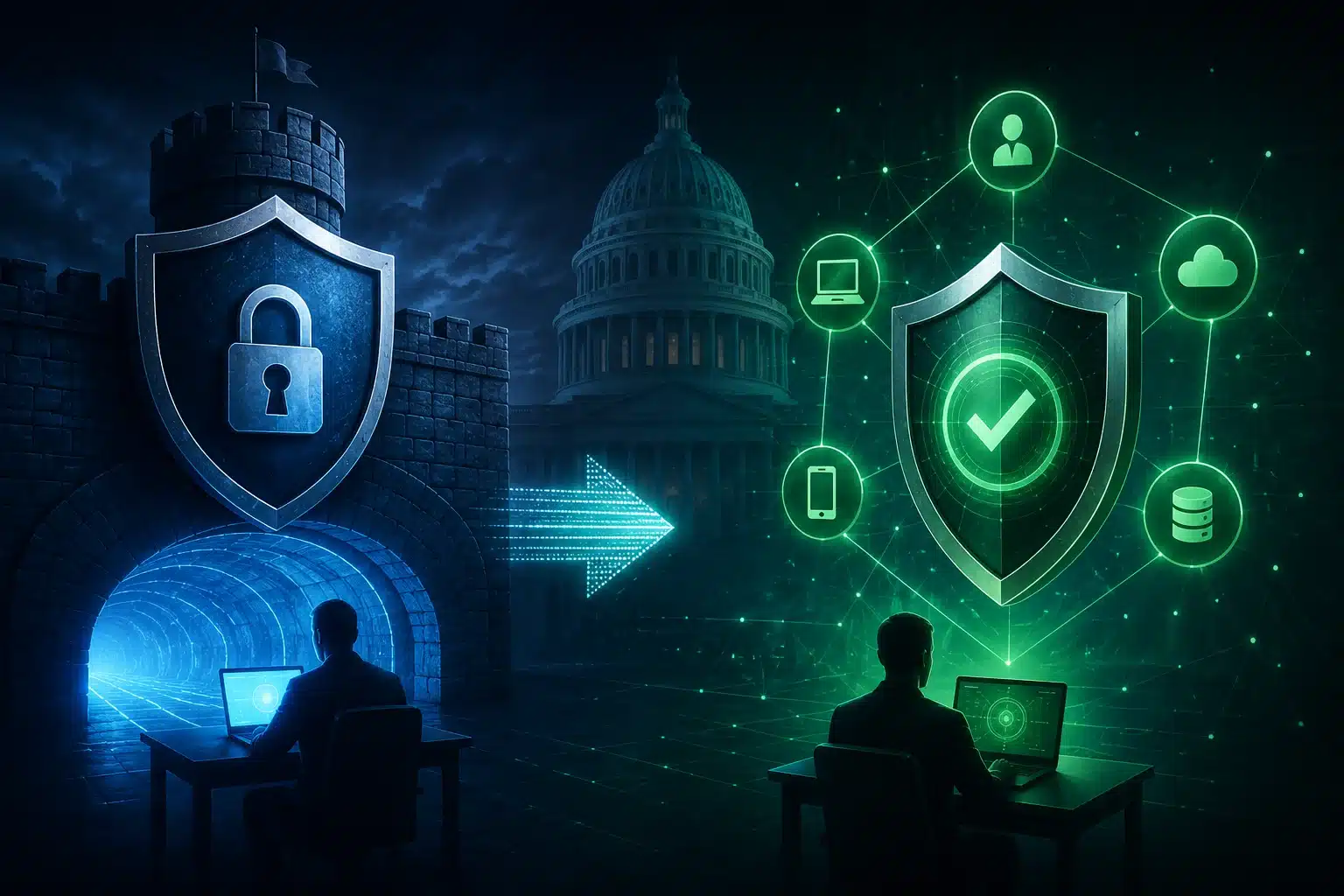
Federal agencies are facing growing pressure to evaluate ZTNA as an alternative to traditional VPN architectures, as cybersecurity threats expose weaknesses in internet-facing remote access systems. While VPNs provide encrypted connections for remote users, ZTNA follows a zero-trust model that continuously verifies users, devices, and access requests rather than assuming that authenticated users should receive broad network access.

The shift reflects a broader move away from the traditional “castle-and-moat” security model, where users inside an organization’s network are generally trusted while those outside must first pass through a security perimeter. As organizations adopted cloud services, mobile workforces, and geographically distributed infrastructure, this model became more difficult to maintain.

VPN Security Risks Drive ZTNA Considerations

A traditional VPN creates an encrypted connection between a remote user’s device and an organization’s internal network. The VPN appliance typically sits at the edge of the network and remains accessible from the public internet, where it authenticates users before granting access.

This architecture creates several security concerns. VPN appliances must maintain publicly accessible listening ports, making them discoverable and scannable by attackers. If vulnerabilities remain unpatched, those weaknesses can potentially be exploited remotely.

The memorandum also points to risks involving legacy code bases, key-exchange processes, and lateral movement. Attackers who obtain legitimate VPN credentials, exploit a vulnerability, or hijack an active session may gain broad access to the internal network. Unlike application-specific access, traditional VPN access operates at the network layer, potentially allowing an authenticated user to reach multiple permitted subnets.

Recent incidents involving vulnerable VPN appliances have further highlighted these concerns. The memorandum cites CISA directives addressing exploitation involving Pulse Connect Secure, VMware, and Ivanti Connect Secure products.

How ZTNA Changes Remote Access

ZTNA uses a “never trust, always verify” approach. Instead of treating users inside a network as inherently trusted, the architecture evaluates access requests based on factors such as identity, device health, user role, location, behavior, and risk.

The architecture is built around three core components: the Policy Engine, which makes access decisions; the Policy Administrator, which establishes or ends sessions; and the Policy Enforcement Point, which enables, monitors, and terminates connections.

Modern ZTNA deployments can also use outbound-only connections, removing the need for publicly accessible inbound listening ports. Rather than placing a user directly onto a corporate network, ZTNA can create an encrypted, application-specific micro-tunnel that limits the user to an authorized resource.

Continuous verification is another key difference. Access is not necessarily granted once and maintained for the entire session. Instead, policies can reassess access based on changing security and contextual signals.

ZTNA Also Brings New Security Risks

The shift to ZTNA does not eliminate cybersecurity risks. The memorandum identifies the control plane as a significant concern because it is responsible for authentication, device verification, policy enforcement, and connection management.

If an attacker compromises a ZTNA provider or components such as the Policy Engine or Policy Administrator, access decisions could potentially be manipulated. This could result in unauthorized access or prevent legitimate users from reaching resources.

Additional security controls, including cryptographic signing of device nodes, may help reduce the impact of a compromised ZTNA provider. The memorandum cites Tailscale Tailnet Lock as an example of this approach.

Federal Agencies Face a Complex Transition

For federal agencies, moving from VPN to ZTNA involves more than replacing one remote-access technology with another. Agencies must consider federal cybersecurity policies, budgets, legacy infrastructure, authentication requirements, and cryptographic standards.

NIST Special Publication 800-207 established foundational principles for Zero Trust Architecture, while Executive Order 14028 directed federal agencies toward zero trust, multifactor authentication, and secure cloud services. OMB Memorandum M-22-09 later established a federal zero-trust strategy centered on identity, devices, networks, applications and workloads, and data.

A transition could involve assessing existing VPN deployments, identifying applications and user groups, deploying ZTNA alongside VPN infrastructure, and progressively migrating applications. VPN infrastructure could then be decommissioned after applications and users are migrated and validated.

However, agencies must also account for recurring ZTNA subscription costs, legacy systems that may not support modern authentication, post-quantum cryptography requirements, NIST standards, FIPS requirements, and FedRAMP approval for cloud-based services.

The transition from VPN to ZTNA therefore represents a broader change in how organizations approach remote access. While ZTNA can reduce exposure associated with publicly accessible network perimeters and broad network-level access, agencies must evaluate the technology’s own control-plane risks, compliance requirements, costs, and technical limitations before making the shift.
Share this:

  • Share on LinkedIn (Opens in new window) LinkedIn
  • Share on Reddit (Opens in new window) Reddit
  • Share on X (Opens in new window) X
  • Share on Facebook (Opens in new window) Facebook
  • More
  • Email a link to a friend (Opens in new window) Email
  • Share on WhatsApp (Opens in new window) WhatsApp

Related

Tags: cybersecurity threatsThe Cyber ExpressThe Cyber Express NewsVPNVPN credentialsVPN Security RisksVulnerabilitiesZero Trust ModelZTNA Considerations
Previous Post

Angelina Jolie, Robert De Niro Among Hollywood Stars Hit by Tribeca Data Leak

Next Post

Origin Energy Data Breach Affects 900,000 Current and Former Customers

Next Post
Origin Energy data breach

Origin Energy Data Breach Affects 900,000 Current and Former Customers

Q1 2026 Threat Reports

❮ ❯
Cyble-Vision


Follow Us On Google News

Latest Cyber News

Tanaka
Firewall Daily

Tanaka Dominates Data Leak Landscape With 25 Leak Posts

July 28, 2026
Employment scams
Cyber News

FBI, LinkedIn Warn Job Seekers of Employment Scams and Exploitation

July 28, 2026
Hermes AI Agent
Cyber News

Hermes AI Agent Used in Cyberattack Targeting Thailand Finance Ministry

July 28, 2026
Origin Energy data breach
Firewall Daily

Origin Energy Data Breach Affects 900,000 Current and Former Customers

July 28, 2026

Categories

Web Stories

Do This on Telegram, Your Bank Account Will Become Zero
If You Install the iOS 18 Beta, Your iPhone Could Be Hacked
Cricket World Cup Ticketing Systems Under Cybersecurity
Cyber Threats and Online Ticket Scams During the NBA Finals
Biometric Data Security: Protecting Sensitive Information

About

The Cyber Express

#1 Trending Cybersecurity News and Magazine

The Cyber Express is a handbook for all stakeholders of the internet that provides information security professionals with the latest news, updates and knowledge they need to combat cyber threats.


Contact

For editorial queries: [email protected]

For marketing and Sales: [email protected]


Quick Links

  • About Us
  • Contact Us
  • Editorial Calendar
  • Careers
  • The Cyber Express by Cyble Vulnerability Disclosure Policy
  • Cyble Trust Portal

Our Address

We’re remote friendly, with office locations around the world:

San Francisco, Atlanta, Rome,
Dubai, Mumbai, Bangalore, Hyderabad,  Singapore, Jakarta, Sydney, and Melbourne


Headquarters:

The Cyber Express LLC
10080 North Wolfe Road, Suite SW3-200, Cupertino, CA, US 95014


India Office:

Cyber Express Media Network
HD-021, 4th Floor, C Wing, Building No.4. Nesco IT Park, WE Highway, Goregaon East, Mumbai, Maharashtra, India – 4000063

  • Privacy Statement
  • Terms of Use
  • Write For Us

© 2026 The Cyber Express - Cybersecurity News and Magazine.

Welcome Back!

Login to your account below

Forgotten Password?

Retrieve your password

Please enter your username or email address to reset your password.

Log In

Add New Playlist

No Result
View All Result
  • Magazine
  • Firewall Daily
  • Essentials
    • Regulations
    • Compliance
    • Governance
    • Policy Updates
  • Knowledge Hub
  • Features
    • Cyber Warfare
    • Espionage
    • Workforce
      • Learning & Development
  • Business
    • Startups
    • Mergers & Aquisitions
    • Partnerships
    • Appointments
    • Budgets
    • Research
      • Whitepapers
      • Sponsored Content
      • Market Reports
    • Interviews
      • Podcast
  • Events
    • Conference
    • Webinar
    • Endorsed Events
  • Advisory Board

© 2026 The Cyber Express - Cybersecurity News and Magazine.

Are you sure want to unlock this post?
Unlock left : 0
Are you sure want to cancel subscription?
-
00:00
00:00

Queue

Update Required Flash plugin
-
00:00
00:00
Do This on Telegram, Your Bank Account Will Become Zero If You Install the iOS 18 Beta, Your iPhone Could Be Hacked Cricket World Cup Ticketing Systems Under Cybersecurity Cyber Threats and Online Ticket Scams During the NBA Finals Biometric Data Security: Protecting Sensitive Information