










• Magazine
  • Firewall Daily
  • Essentials
    • Regulations
    • Compliance
    • Governance
    • Policy Updates
  • Knowledge Hub
  • Features
    • Cyber Warfare
    • Espionage
    • Workforce
      • Learning & Development
  • Business
    • Startups
    • Mergers & Aquisitions
    • Partnerships
    • Appointments
    • Budgets
    • Research
      • Whitepapers
      • Sponsored Content
      • Market Reports
    • Interviews
      • Podcast
  • Events
    • Conference
    • Webinar
    • Endorsed Events
  • Advisory Board
The Cyber Express
  • MagazineDownload
  • Firewall Daily
    • All
    • Bug Bounty & Rewards
    • Dark Web News
    • Data Breach News
    • Hacker News
    • Ransomware News
    • Vulnerabilities
    weekly roundup October 30

    The Cyber Express Weekly Roundup: Binance Hit by $6.3 Billion Security Incident, South Korea Busts AI-Powered Hacking Ring and More

    Binance Data Breach

    Binance Security Incident Affects $6.3 Billion in Crypto Assets, $3 Billion Frozen

    Cyberattacks on Japan

    Three Cyberattack Campaigns Target Japan, Exposing AI’s Growing Role

    Ukrainian ransomware affiliate

    Ransomware Attacks on Hospitals and Businesses Lead to 70-Month Sentence

    FBI seizes Virtualine

    FBI Seizes Bulletproof Hosting Domain Linked to Cybercrime

    ASD Cyber Threat Report

    Australian Data Breach Incidents Up 66% as AI Sharpens Scams

    INJ3CTOR3

    INJ3CTOR3 Malware Steals FreePBX Credentials, Enabling Toll Fraud After Cleanup

    Discoverable Servers

    Discord to Let Google Index Public Server Messages, Raising Privacy Concerns

    Columbia University cyberattack

    Columbia University Settles $16.1M Data Breach Lawsuit After 2025 Cyberattack

    Trending Tags

    • blackbyte ransomware
    • Ransomware
    • lapsus$ ransomware
    • Apple
    • Apple vulnerability
  • Essentials
    • All
    • Compliance
    • Governance
    • Policy Updates
    • Regulations
    ASD Essentials

    The Essential Eight Is Being Replaced: What Australian Organisations Need to Know

    SICW 2026

    AI Is Now Fighting on Both Sides of the Cyber War, Singapore Warns

    Morocco cybersecurity strategy

    Morocco Flags AI Threats, Prioritizes Critical Infrastructure Defense

    European Police Chiefs Convention 2026

    Europe’s Police Chiefs Face Growing Threat of AI-Driven Crime

    AI service security

    Hackers Are Stealing AI Keys. The Cost Can Reach $600,000

    AI security risks

    Sam Altman at UN Security Council: 6 AI Security Risks the World Cannot Ignore

    AI-enabled cyber attacks

    AI Gives Hackers an Edge Defenders Still Can’t Match, NCSC Warns

    Fraudulent SIM cards

    India’s DoT Warns Citizens Over SIM Fraud and IMEI Tampering

    EU cybersecurity incidents

    EU Cybersecurity Response Hampered by Critical Information Gaps

    • Regulations
    • Compliance
    • Governance
    • Policy Updates
  • Knowledge Hub
    • All
    • How to
    • What is
    Infostealer Intelligence

    The 2026 Infostealer Intelligence Shortlist: Top 10 Vendors Security Teams Should Know

    Google Chrome

    How to Remove Saved Passwords From Google Chrome (And Why You Should)

    DPDP Rules, Cyble, DPDP Act, Cyble Vantage

    How Cyble’s Front-Row Vantage Can Help You in Complying to India’s DPDP Act

    Cybersecurity Countries

    The Top 8 Countries Leading the Cyber Defense Race in 2025

    link building

    The Link Building Secrets Your Competitors Don’t Want You to Know

    Supply Chain Attack

    Supply Chain Resilience and Physical Security: Lessons for 2025

    Healthcare cybersecurity trends of 2024

    Healthcare Cybersecurity: 2024 Was Tough, 2025 May Be Better

    CEO's Guide to Take-Down Services

    Shield Your Organization: CEO’s Perspective on Take-Down Services

    Azure sign-in Microsoft

    Microsoft Announces Mandatory MFA for Azure Sign-ins to Bolster Cloud Defenses

  • Features
    • Cyber Warfare
    • Espionage
    • Workforce
      • Learning & Development
  • Business
    • All
    • Appointments
    • Budgets
    • Mergers & Aquisitions
    • Partnerships
    • Press Release
    • Startups
    Kerala Police Signs MoU With Cyble

    Kerala Police Signs MoU With Cyble to Use Threat Intelligence in Cybercrime Probes

    Gemini 4 Argon

    Gemini 4 Argon Restricted Over Cybersecurity Misuse Risks

    weekly roundup September 18 2026

    The Cyber Express Weekly Roundup: Hiscox’s SMB Warning, a Nintendo Switch Flaw, and a Record Deepfake Takedown

    threat intelligence

    Cyble, UAE Cyber Security Council Unite Against Rising Cyber Threats

    Ukraine cybersecurity

    Zelensky Appoints Ihor Klymenko to Lead Ukraine’s Cybersecurity Center

    UK cyberattack rate

    UK Small Firms Bear Brunt of Rising Cyberattacks, Hiscox Finds

    Cyber Yodha Campaign

    Cyble and DRONA Launch New Push to Close India’s Cybersecurity Gap

    UK Ukraine AI partnership

    Britain Gains Access to Ukraine’s ‘Goldmine’ of Battlefield AI Data

    Hims & Hers lawsuit

    FTC Sues Hims & Hers Over Health Data Privacy, Billing Practices

    • Startups
    • Mergers & Aquisitions
    • Partnerships
    • Appointments
    • Budgets
    • Research
      • Whitepapers
      • Sponsored Content
      • Market Reports
    • Interviews
      • Podcast
  • Events
    • Conference
    • Webinar
    • Endorsed Events
  • Advisory Board
No Result
View All Result
The Cyber Express
No Result
View All Result

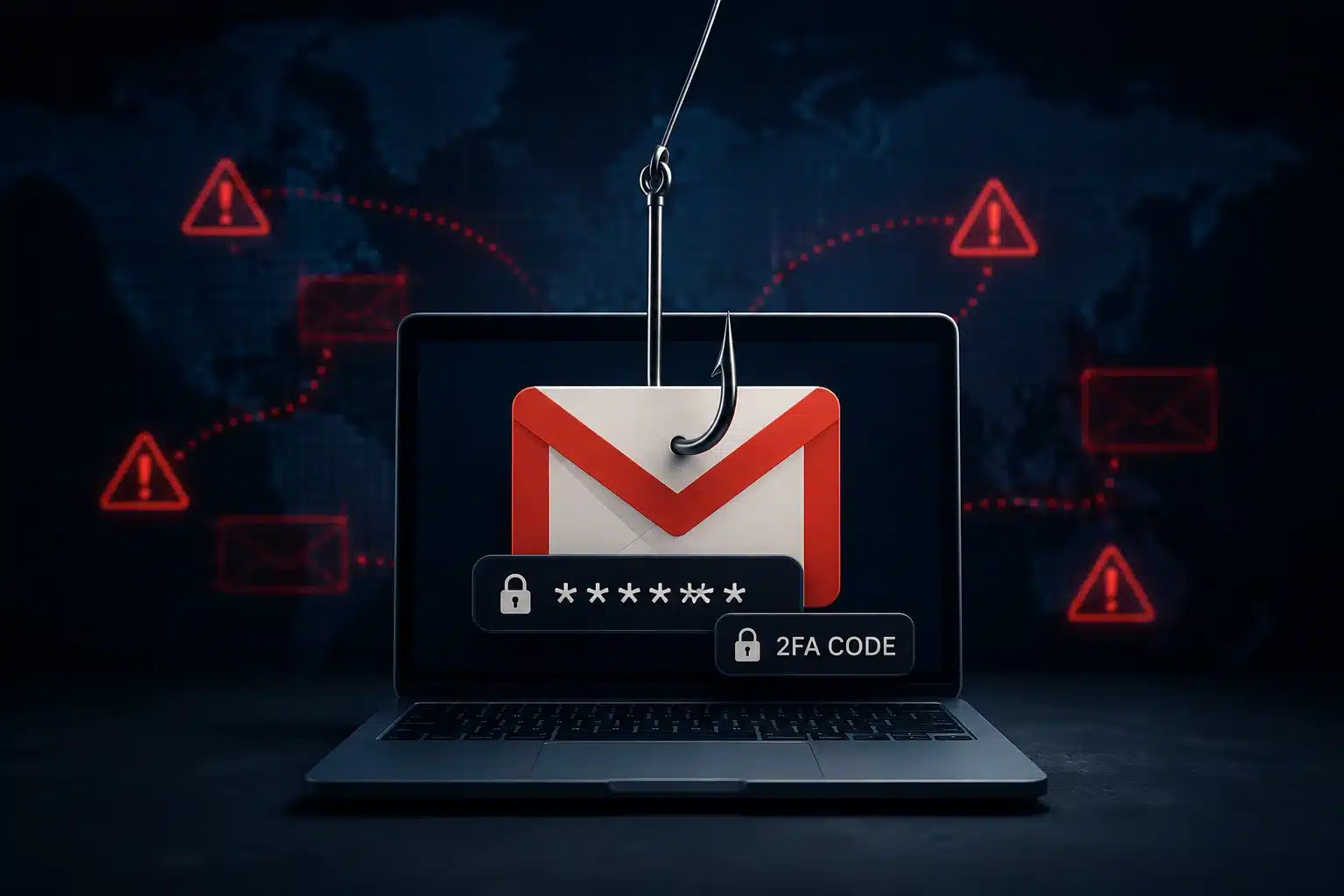
Belarus-Linked UNC1151 Launches Gmail Phishing Campaign to Steal 2FA Codes

Samiksha Jain by Samiksha Jain
June 16, 2026
in Cyber News, Firewall Daily, Threat Actors
0
UNC1151 Gmail Phishing Campaign
585
SHARES
3.2k
VIEWS
Share on LinkedInShare on Twitter

The UNC1151 Gmail phishing campaign has emerged as a cyber threat targeting Polish internet users, with attackers now focusing on Gmail accounts and deploying phishing pages capable of stealing both passwords and two-factor authentication (2FA) credentials. According to researchers at CERT Polska, the campaign marks a notable evolution in the tactics of the Ghostwriter-linked threat group, which has spent years targeting email users across Poland.

Also tracked as Ghostwriter and Storm-0257, UNC1151 has been linked by cybersecurity researchers to Belarusian state intelligence services and has remained active against Polish targets since Russia’s full-scale invasion of Ukraine.

UNC1151 Gmail Phishing Campaign Expands Target Scope

For years, UNC1151 primarily targeted users of popular Polish email providers including Onetpasswords, Wirtualna Polska, and Interia. Since March 2026, however, the group has shifted its attention to Gmail users, launching high-volume phishing operations that run almost daily during weekdays.

CERT Polska researchers said the attackers target a wide range of individuals, including politicians, public officials, researchers, journalists, law enforcement personnel, government employees, and people connected to them through professional, family, or social relationships.
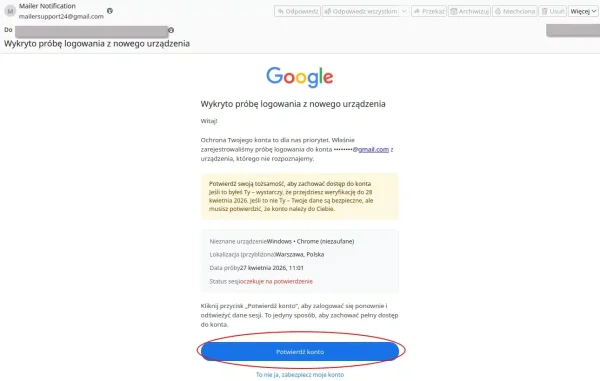
UNC1151 Gmail Phishing Campaign
Image Source: CERT Polska

The group also conducts campaigns against specific professional sectors and geographic regions. In some cases, phishing emails are sent to unintended recipients because attackers attempt to guess email addresses based on names and affiliations.

How the UNC1151 Gmail Phishing Campaign Works

The UNC1151 Gmail phishing campaign relies on fraudulent emails designed to resemble official Gmail security notifications. The messages often warn recipients about suspicious account activity, unauthorized login attempts, or alleged violations of service policies.

Victims are urged to act quickly to avoid account suspension or permanent deletion.

The emails are typically sent from Gmail accounts created specifically for phishing operations, although attackers occasionally use compromised accounts to increase credibility. Common subject lines include warnings about security alerts, suspicious activity, and account verification requirements.

Embedded links direct recipients to fake Gmail login pages that closely imitate Google’s legitimate authentication portal. Once users enter their credentials, attackers capture both usernames and passwords.

2FA Credential Theft Marks Key Evolution

One of the most concerning developments in the campaign is its ability to harvest two-factor authentication theft credentials.

Unlike earlier phishing campaigns targeting Polish email services, the latest operation includes additional prompts requesting verification codes after login credentials have been entered. If a victim’s account is protected by 2FA, the phishing page automatically displays a form requesting the authentication code.

This enables attackers to steal both SMS-based verification codes and codes generated through applications such as Google Authenticator.

Researchers noted that attackers frequently continue targeting the same victims even after unsuccessful login attempts. Multiple phishing emails may be delivered within days to increase pressure and improve the chances of credential theft.

UNC1151 Gmail Phishing Campaign
Source: CERT Polska

Ghostwriter Phishing Infrastructure Continues to Evolve

The campaign relies on a constantly changing phishing infrastructure.

According to CERT Polska, operators use domains registered specifically for phishing activities, often leveraging top-level domains such as .icu, .digital, and .top. The group also abuses hosting platforms such as Netlify by creating deceptive subdomains that imitate account verification services.

Examples of domains observed in the campaign include mailverify.digital, verify-check.digital, monitoring-google-konta.netlify.app, and service-auth.netlify.app.

In addition, attackers host fake login panels on compromised websites belonging to legitimate organizations. Rather than replacing the main website, the phishing content is hidden within the compromised infrastructure, allowing attacks to remain undetected for extended periods.

Gmail Phishing Attacks Signal Broader Threat

Security researchers warn that the increase in Gmail phishing attacks demonstrates UNC1151’s continued ability to adapt its tactics while maintaining its long-standing objective of gaining access to email accounts.

Once access is obtained, attackers search for sensitive documents, contact lists, and linked services, including social media accounts that can be further compromised. Stolen contacts may also be used to identify additional targets for future phishing campaigns.

Although the group’s recent focus has shifted toward Gmail, researchers caution that attacks against users of Polish email providers have not disappeared entirely.

The findings highlight the growing sophistication of state-linked phishing operations and reinforce the importance of scrutinizing login requests, verifying website domains, and protecting accounts with strong authentication practices.

As the UNC1151 Gmail phishing campaign continues to evolve, cybersecurity experts expect further adaptations designed to bypass defenses and increase the success rate of credential theft operations.

Share this:

  • Share on LinkedIn (Opens in new window) LinkedIn
  • Share on Reddit (Opens in new window) Reddit
  • Share on X (Opens in new window) X
  • Share on Facebook (Opens in new window) Facebook
  • More
  • Email a link to a friend (Opens in new window) Email
  • Share on WhatsApp (Opens in new window) WhatsApp

Related

Tags: CERT PolskaGmail accountsPolish internet usersThe Cyber ExpressThe Cyber Express NewsUNC1151 Gmail phishing campaign
Previous Post

Critical SearchLeak Flaw in Microsoft 365 Copilot Exposed Sensitive Enterprise Data

Next Post

China Spent Over a Year Inside U.S. Medical Research Networks — And Used Google’s Own Email Rules to Steal Data

Next Post
UNC6508, Gmail Ads, Gmail, Google, CNIL, CNIL Fines Google

China Spent Over a Year Inside U.S. Medical Research Networks — And Used Google's Own Email Rules to Steal Data

Cyble-Vision


Follow Us On Google News

Categories

Q1 2026 Threat Reports

❮ ❯
  • Privacy Statement
  • Terms of Use
  • Write For Us

© 2026 The Cyber Express - Cybersecurity News and Magazine.

Welcome Back!

Login to your account below

Forgotten Password?

Retrieve your password

Please enter your username or email address to reset your password.

Log In

Add New Playlist

No Result
View All Result
  • Magazine
  • Firewall Daily
  • Essentials
    • Regulations
    • Compliance
    • Governance
    • Policy Updates
  • Knowledge Hub
  • Features
    • Cyber Warfare
    • Espionage
    • Workforce
      • Learning & Development
  • Business
    • Startups
    • Mergers & Aquisitions
    • Partnerships
    • Appointments
    • Budgets
    • Research
      • Whitepapers
      • Sponsored Content
      • Market Reports
    • Interviews
      • Podcast
  • Events
    • Conference
    • Webinar
    • Endorsed Events
  • Advisory Board

© 2026 The Cyber Express - Cybersecurity News and Magazine.

-
00:00
00:00

Queue

Update Required Flash plugin
-
00:00
00:00