























• About Us
  • Contact Us
  • Editorial Calendar
  • Careers
  • The Cyber Express by Cyble Vulnerability Disclosure Policy
  • Cyble Trust Portal
The Cyber Express
  • MagazineDownload
  • Firewall Daily
    • All
    • Bug Bounty & Rewards
    • Dark Web News
    • Data Breach News
    • Hacker News
    • Ransomware News
    • Vulnerabilities
    EU-US Data Privacy Framework

    EU-US Data Privacy Framework Under Threat After Supreme Court Ruling

    Japan cyberattacks

    Japan’s Aflac, KDDI, Sapporo, Nidec: Four Breaches, One Common Entry Point

    Scattered Spider

    Alleged Scattered Spider Member Arrested in Finland, Extradited to U.S.

    AI Cyber Attacks

    AI Cyber Attacks Emerge as Biggest Threat to Indian Banking: RBI

    Apple Security Update

    Apple Security Update Patches 30+ Vulnerabilities in iOS 26.5.2

    Seized Crypto Assets

    Ukraine Makes History With First $8.3M Seized Crypto Transfer to ARMA

    Illegal World Cup Streaming Domains

    U.S. Seizes Nearly 400 Illegal FIFA World Cup Streaming Domains

    Operation Endgame Disrupts SocGholish

    Operation Endgame Disrupts SocGholish, StealC Malware Networks

    UAE Cybersecurity Council

    UAE Cybersecurity Council Calls for Stronger Digital Footprint Protection

    Trending Tags

    • blackbyte ransomware
    • Ransomware
    • lapsus$ ransomware
    • Apple
    • Apple vulnerability
  • Essentials
    • All
    • Compliance
    • Governance
    • Policy Updates
    • Regulations
    FBI Warns of Malicious Traffic

    FBI Warns of a Hidden Web Tactic Fueling Phishing and Ransomware

    Ukraine Joins EU Cybersecurity Reserve

    What Ukraine’s Entry Into the EU Cybersecurity Reserve Means

    UK social media ban

    UK Social Media Ban for Under-16s Could Take Effect by Spring 2027

    Ransomware Preparedness

    Ransomware Preparedness Must Be a Boardroom Priority: NCSC Chief

    AI legal assistants

    AI Heads to UK Courts, Bringing New Cybersecurity and Governance Challenges

    VerdantBamboo

    China’s VerdantBamboo Experimented With Three Re-Entries and Three Malware in a Company Network

    Crypto Scam, Crypto

    New Threat Actor Targets Crypto Firms’ Development Infrastructure

    Pink, Pink Extortion, CL-CRI-1147

    Pink Extortion Group Emerges Targeting Microsoft 365 Data

    AI-Powered Bots

    AI-Powered Bots Are Blurring the Line Between Users and Cyber Threats

    • Regulations
    • Compliance
    • Governance
    • Policy Updates
  • Knowledge Hub
    • All
    • How to
    • What is
    Google Chrome

    How to Remove Saved Passwords From Google Chrome (And Why You Should)

    DPDP Rules, Cyble, DPDP Act, Cyble Vantage

    How Cyble’s Front-Row Vantage Can Help You in Complying to India’s DPDP Act

    Cybersecurity Countries

    The Top 8 Countries Leading the Cyber Defense Race in 2025

    link building

    The Link Building Secrets Your Competitors Don’t Want You to Know

    Supply Chain Attack

    Supply Chain Resilience and Physical Security: Lessons for 2025

    Healthcare cybersecurity trends of 2024

    Healthcare Cybersecurity: 2024 Was Tough, 2025 May Be Better

    CEO's Guide to Take-Down Services

    Shield Your Organization: CEO’s Perspective on Take-Down Services

    Azure sign-in Microsoft

    Microsoft Announces Mandatory MFA for Azure Sign-ins to Bolster Cloud Defenses

    Signal Proxy, Signal, Signal Ban in Russia, Signal Ban in Venezuela, Bypass Signal Ban, How to Activate Signal Proxy, Signal Proxy Server

    How to Set Up Signal Proxy to Help Bypass Censorship in Russia and Venezuela

  • Features
    • Cyber Warfare
    • Espionage
    • Workforce
      • Learning & Development
  • Business
    • All
    • Appointments
    • Budgets
    • Mergers & Aquisitions
    • Partnerships
    • Press Release
    • Startups
    Sunil Varkey

    Sunil Varkey Joins Hexaware Technologies as EVP & CISO

    AI Chip, Chip Security Act

    Congress Wants a GPS Tracker on Every Advanced AI Chip America Exports

    Fraud, Agentic AI, AI-assisted Cyberattacks

    Agentic AI Run Fraud Campaigns Earning 4.5 Times More: Interpol

    Stryker, Stryker Cyberattack, CISA, Handala

    Stryker Says Cyberattack Disrupted Processing, Manufacturing and Shipping

    INC Ransom, Western Critical Infrastructure, Critical infrastructure, Russian GRU, Russian Threat Actor, Sandworm, APT44, Energy Supply Chain, Energy Infrastructure

    INC Ransom’s Franchise Model Is Putting Critical Infrastructure on the Chopping Block

    Terrorist Cyberattacks, UAE Cyber Security Council

    UAE Blocked AI-Powered Terrorist Cyberattacks Targeting Critical Infrastructure

    Eurail Breach, Eurail

    Eurail Breach Escalates as Stolen Passport Data and IBANs Surface on Dark Web for Sale

    Discord teen-by-default settings

    Discord Introduces Stronger Teen Safety Controls Worldwide

    The Cyber Express cybersecurity roundup

    The Cyber Express Weekly Roundup: FortiOS Exploits, Ransomware, Hacktivist Surge, and EU Telecom Rules

    • Startups
    • Mergers & Aquisitions
    • Partnerships
    • Appointments
    • Budgets
    • Research
      • Whitepapers
      • Sponsored Content
      • Market Reports
    • Interviews
      • Podcast
  • Events
    • Conference
    • Webinar
    • Endorsed Events
  • Advisory Board
No Result
View All Result
  • MagazineDownload
  • Firewall Daily
    • All
    • Bug Bounty & Rewards
    • Dark Web News
    • Data Breach News
    • Hacker News
    • Ransomware News
    • Vulnerabilities
    EU-US Data Privacy Framework

    EU-US Data Privacy Framework Under Threat After Supreme Court Ruling

    Japan cyberattacks

    Japan’s Aflac, KDDI, Sapporo, Nidec: Four Breaches, One Common Entry Point

    Scattered Spider

    Alleged Scattered Spider Member Arrested in Finland, Extradited to U.S.

    AI Cyber Attacks

    AI Cyber Attacks Emerge as Biggest Threat to Indian Banking: RBI

    Apple Security Update

    Apple Security Update Patches 30+ Vulnerabilities in iOS 26.5.2

    Seized Crypto Assets

    Ukraine Makes History With First $8.3M Seized Crypto Transfer to ARMA

    Illegal World Cup Streaming Domains

    U.S. Seizes Nearly 400 Illegal FIFA World Cup Streaming Domains

    Operation Endgame Disrupts SocGholish

    Operation Endgame Disrupts SocGholish, StealC Malware Networks

    UAE Cybersecurity Council

    UAE Cybersecurity Council Calls for Stronger Digital Footprint Protection

    Trending Tags

    • blackbyte ransomware
    • Ransomware
    • lapsus$ ransomware
    • Apple
    • Apple vulnerability
  • Essentials
    • All
    • Compliance
    • Governance
    • Policy Updates
    • Regulations
    FBI Warns of Malicious Traffic

    FBI Warns of a Hidden Web Tactic Fueling Phishing and Ransomware

    Ukraine Joins EU Cybersecurity Reserve

    What Ukraine’s Entry Into the EU Cybersecurity Reserve Means

    UK social media ban

    UK Social Media Ban for Under-16s Could Take Effect by Spring 2027

    Ransomware Preparedness

    Ransomware Preparedness Must Be a Boardroom Priority: NCSC Chief

    AI legal assistants

    AI Heads to UK Courts, Bringing New Cybersecurity and Governance Challenges

    VerdantBamboo

    China’s VerdantBamboo Experimented With Three Re-Entries and Three Malware in a Company Network

    Crypto Scam, Crypto

    New Threat Actor Targets Crypto Firms’ Development Infrastructure

    Pink, Pink Extortion, CL-CRI-1147

    Pink Extortion Group Emerges Targeting Microsoft 365 Data

    AI-Powered Bots

    AI-Powered Bots Are Blurring the Line Between Users and Cyber Threats

    • Regulations
    • Compliance
    • Governance
    • Policy Updates
  • Knowledge Hub
    • All
    • How to
    • What is
    Google Chrome

    How to Remove Saved Passwords From Google Chrome (And Why You Should)

    DPDP Rules, Cyble, DPDP Act, Cyble Vantage

    How Cyble’s Front-Row Vantage Can Help You in Complying to India’s DPDP Act

    Cybersecurity Countries

    The Top 8 Countries Leading the Cyber Defense Race in 2025

    link building

    The Link Building Secrets Your Competitors Don’t Want You to Know

    Supply Chain Attack

    Supply Chain Resilience and Physical Security: Lessons for 2025

    Healthcare cybersecurity trends of 2024

    Healthcare Cybersecurity: 2024 Was Tough, 2025 May Be Better

    CEO's Guide to Take-Down Services

    Shield Your Organization: CEO’s Perspective on Take-Down Services

    Azure sign-in Microsoft

    Microsoft Announces Mandatory MFA for Azure Sign-ins to Bolster Cloud Defenses

    Signal Proxy, Signal, Signal Ban in Russia, Signal Ban in Venezuela, Bypass Signal Ban, How to Activate Signal Proxy, Signal Proxy Server

    How to Set Up Signal Proxy to Help Bypass Censorship in Russia and Venezuela

  • Features
    • Cyber Warfare
    • Espionage
    • Workforce
      • Learning & Development
  • Business
    • All
    • Appointments
    • Budgets
    • Mergers & Aquisitions
    • Partnerships
    • Press Release
    • Startups
    Sunil Varkey

    Sunil Varkey Joins Hexaware Technologies as EVP & CISO

    AI Chip, Chip Security Act

    Congress Wants a GPS Tracker on Every Advanced AI Chip America Exports

    Fraud, Agentic AI, AI-assisted Cyberattacks

    Agentic AI Run Fraud Campaigns Earning 4.5 Times More: Interpol

    Stryker, Stryker Cyberattack, CISA, Handala

    Stryker Says Cyberattack Disrupted Processing, Manufacturing and Shipping

    INC Ransom, Western Critical Infrastructure, Critical infrastructure, Russian GRU, Russian Threat Actor, Sandworm, APT44, Energy Supply Chain, Energy Infrastructure

    INC Ransom’s Franchise Model Is Putting Critical Infrastructure on the Chopping Block

    Terrorist Cyberattacks, UAE Cyber Security Council

    UAE Blocked AI-Powered Terrorist Cyberattacks Targeting Critical Infrastructure

    Eurail Breach, Eurail

    Eurail Breach Escalates as Stolen Passport Data and IBANs Surface on Dark Web for Sale

    Discord teen-by-default settings

    Discord Introduces Stronger Teen Safety Controls Worldwide

    The Cyber Express cybersecurity roundup

    The Cyber Express Weekly Roundup: FortiOS Exploits, Ransomware, Hacktivist Surge, and EU Telecom Rules

    • Startups
    • Mergers & Aquisitions
    • Partnerships
    • Appointments
    • Budgets
    • Research
      • Whitepapers
      • Sponsored Content
      • Market Reports
    • Interviews
      • Podcast
  • Events
    • Conference
    • Webinar
    • Endorsed Events
  • Advisory Board
No Result
View All Result
The Cyber Express
No Result
View All Result
Home Firewall Daily

The LockBit Takedown: Why Ransom Payments Are a No-win Scenario

Despite the increasing frequency and severity of ransomware attacks, the financial toll exacted on businesses remains staggering.

Samiksha Jain by Samiksha Jain
February 26, 2024
in Firewall Daily, Ransomware News
0
Ransom Payment
636
SHARES
3.5k
VIEWS
Share on LinkedInShare on Twitter

The cybersecurity community was rocked by a massive event when LockBit Ransomware once a powerful domain suddenly changed, displaying flags of nations united against cybercrime. On February 20, 2024, the Department of Justice, working with law enforcement agencies worldwide, dealt a major blow to LockBit’s illegal operations. 

In a decisive move, authorities targeted one of the world’s biggest ransomware groups, taking control of its systems and capturing key members. 

However, amid the investigation, a troubling revelation emerged, shedding light on the deceptive practices of LockBit and the reality of ransomware collectives. Despite their claims of data deletion upon ransom payment, evidence surfaced of lingering data belonging to companies who had complied.  

“Some of the data on LockBit’s systems belonged to victims who had paid a ransom to the threat actors, evidencing that even when a ransom is paid, it does not guarantee that data will be deleted, despite what the criminals have promised,” reads NCA official Statement.  

It’s undeniable that the LockBit collective frequently resorts to double extortion tactics, so it’s not surprising that this occurred. Yet, this only highlights the harmful consequences of ransom payments for those affected. 
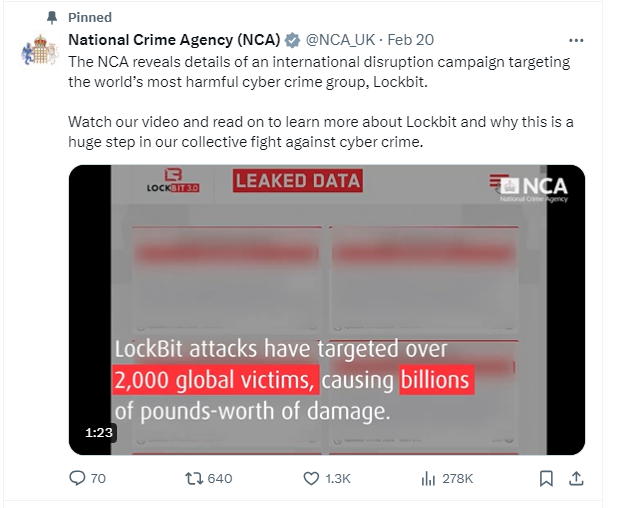
LockBit Takedown
Source: Twitter

The statistics paint a grim picture of the ransomware domain, revealing the harsh realities faced by organizations that fall victim to these attacks. According to a report by Spin.AI, a staggering 36% of companies find themselves targeted for a second time after paying a ransom, highlighting the persistent threat posed by cybercriminals.  

report-ad-banner

Even for those who comply with ransom demands, the outcome is often far from satisfactory, with 41% failing to recover all their data and over 40% forced to rebuild their systems from scratch. Additionally, nearly 30% of ransom-paying companies had their data leaked by criminals highlighting the treacherous nature of engaging with extortionists. 

Despite the increasing frequency and severity of ransomware attacks, the financial toll exacted on businesses remains staggering. With an average ransom payment exceeding $800,000, the financial strain on organizations is immense.  

In the face of such daunting odds, organizations must grapple with ethical and practical dilemmas. Is it worth risking further victimization to regain control of their data? Can they afford to rebuild their systems from scratch, knowing that paying the ransom may not guarantee their safety? 

As we go deeper into the tangled web of ransomware, one burning issue remains: is paying the ransom ever a viable option? The latest LockBit raid, combined with dismal data and tragic victimization stories, pushes us to face the sad reality that there are no easy fixes when it comes to cyber extortion. 

LockBit Ransomware Crackdown: The NCA’s Investigation  

NAC’s recent investigation into LockBit, one of the most notorious cybercrime groups globally, has yielded invaluable insights into the workings of ransomware operations.  

By infiltrating LockBit’s network and seizing control of their services, the NCA has dealt a significant blow to their criminal enterprise.  

For four years, LockBit’s ransomware attacks have wreaked havoc on thousands of victims worldwide, resulting in staggering financial losses amounting to billions of pounds, dollars, and euros.  

The group operated on a ransomware-as-a-service model, providing affiliates with the tools and infrastructure needed to execute attacks.  

Despite victims paying hefty ransoms in cryptocurrency, the investigation has revealed a stark truth: paid ransoms do not guarantee the deletion of stolen data, contrary to the promises made by cybercriminals.  

This revelation is extremely important in the field of cybersecurity, emphasizing the rising threat posed by ransomware and the critical necessity for strong defense methods.  

As ransomware payments surged to over $1 billion in 2023, surpassing previous records, the NCA’s findings highlight the pressing need for proactive measures to mitigate the impact of cyber extortion on organizations worldwide. 

Why Ransom Payment is Risky 

Paying ransomware demands poses significant risks to organizations, with repercussions ranging from financial losses to reputational damage and ethical dilemmas. One of the foremost concerns is the lack of guarantee for data recovery.  

Despite the hefty sums often demanded, there is no assurance that cybercriminals will provide decryption keys or restore access to encrypted systems after payment. This uncertainty leaves organizations vulnerable to prolonged downtime and data loss. 

According to the Sophos report, on a global scale, when organizations paid a ransom to get their data decrypted, they ended up additionally doubling their recovery costs (US$750,000 in recovery costs versus US$375,000 for organizations that used backups to get data back).  

Moreover, paying the ransom usually meant longer recovery times, with 45% of those organizations that used backups recovering within a week, compared to 39% of those that paid the ransom. 

Moreover, paying ransom inadvertently fuels further attacks by emboldening criminals. By demonstrating a willingness to meet their demands, organizations incentivize cybercriminals to continue their illicit activities, perpetuating a vicious cycle of extortion and exploitation. This not only puts the paying organization at risk but also encourages ransomware gangs to target other vulnerable entities, amplifying the overall threat landscape. 

“Incident costs rise significantly when ransoms are paid. Most victims will not be able to recover all their files by simply buying the encryption keys; they must rebuild and recover from backups as well. Paying ransoms not only enriches criminals, but it also slows incident response and adds cost to an already devastatingly expensive situation,” said Chester Wisniewski, field CTO, Sophos. 

Ethical considerations also loom large when contemplating ransom payments. Funding criminal enterprises through ransom payments raises profound ethical concerns, as organizations become complicit in supporting illicit activities such as extortion and data theft. Moreover, in regions where paying ransom is illegal, organizations may face legal repercussions for their involvement in financing criminal operations. 

Furthermore, the risks extend beyond immediate financial and legal consequences. Paying ransom does not guarantee that the ordeal ends there. Some ransomware gangs may sell stolen data to other malicious actors, leading to the potential for multiple ransom demands or even widespread identity theft.  

Additionally, hackers may resort to extortion tactics, threatening to expose previous ransom payments unless further funds are provided. This not only exacerbates financial losses but also tarnishes the organization’s reputation, particularly if the incident becomes public knowledge. 

So, What Can Be Alternatives to Paying Ransom? 

When faced with the daunting prospect of a ransomware attack, organizations must consider alternatives to paying the ransom, safeguarding both their data and integrity. One of the most crucial alternatives is maintaining regular data backups.  

By regularly backing up essential data and systems, organizations can mitigate the impact of ransomware attacks, enabling swift recovery without succumbing to extortion. Additionally, investing in robust cybersecurity measures is paramount.  

Implementing multi-layered security protocols, such as firewalls, antivirus software, and intrusion detection systems, can help detect and prevent ransomware attacks before they inflict substantial damage. Moreover, organizations should prioritize cybersecurity awareness training for employees to mitigate the risk of human error and phishing attacks, which are common entry points for ransomware. 

Furthermore, involving law enforcement agencies is essential. Reporting ransomware attacks to authorities not only facilitates the investigation and potential prosecution of cybercriminals but also contributes to collective efforts to combat cybercrime.  

By exploring these alternatives to paying ransom, organizations can bolster their resilience against ransomware attacks and safeguard their data, finances, and reputation in an increasingly hostile digital landscape. 

It is evident that the solution to ransomware extortion is not straightforward. However, by prioritizing resilience over capitulation, organizations can take a stand against cyber threats while safeguarding their integrity.  

It is time to shift the narrative from compliance to defiance, from vulnerability to strength. Together, we can build a future where ransomware loses its grip, and cybersecurity becomes synonymous with empowerment. 

Media Disclaimer: This report is based on internal and external research obtained through various means. The information provided is for reference purposes only, and users bear full responsibility for their reliance on it. The Cyber Express assumes no liability for the accuracy or consequences of using this information.

Share this:

  • Share on LinkedIn (Opens in new window) LinkedIn
  • Share on Reddit (Opens in new window) Reddit
  • Share on X (Opens in new window) X
  • Share on Facebook (Opens in new window) Facebook
  • More
  • Email a link to a friend (Opens in new window) Email
  • Share on WhatsApp (Opens in new window) WhatsApp

Related

Tags: LockBit ransomwareLockBit takedownNCA CrackdownPaying RansomRansom PaymentThe Cyber ExpressThe Cyber Express News
Previous Post

Beware of ENS Email Phishing: Crypto Scammers Target Ethereum Name Service Owners

Next Post

Tangerine Data Breach Exposes Personal Information of 230,000 Customers

Next Post
Tangerine data breach

Tangerine Data Breach Exposes Personal Information of 230,000 Customers

Q1 2026 Threat Reports

❮ ❯
Cyble-Vision


Follow Us On Google News

Latest Cyber News

EU-US Data Privacy Framework
Cyber News

EU-US Data Privacy Framework Under Threat After Supreme Court Ruling

July 3, 2026
Japan cyberattacks
Cyber News

Japan’s Aflac, KDDI, Sapporo, Nidec: Four Breaches, One Common Entry Point

July 2, 2026
Scattered Spider
Cyber News

Alleged Scattered Spider Member Arrested in Finland, Extradited to U.S.

July 2, 2026
AI Cyber Attacks
Cyber News

AI Cyber Attacks Emerge as Biggest Threat to Indian Banking: RBI

July 1, 2026

Categories

Web Stories

Do This on Telegram, Your Bank Account Will Become Zero
If You Install the iOS 18 Beta, Your iPhone Could Be Hacked
Cricket World Cup Ticketing Systems Under Cybersecurity
Cyber Threats and Online Ticket Scams During the NBA Finals
Biometric Data Security: Protecting Sensitive Information

About

The Cyber Express

#1 Trending Cybersecurity News and Magazine

The Cyber Express is a handbook for all stakeholders of the internet that provides information security professionals with the latest news, updates and knowledge they need to combat cyber threats.


Contact

For editorial queries: [email protected]

For marketing and Sales: [email protected]


Quick Links

  • About Us
  • Contact Us
  • Editorial Calendar
  • Careers
  • The Cyber Express by Cyble Vulnerability Disclosure Policy
  • Cyble Trust Portal

Our Address

We’re remote friendly, with office locations around the world:

San Francisco, Atlanta, Rome,
Dubai, Mumbai, Bangalore, Hyderabad,  Singapore, Jakarta, Sydney, and Melbourne


Headquarters:

The Cyber Express LLC
10080 North Wolfe Road, Suite SW3-200, Cupertino, CA, US 95014


India Office:

Cyber Express Media Network
HD-021, 4th Floor, C Wing, Building No.4. Nesco IT Park, WE Highway, Goregaon East, Mumbai, Maharashtra, India – 4000063

  • Privacy Statement
  • Terms of Use
  • Write For Us

© 2026 The Cyber Express - Cybersecurity News and Magazine.

Welcome Back!

Login to your account below

Forgotten Password?

Retrieve your password

Please enter your username or email address to reset your password.

Log In

Add New Playlist

No Result
View All Result
  • Magazine
  • Firewall Daily
  • Essentials
    • Regulations
    • Compliance
    • Governance
    • Policy Updates
  • Knowledge Hub
  • Features
    • Cyber Warfare
    • Espionage
    • Workforce
      • Learning & Development
  • Business
    • Startups
    • Mergers & Aquisitions
    • Partnerships
    • Appointments
    • Budgets
    • Research
      • Whitepapers
      • Sponsored Content
      • Market Reports
    • Interviews
      • Podcast
  • Events
    • Conference
    • Webinar
    • Endorsed Events
  • Advisory Board

© 2026 The Cyber Express - Cybersecurity News and Magazine.

Are you sure want to unlock this post?
Unlock left : 0
Are you sure want to cancel subscription?
-
00:00
00:00

Queue

Update Required Flash plugin
-
00:00
00:00
Do This on Telegram, Your Bank Account Will Become Zero If You Install the iOS 18 Beta, Your iPhone Could Be Hacked Cricket World Cup Ticketing Systems Under Cybersecurity Cyber Threats and Online Ticket Scams During the NBA Finals Biometric Data Security: Protecting Sensitive Information