






























The Federal Communications Commission (FCC) has begun addressing the long-standing vulnerabilities in American telephone networks. These SS7 vulnerabilities, particularly associated with the Signaling System Number 7 (SS7) and Diameter protocols, have been exploited by foreign governments and surveillance entities for years, enabling remote spying and monitoring of wireless devices.
The SS7 and Diameter protocols, integral to the functioning of fixed and mobile network operators, facilitate interconnection between networks, forming the backbone of modern telecommunications. However, they have also harbored security weaknesses, leaving users susceptible to unauthorized surveillance.
FCC Addresses the Decades-Long SS7 Vulnerabilities
The vulnerabilities within the SS7 protocol have been recognized since at least 2008, with limited efforts to rectify these issues over the years. Developed in the mid-1970s, SS7 has been exploited to track phone locations, intercept calls and text messages, and spy on users over the years.
Similarly, the Diameter protocol, introduced in the late 1990s, lacks essential security measures such as IP address encryption during transport, making it vulnerable to network spoofing attacks. Recognizing the urgency of the situation, the FCC’s Public Safety and Homeland Security Bureau has initiated steps to address these vulnerabilities.
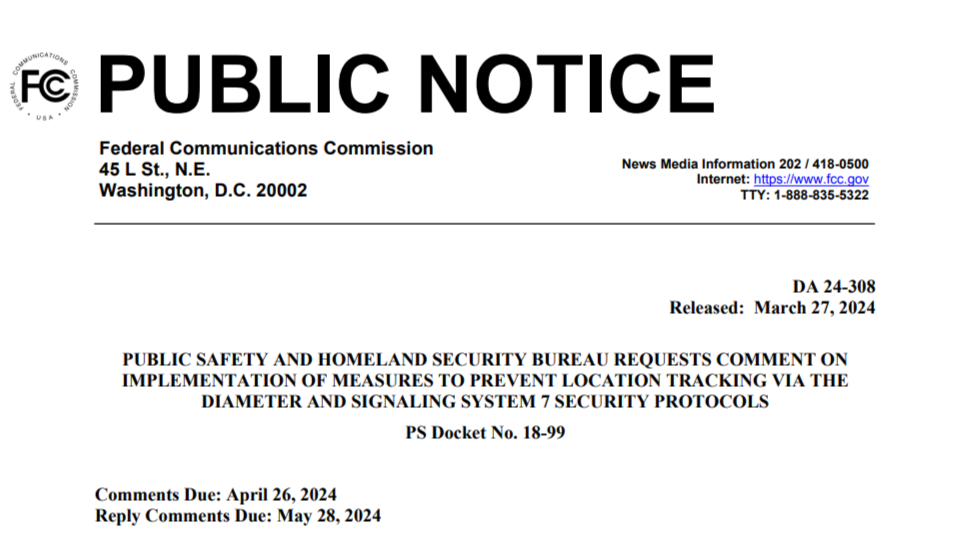
The Bureau has solicited feedback from communications service providers regarding their implementation of security measures to prevent exploitation of SS7 and Diameter vulnerabilities, particularly in tracking consumers’ mobile device locations.
Mitigation Against the Signaling System Number 7 Vulnerabilities
The vulnerabilities posed by SS7 and Diameter protocols have long been a concern for both industry watchdogs and lawmakers. Federal advisory committees like the Communications Security, Reliability, and Interoperability Council (CSRIC) have been actively engaged in assessing these risks and formulating recommendations to mitigate them.

In response to these recommendations, the FCC has urged communications service providers to adopt security countermeasures, including firewalls, monitoring, and encryption technologies. Additionally, the Commission has emphasized the importance of network administration best practices to reduce unauthorized access and exploitation of vulnerabilities.
Recent developments highlight the gravity of the situation, with US Senator Ron Wyden highlighting the national security implications of carriers’ lax cybersecurity practices. Senator Wyden has long advocated for addressing vulnerabilities in SS7, emphasizing the need for mandatory minimum cybersecurity standards to safeguard America’s phone networks.
The FCC’s call for comments, prompted by Senator Wyden’s concerns, marks an important step towards enhancing cybersecurity in telecommunications. With a deadline for submissions set for April 26, stakeholders have an opportunity to contribute to the dialogue on securing phone networks against evolving threats.
This is an ongoing story and The Cyber Express will be closely monitoring the situation. We will update this post once we have more information on the SS7 vulnerabilities or any official confirmation from the FCC regarding the mitigation plans for the vulnerabilities.
Media Disclaimer: This report is based on internal and external research obtained through various means. The information provided is for reference purposes only, and users bear full responsibility for their reliance on it. The Cyber Express assumes no liability for the accuracy or consequences of using this information.