































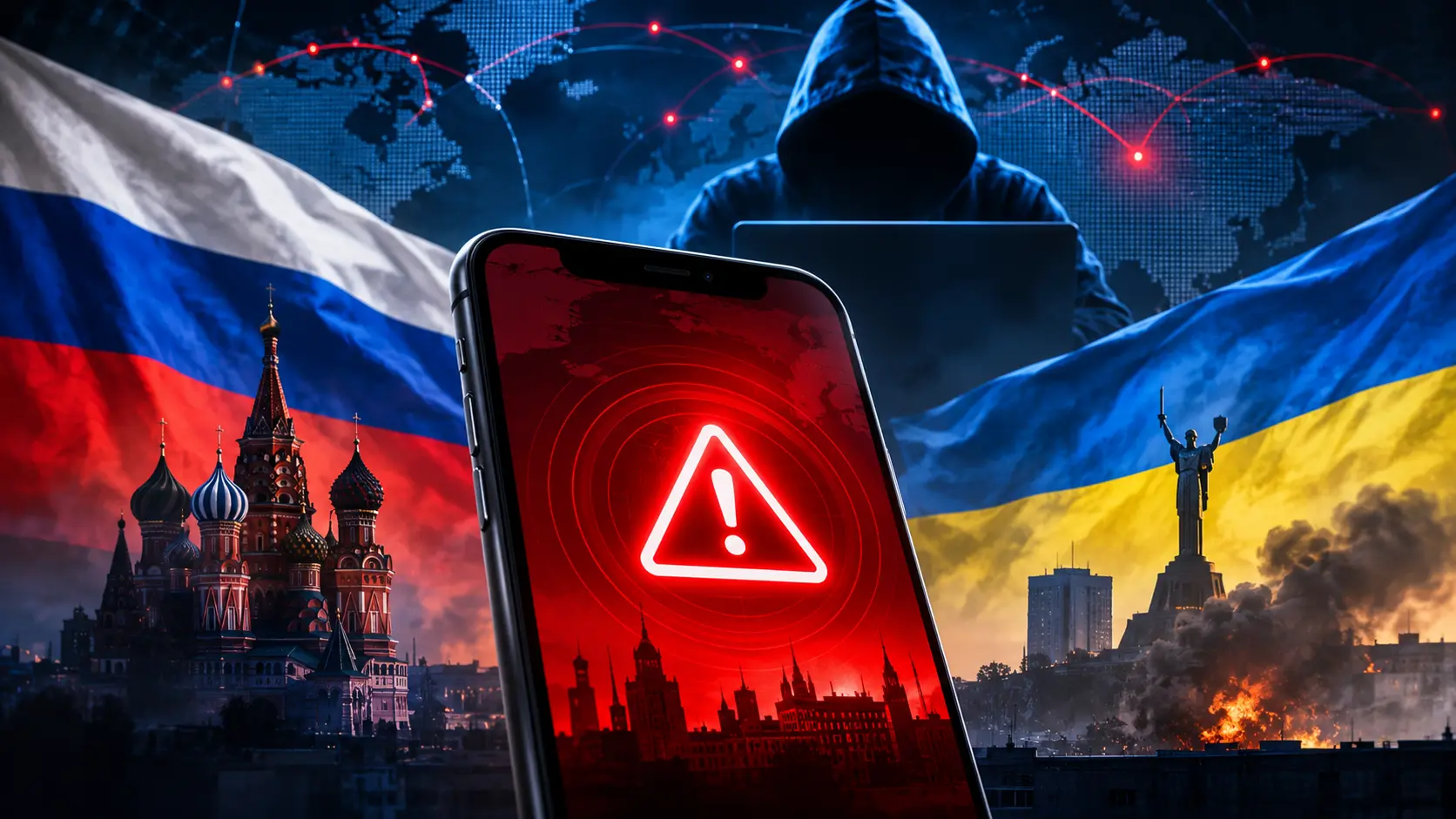
Emergency alert app cyberattacks in Russia and Ukraine triggered a series of false warnings, including alerts about air raids, radiation threats, chemical attacks and alleged nuclear strikes. Ukrainian authorities said their air raid warning application had been affected, while Russian officials reported a separate attack on their emergency alert app hours later. The incidents raised concerns about the reliability of digital public warning systems during an ongoing conflict.
According to BBC live reporting, Ukraine’s air raid app issued false red-level air raid warnings nationwide. Some residents, including people in Kyiv, also received warnings about radiation, chemical attacks and street fighting. Ukrainian authorities cancelled the alerts within an hour and urged residents to disregard suspicious messages.
Russia subsequently reported that its emergency alert app had also been targeted. The extent of the false warnings distributed through the Russian application remained unclear.
Emergency Alert App Cyberattacks Trigger False Warnings
Ukraine was the first to report problems with its emergency alert application, which is supported by the country’s Ministry of Digital Transformation and provides notifications about the beginning and end of air defence alerts.
Following the incident, the Ukrainian Air Force said the application had probably experienced hostile interference. It specifically denied that Kyiv faced the radiation threat indicated by the false alerts and asked residents to remain calm and follow official updates.
Ukraine’s Centre for Strategic Communications also urged users to disregard strange messages appearing in the application. The centre blamed Russia for the incident in a post on X and highlighted an alert containing a message in Russian about the Oreshnik missile system.

The supplied reporting does not establish how the attackers gained access to the application or how the false messages were inserted into the alert system.
Russia’s Emergency App Issues False Nuclear Warning
Several hours after Ukraine reported the incident, Russian authorities said their emergency alert application had suffered what they described as a massive cyberattack.
One false message reportedly warned Russian residents that nuclear warheads mounted on P1-Suns, identified in the message as a Ukrainian attack drone, had been launched towards all regions of Russia. The alert also instructed people to stock up on food for three weeks and hide.
A Ukrainian espionage group claimed that fake nuclear strike warnings had been sent to users in Russia. However, the available reporting did not independently establish who was responsible for the Russian application incident.
Russia’s emergencies ministry said the mobile application was an additional information service and that the wider public warning system continued to operate normally.
The ministry said emergency information was also distributed through sirens, loudspeakers, text messages, television and radio broadcasts. It added that specialists were working to restore the application and described the situation as under control.
Cybersecurity Expert Warns of Further Attacks
Herbert Lin, a senior research scholar specialising in cyber policy and security at Stanford University, described the reported compromise of Ukraine’s air raid warning application as concerning.
Speaking to the BBC’s Newsday programme, Lin said he believed it was the first time an official Ukrainian information application had experienced such an incident. He warned that similar attacks could occur again but stressed that the method used to compromise the application was not yet known.
The incident highlights the potential consequences of interference with emergency alert systems, which are designed to deliver time-sensitive information to people facing security threats.
False warnings can create uncertainty about whether a reported threat is genuine, particularly when residents rely on mobile applications for immediate updates during military attacks. However, the supplied reporting does not establish the wider impact of the incidents on public behaviour or emergency response operations.
False Alerts Coincide With End of Kherson Ceasefire
The false warnings in Ukraine appeared just minutes before the scheduled end of a localised ceasefire in the frontline Kherson region, according to BBC reporting.
The six-day ceasefire involving the area around Oleshky, which has been under Russian occupation since 2022, had enabled hundreds of people to evacuate. The arrangement was brokered with assistance from US First Lady Melania Trump and Pope Leo XIV.
Both sides had accused each other of using the ceasefire period to strengthen their frontline positions. Ukrainian officials said the humanitarian operation could provide a basis for further solutions, although the Kremlin viewed such operations as separate from the wider peace process.
The timing of the false alerts was reported, but the available information does not establish that the cyber incidents were connected to the ceasefire or its conclusion.
Russia and Ukraine Continue Exchanging Energy Strikes
The reported cyberattacks on Russia and Ukraine occurred amid continued strikes against energy infrastructure on both sides.
Russian authorities reported drone strikes against an industrial enterprise east of Moscow, identified by Ukrainian media as the Kstovo oil refinery. Nizhny Novgorod regional governor Gleb Nikitin reported significant damage, possible power outages and reduced hot water supplies. One woman was reportedly injured by falling drone debris.
Ukrainian President Volodymyr Zelensky also said Russian strikes had hit energy infrastructure in four Ukrainian regions, leaving hundreds of thousands of homes without power.
The emergency application incidents add another layer of concern to the conflict, where digital information services are used to communicate immediate threats to civilians. Investigations into the reported attacks, including who was responsible and how the applications were compromised, remain unresolved in the supplied reporting.