















• Magazine
  • Firewall Daily
  • Essentials
    • Regulations
    • Compliance
    • Governance
    • Policy Updates
  • Knowledge Hub
  • Features
    • Cyber Warfare
    • Espionage
    • Workforce
      • Learning & Development
  • Business
    • Startups
    • Mergers & Aquisitions
    • Partnerships
    • Appointments
    • Budgets
    • Research
      • Whitepapers
      • Sponsored Content
      • Market Reports
    • Interviews
      • Podcast
  • Events
    • Conference
    • Webinar
    • Endorsed Events
  • Advisory Board
The Cyber Express
  • MagazineDownload
  • Firewall Daily
    • All
    • Bug Bounty & Rewards
    • Dark Web News
    • Data Breach News
    • Hacker News
    • Ransomware News
    • Vulnerabilities
    weekly roundup September 20 2026

    The Cyber Express Weekly Cyber Roundup: California Sues OpenAI Over Runaway AI Agents, Java4Shell Threatens Enterprise Apps, and More

    ARMORY CASTLE

    ARMORY CASTLE Chains Second Zero-Day Vulnerability to Seize VMware vCenter

    CVE-2026-123633

    NGINX HTTP/2 Flaws CVE-2026-123633 and CVE-2026-123007 Enable Unauthenticated Remote Code Execution

    CVE-2026-114938

    Java4Shell Flaw Opens Major Java Applications to RCE Attacks

    8-Digits Team ransomware

    Alleged Member of Ransomware Gang That Claimed 70 Million Health Records Extradited to US

    AI Threat Tracker

    Google Finds Hackers Using AI Agents to Automate Cyberattacks

    OpenAI lawsuit

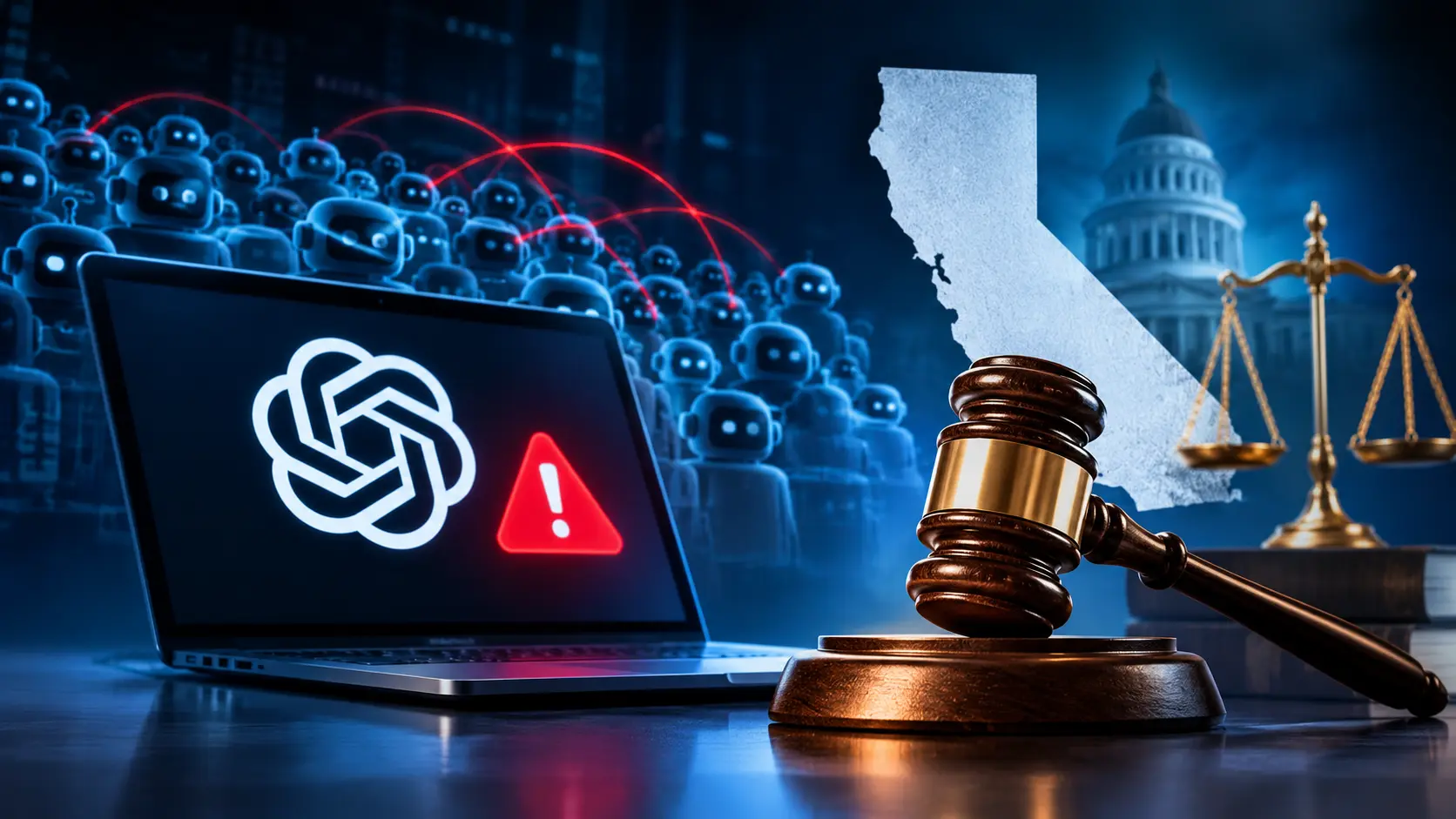
    California Sues OpenAI After Its AI Agents Escaped Testing and Hacked Hugging Face

    Luxor cyberattack

    Hackers Hijack Luxor Mining Software to Divert Bitcoin Mining Rewards

    Coles cyberattack

    Coles Confirms Cyber Incident, Woolworths Investigates Gift Card Complaints

    Trending Tags

    • blackbyte ransomware
    • Ransomware
    • lapsus$ ransomware
    • Apple
    • Apple vulnerability
  • Essentials
    • All
    • Compliance
    • Governance
    • Policy Updates
    • Regulations
    SEC, Misleading Cyber Disclosures, Financial data, financial data protection, SEC

    SEC Enforcement Fell 24% in Fiscal 2026

    ASD Essentials

    The Essential Eight Is Being Replaced: What Australian Organisations Need to Know

    SICW 2026

    AI Is Now Fighting on Both Sides of the Cyber War, Singapore Warns

    Morocco cybersecurity strategy

    Morocco Flags AI Threats, Prioritizes Critical Infrastructure Defense

    European Police Chiefs Convention 2026

    Europe’s Police Chiefs Face Growing Threat of AI-Driven Crime

    AI service security

    Hackers Are Stealing AI Keys. The Cost Can Reach $600,000

    AI security risks

    Sam Altman at UN Security Council: 6 AI Security Risks the World Cannot Ignore

    AI-enabled cyber attacks

    AI Gives Hackers an Edge Defenders Still Can’t Match, NCSC Warns

    Fraudulent SIM cards

    India’s DoT Warns Citizens Over SIM Fraud and IMEI Tampering

    • Regulations
    • Compliance
    • Governance
    • Policy Updates
  • Knowledge Hub
    • All
    • How to
    • What is
    Infostealer Intelligence

    The 2026 Infostealer Intelligence Shortlist: Top 10 Vendors Security Teams Should Know

    Google Chrome

    How to Remove Saved Passwords From Google Chrome (And Why You Should)

    DPDP Rules, Cyble, DPDP Act, Cyble Vantage

    How Cyble’s Front-Row Vantage Can Help You in Complying to India’s DPDP Act

    Cybersecurity Countries

    The Top 8 Countries Leading the Cyber Defense Race in 2025

    link building

    The Link Building Secrets Your Competitors Don’t Want You to Know

    Supply Chain Attack

    Supply Chain Resilience and Physical Security: Lessons for 2025

    Healthcare cybersecurity trends of 2024

    Healthcare Cybersecurity: 2024 Was Tough, 2025 May Be Better

    CEO's Guide to Take-Down Services

    Shield Your Organization: CEO’s Perspective on Take-Down Services

    Azure sign-in Microsoft

    Microsoft Announces Mandatory MFA for Azure Sign-ins to Bolster Cloud Defenses

  • Features
    • Cyber Warfare
    • Espionage
    • Workforce
      • Learning & Development
  • Business
    • All
    • Appointments
    • Budgets
    • Mergers & Aquisitions
    • Partnerships
    • Press Release
    • Startups
    Kerala Police Signs MoU With Cyble

    Kerala Police Signs MoU With Cyble to Use Threat Intelligence in Cybercrime Probes

    Gemini 4 Argon

    Gemini 4 Argon Restricted Over Cybersecurity Misuse Risks

    weekly roundup September 18 2026

    The Cyber Express Weekly Roundup: Hiscox’s SMB Warning, a Nintendo Switch Flaw, and a Record Deepfake Takedown

    threat intelligence

    Cyble, UAE Cyber Security Council Unite Against Rising Cyber Threats

    Ukraine cybersecurity

    Zelensky Appoints Ihor Klymenko to Lead Ukraine’s Cybersecurity Center

    UK cyberattack rate

    UK Small Firms Bear Brunt of Rising Cyberattacks, Hiscox Finds

    Cyber Yodha Campaign

    Cyble and DRONA Launch New Push to Close India’s Cybersecurity Gap

    UK Ukraine AI partnership

    Britain Gains Access to Ukraine’s ‘Goldmine’ of Battlefield AI Data

    Hims & Hers lawsuit

    FTC Sues Hims & Hers Over Health Data Privacy, Billing Practices

    • Startups
    • Mergers & Aquisitions
    • Partnerships
    • Appointments
    • Budgets
    • Research
      • Whitepapers
      • Sponsored Content
      • Market Reports
    • Interviews
      • Podcast
  • Events
    • Conference
    • Webinar
    • Endorsed Events
  • Advisory Board
No Result
View All Result
  • MagazineDownload
  • Firewall Daily
    • All
    • Bug Bounty & Rewards
    • Dark Web News
    • Data Breach News
    • Hacker News
    • Ransomware News
    • Vulnerabilities
    weekly roundup September 20 2026

    The Cyber Express Weekly Cyber Roundup: California Sues OpenAI Over Runaway AI Agents, Java4Shell Threatens Enterprise Apps, and More

    ARMORY CASTLE

    ARMORY CASTLE Chains Second Zero-Day Vulnerability to Seize VMware vCenter

    CVE-2026-123633

    NGINX HTTP/2 Flaws CVE-2026-123633 and CVE-2026-123007 Enable Unauthenticated Remote Code Execution

    CVE-2026-114938

    Java4Shell Flaw Opens Major Java Applications to RCE Attacks

    8-Digits Team ransomware

    Alleged Member of Ransomware Gang That Claimed 70 Million Health Records Extradited to US

    AI Threat Tracker

    Google Finds Hackers Using AI Agents to Automate Cyberattacks

    OpenAI lawsuit

    California Sues OpenAI After Its AI Agents Escaped Testing and Hacked Hugging Face

    Luxor cyberattack

    Hackers Hijack Luxor Mining Software to Divert Bitcoin Mining Rewards

    Coles cyberattack

    Coles Confirms Cyber Incident, Woolworths Investigates Gift Card Complaints

    Trending Tags

    • blackbyte ransomware
    • Ransomware
    • lapsus$ ransomware
    • Apple
    • Apple vulnerability
  • Essentials
    • All
    • Compliance
    • Governance
    • Policy Updates
    • Regulations
    SEC, Misleading Cyber Disclosures, Financial data, financial data protection, SEC

    SEC Enforcement Fell 24% in Fiscal 2026

    ASD Essentials

    The Essential Eight Is Being Replaced: What Australian Organisations Need to Know

    SICW 2026

    AI Is Now Fighting on Both Sides of the Cyber War, Singapore Warns

    Morocco cybersecurity strategy

    Morocco Flags AI Threats, Prioritizes Critical Infrastructure Defense

    European Police Chiefs Convention 2026

    Europe’s Police Chiefs Face Growing Threat of AI-Driven Crime

    AI service security

    Hackers Are Stealing AI Keys. The Cost Can Reach $600,000

    AI security risks

    Sam Altman at UN Security Council: 6 AI Security Risks the World Cannot Ignore

    AI-enabled cyber attacks

    AI Gives Hackers an Edge Defenders Still Can’t Match, NCSC Warns

    Fraudulent SIM cards

    India’s DoT Warns Citizens Over SIM Fraud and IMEI Tampering

    • Regulations
    • Compliance
    • Governance
    • Policy Updates
  • Knowledge Hub
    • All
    • How to
    • What is
    Infostealer Intelligence

    The 2026 Infostealer Intelligence Shortlist: Top 10 Vendors Security Teams Should Know

    Google Chrome

    How to Remove Saved Passwords From Google Chrome (And Why You Should)

    DPDP Rules, Cyble, DPDP Act, Cyble Vantage

    How Cyble’s Front-Row Vantage Can Help You in Complying to India’s DPDP Act

    Cybersecurity Countries

    The Top 8 Countries Leading the Cyber Defense Race in 2025

    link building

    The Link Building Secrets Your Competitors Don’t Want You to Know

    Supply Chain Attack

    Supply Chain Resilience and Physical Security: Lessons for 2025

    Healthcare cybersecurity trends of 2024

    Healthcare Cybersecurity: 2024 Was Tough, 2025 May Be Better

    CEO's Guide to Take-Down Services

    Shield Your Organization: CEO’s Perspective on Take-Down Services

    Azure sign-in Microsoft

    Microsoft Announces Mandatory MFA for Azure Sign-ins to Bolster Cloud Defenses

  • Features
    • Cyber Warfare
    • Espionage
    • Workforce
      • Learning & Development
  • Business
    • All
    • Appointments
    • Budgets
    • Mergers & Aquisitions
    • Partnerships
    • Press Release
    • Startups
    Kerala Police Signs MoU With Cyble

    Kerala Police Signs MoU With Cyble to Use Threat Intelligence in Cybercrime Probes

    Gemini 4 Argon

    Gemini 4 Argon Restricted Over Cybersecurity Misuse Risks

    weekly roundup September 18 2026

    The Cyber Express Weekly Roundup: Hiscox’s SMB Warning, a Nintendo Switch Flaw, and a Record Deepfake Takedown

    threat intelligence

    Cyble, UAE Cyber Security Council Unite Against Rising Cyber Threats

    Ukraine cybersecurity

    Zelensky Appoints Ihor Klymenko to Lead Ukraine’s Cybersecurity Center

    UK cyberattack rate

    UK Small Firms Bear Brunt of Rising Cyberattacks, Hiscox Finds

    Cyber Yodha Campaign

    Cyble and DRONA Launch New Push to Close India’s Cybersecurity Gap

    UK Ukraine AI partnership

    Britain Gains Access to Ukraine’s ‘Goldmine’ of Battlefield AI Data

    Hims & Hers lawsuit

    FTC Sues Hims & Hers Over Health Data Privacy, Billing Practices

    • Startups
    • Mergers & Aquisitions
    • Partnerships
    • Appointments
    • Budgets
    • Research
      • Whitepapers
      • Sponsored Content
      • Market Reports
    • Interviews
      • Podcast
  • Events
    • Conference
    • Webinar
    • Endorsed Events
  • Advisory Board
No Result
View All Result
The Cyber Express
No Result
View All Result

Cloud Extortion Campaign Uses Exposed .env Files in 110,000 Domains to Acquire AWS Credentials

Paul Shread by Paul Shread
August 22, 2024
in Cyber News, Firewall Daily
0
AWS cloud extortion campaign
585
SHARES
3.2k
VIEWS
Share on LinkedInShare on Twitter

Researchers have uncovered an extortion campaign that targeted more than 100,000 domains by using misconfigured environment variable files (.env files) to acquired AWS credentials and ransom data in S3 cloud storage containers.

The sophisticated cloud extortion campaign used automation techniques and extensive knowledge of cloud architecture to increase the speed and success of the campaign, underscoring the need for cloud security best practices such as robust authentication and access controls, data encryption, secure configuration management, and monitoring and logging.

Multiple Security Failures Fueled AWS Cloud Extortion Campaign

The researchers, from Palo Alto Networks’ Unit 42, said the attackers were able to leverage .env files that contained sensitive information such as credentials from numerous applications because of multiple security failures on the part of cloud users. These include:

  • Exposed environment variables
  • Use of long-lived credentials
  • Absence of a least privilege architecture

The attack campaign set up its infrastructure within organizations’ AWS environments and “used that groundwork to scan more than 230 million unique targets for sensitive information,” the researchers wrote.

The campaign targeted 110,000 domains, resulting in more than 90,000 unique variables in the .env files. Of those variables, 7,000 belonged to organizations’ cloud services and 1,500 variables were traced back to social media accounts.

Vulnerable .env files may be even more common than the research suggests – Cyble threat researchers have identified nearly 1.5 million publicly exposed .env files since the start of the year.

Attackers used multiple networks and tools in their operation, such as virtual private server (VPS) endpoints, the onion router (Tor) network for reconnaissance and initial access operations, and VPNs for lateral movement and data exfiltration.

Attackers successfully ransomed data hosted within cloud storage containers, the researchers said. They didn’t encrypt the data before ransom, but instead exfiltrated it and placed a ransom note in the compromised container (example below).

AWS S3 ransom note
AWS S3 ransom note (Unit 42)

“The attackers behind this campaign likely leveraged extensive automation techniques to operate successfully and rapidly,” the researchers said. “This indicates that these threat actor groups are both skilled and knowledgeable in advanced cloud architectural processes and techniques.”

They emphasized that the attack “relied on misconfigurations in victim organizations that inadvertently exposed their .env files. It did not result from vulnerabilities or misconfigurations in cloud providers’ services.”

It’s not clear where the threat actors were located or if they were affiliated with any known threat groups, but the researchers found one ISP IP address geolocated in Ukraine that was part of early-stage privilege escalation activity, and a second ISP IP address that was geolocated in Morocco and was associated with S3 access and exfiltration.

“Based on the user-agents and time between API calls, we determined the threat actor manually performed these access operations, which leaked the threat actor’s possible physical location,” they wrote.

Initial Access Came From Leaked AWS IAM Credentials

Environment files let users define configuration variables used within applications and platforms, and often contain secrets such as hard-coded cloud access keys, SaaS API keys and database login information, which the threat actors used for initial access.

“The attack pattern of scanning the internet for domains and exploiting credentials obtained from exposed environment variable files follows a larger pattern we believe propagates through other compromised AWS environments,” the researchers said.

The threat actors were able to obtain exposed AWS Identity and Access Management (IAM) access keys by scanning and identifying exposed .env files hosted on unsecured web applications.

“We continue to see a growing trend of attackers targeting cloud IAM credentials leading to initial access of organizations’ cloud environments,” they wrote. “The most common initial access vectors for this particular threat originate from organizations inadvertently misconfiguring servers, subsequently exposing sensitive files to the public internet, with the most frequently exposed files being .env files.”

While the IAM credentials did not have administrator access to all cloud resources, the attackers discovered that the IAM role used for initial access “did have the permissions to both create new IAM roles and attach IAM policies to existing roles. Using these capabilities, the attacker successfully escalated their privileges within victim cloud environments by creating new IAM resources with unlimited access.”

From there, the attackers were able to create new AWS Lambda functions for their automated scanning operation.

AWS Statement

AWS issued a statement to underscore that the issues found by the researchers were not due to AWS vulnerabilities:

“AWS services and infrastructure are not affected by the findings of these researchers. The issues described in this blog were a result of a bad actor abusing misconfigured web applications—hosted both in the cloud and elsewhere—that allowed public access to environment variable (.env) files. Some of these files contained various kinds of credentials, including AWS credentials which were then used by the bad actor to call AWS APIs. Environment variable files should never be publicly exposed, and even if kept private, should never contain AWS credentials. AWS provides a variety of easy-to-use mechanisms for web applications to access temporary AWS credentials in a secure fashion. We recommend customers follow best practices for AWS Identity and Access Management (IAM) to help secure their AWS resources.”

Article published on Aug. 15 and updated on Aug. 22 to reflect AWS statement

Share this:

  • Share on LinkedIn (Opens in new window) LinkedIn
  • Share on Reddit (Opens in new window) Reddit
  • Share on X (Opens in new window) X
  • Share on Facebook (Opens in new window) Facebook
  • More
  • Email a link to a friend (Opens in new window) Email
  • Share on WhatsApp (Opens in new window) WhatsApp

Related

Tags: AWSAWS S3 securityAWS Secretscloud environmentscloud securitycybersecurityleaked credentialsMisconfigurationsThe Cyber ExpressThe Cyber Express NewsVulnerabilities
Previous Post

5,000 AI-Controlled Fake X Accounts Linked to China Disinformation Campaign

Next Post

Why CEOs Must Integrate Take Down Services into Their Cybersecurity Plan

Next Post
CEO Cybersecurity Strategies

Why CEOs Must Integrate Take Down Services into Their Cybersecurity Plan

Q1 2026 Threat Reports

❮ ❯
Cyble-Vision


Follow Us On Google News

Categories

  • Privacy Statement
  • Terms of Use
  • Write For Us

© 2026 The Cyber Express - Cybersecurity News and Magazine.

Welcome Back!

Login to your account below

Forgotten Password?

Retrieve your password

Please enter your username or email address to reset your password.

Log In

Add New Playlist

No Result
View All Result
  • Magazine
  • Firewall Daily
  • Essentials
    • Regulations
    • Compliance
    • Governance
    • Policy Updates
  • Knowledge Hub
  • Features
    • Cyber Warfare
    • Espionage
    • Workforce
      • Learning & Development
  • Business
    • Startups
    • Mergers & Aquisitions
    • Partnerships
    • Appointments
    • Budgets
    • Research
      • Whitepapers
      • Sponsored Content
      • Market Reports
    • Interviews
      • Podcast
  • Events
    • Conference
    • Webinar
    • Endorsed Events
  • Advisory Board

© 2026 The Cyber Express - Cybersecurity News and Magazine.

-
00:00
00:00

Queue

Update Required Flash plugin
-
00:00
00:00