

























• About Us
  • Contact Us
  • Editorial Calendar
  • Careers
  • The Cyber Express by Cyble Vulnerability Disclosure Policy
  • Cyble Trust Portal
The Cyber Express
  • MagazineDownload
  • Firewall Daily
    • All
    • Bug Bounty & Rewards
    • Dark Web News
    • Data Breach News
    • Hacker News
    • Ransomware News
    • Vulnerabilities
    The Cyber Express Weekly Roundup

    A Week That Set the Tone for 2026: Cyber Laws, Breaches, and Disinformation

    La Poste, La Banque Postale

    La Poste and La Banque Postale Hit by Cyberattack, Online Services Disrupted

    China Cybersecurity law 2026

    China’s New Cybersecurity Law Is Here — And It Changes Everything for Businesses

    Shai-Hulud Supply Chain Attack Drained .5 Million from Trust Wallet Users

    Shai-Hulud Supply Chain Attack Drained $8.5 Million from Trust Wallet Users

    Digital Services Act, TikTok, Disinformation, Disinformation Campaign, Poland, EU Commission

    Poland Calls for EU Investigation of TikTok Over AI-Generated Disinformation Campaign

    CVE-2025-52691

    Singapore CSA Warns of Critical SmarterMail Flaw Enabling Unauthenticated Remote Code Execution

    Two Security Experts Plead Guilty in BlackCat Ransomware Case

    Two Security Experts Plead Guilty in BlackCat Ransomware Case

    Latest Oracle EBS Victims Include Korean Air, University of Phoenix

    Latest Oracle EBS Victims Include Korean Air, University of Phoenix

    GDPR Fine

    CNIL Fines NEXPUBLICA FRANCE €1.7 Million for GDPR Security Failures

    Trending Tags

    • blackbyte ransomware
    • Ransomware
    • lapsus$ ransomware
    • Apple
    • Apple vulnerability
  • Essentials
    • All
    • Compliance
    • Governance
    • Policy Updates
    • Regulations
    MongoBleed, MongoDB, CVE-2025-14847

    Critical ‘MongoBleed’ Flaw Exploited in the Wild to Leak Database Secrets

    DPDP Act Is Reshaping the Cyber Insurance Landscape

    Beyond Compliance: How India’s DPDP Act Is Reshaping the Cyber Insurance Landscape

    FBI Seizes E-Note Crypto Exchange

    FBI Seizes E-Note Crypto Exchange Linked to Ransomware Money Laundering

    DPDP Act

    8 Ways the DPDP Act Will Change How Indian Companies Handle Data in 2026 

    FBI Warns

    FBI Cautions Alaskans Against Phone Scams Using Fake Arrest Threats

    City of Cambridge

    City of Cambridge Advises Password Reset After Nationwide CodeRED Data Breach

    Digital Arrest, CBI, Digital Arrest Fraud, Cyber Fraud

    CBI Files Charges Against 13 in Digital Arrest Fraud Case Linked to Myanmar Cyber Slave Compounds

    Government Contractor Fraud

    Federal Grand Jury Charges Former Manager with Government Contractor Fraud

    ban on social media

    Australia’s Social Media Ban for Kids: Protection, Overreach or the Start of a Global Shift?

    • Regulations
    • Compliance
    • Governance
    • Policy Updates
  • Knowledge Hub
    • All
    • How to
    • What is
    DPDP Rules, Cyble, DPDP Act, Cyble Vantage

    How Cyble’s Front-Row Vantage Can Help You in Complying to India’s DPDP Act

    Cybersecurity Countries

    The Top 8 Countries Leading the Cyber Defense Race in 2025

    link building

    The Link Building Secrets Your Competitors Don’t Want You to Know

    Supply Chain Attack

    Supply Chain Resilience and Physical Security: Lessons for 2025

    Healthcare cybersecurity trends of 2024

    Healthcare Cybersecurity: 2024 Was Tough, 2025 May Be Better

    CEO's Guide to Take-Down Services

    Shield Your Organization: CEO’s Perspective on Take-Down Services

    Azure sign-in Microsoft

    Microsoft Announces Mandatory MFA for Azure Sign-ins to Bolster Cloud Defenses

    Signal Proxy, Signal, Signal Ban in Russia, Signal Ban in Venezuela, Bypass Signal Ban, How to Activate Signal Proxy, Signal Proxy Server

    How to Set Up Signal Proxy to Help Bypass Censorship in Russia and Venezuela

    Third-Party Risk Management in Healthcare

    Why Healthcare CISOs Must Prioritize Third-Party Risk Management

  • Features
    • Cyber Warfare
    • Espionage
    • Workforce
      • Learning & Development
  • Business
    • All
    • Appointments
    • Budgets
    • Mergers & Aquisitions
    • Partnerships
    • Press Release
    • Startups
    Shinhan Card data breach

    South Korea’s Shinhan Card Data Breach Affects 192,000 Merchants

    Cyble's Beenu-Recognized-by-ET-Edge-as-an-Impactful-CEO-2025_

    Beenu Arora, CEO & Co-Founder of Cyble, Recognized by ET Edge as an Impactful CEO 2025

    LastPass UK

    Password Manager LastPass Penalized £1.2m by ICO for Security Failures

    Coupang CEO Resigns

    Coupang CEO Resigns After Massive Data Breach Exposes Millions of Users

    Black Friday

    Black Friday Cybersecurity Survival Guide: Protect Yourself from Scams & Attacks

    Cyble and BOCRA Sign MoU

    Cyble and BOCRA Sign MoU to Strengthen Botswana’s National Cybersecurity Framework

    ARC Data Sale

    ARC Data Sale Scandal: Airlines’ Travel Records Used for Warrantless Surveillance

    NYT, ChatGPT, The New York Times, Voice Mode, OpenAI Voice Mode

    OpenAI Battles Court Order to Indefinitely Retain User Chat Data in NYT Copyright Dispute

    Telegram Bots, HTML phishing attack, Telegram bot credential theft, self-contained phishing malware, JavaScript credential harvesting, email security bypass techniques, RFQ phishing scams, invoice phishing attacks, Adobe login phishing, Microsoft credential theft, FedEx phishing campaign, DHL impersonation attack, Central Europe phishing 2025, Eastern Europe cyber threats, Cyble threat intelligence, CryptoJS AES obfuscation, anti-forensics phishing, F12 developer tools blocking, Telegram Bot API abuse, api.telegram.org malicious traffic, credential phishing 2025, HTML attachment malware, business email compromise, targeted phishing campaign, Czech Republic cyber threats, Slovakia phishing attacks, Hungary cybersecurity threats, Germany phishing campaign, Telekom Deutschland phishing, manufacturing sector attacks, automotive industry phishing, government agency phishing, energy utility cyber threats, telecommunications phishing, professional services attacks, garclogtools_bot, v8one_bot, dollsman_bot, dual-capture credential theft, fake login error messages, IP address harvesting, api.ipify.org abuse, ip-api.com malicious use, YARA phishing detection, phishing IOCs 2025, HTML file security risks, RFC-compliant filename spoofing, blurred document phishing, modal login phishing, brand impersonation attacks, CryptoJS malware obfuscation, right-click blocking malware, keyboard shortcut interception, multi-stage credential theft, decentralized phishing infrastructure, phishing toolkit generators, modular phishing templates, German language phishing, Spanish phishing variants

    Cyble Detects Phishing Campaign Using Telegram Bots to Siphon Corporate Credentials

    • Startups
    • Mergers & Aquisitions
    • Partnerships
    • Appointments
    • Budgets
    • Research
      • Whitepapers
      • Sponsored Content
      • Market Reports
    • Interviews
      • Podcast
  • Events
    • Conference
    • Webinar
    • Endorsed Events
  • Advisory Board
No Result
View All Result
  • MagazineDownload
  • Firewall Daily
    • All
    • Bug Bounty & Rewards
    • Dark Web News
    • Data Breach News
    • Hacker News
    • Ransomware News
    • Vulnerabilities
    The Cyber Express Weekly Roundup

    A Week That Set the Tone for 2026: Cyber Laws, Breaches, and Disinformation

    La Poste, La Banque Postale

    La Poste and La Banque Postale Hit by Cyberattack, Online Services Disrupted

    China Cybersecurity law 2026

    China’s New Cybersecurity Law Is Here — And It Changes Everything for Businesses

    Shai-Hulud Supply Chain Attack Drained .5 Million from Trust Wallet Users

    Shai-Hulud Supply Chain Attack Drained $8.5 Million from Trust Wallet Users

    Digital Services Act, TikTok, Disinformation, Disinformation Campaign, Poland, EU Commission

    Poland Calls for EU Investigation of TikTok Over AI-Generated Disinformation Campaign

    CVE-2025-52691

    Singapore CSA Warns of Critical SmarterMail Flaw Enabling Unauthenticated Remote Code Execution

    Two Security Experts Plead Guilty in BlackCat Ransomware Case

    Two Security Experts Plead Guilty in BlackCat Ransomware Case

    Latest Oracle EBS Victims Include Korean Air, University of Phoenix

    Latest Oracle EBS Victims Include Korean Air, University of Phoenix

    GDPR Fine

    CNIL Fines NEXPUBLICA FRANCE €1.7 Million for GDPR Security Failures

    Trending Tags

    • blackbyte ransomware
    • Ransomware
    • lapsus$ ransomware
    • Apple
    • Apple vulnerability
  • Essentials
    • All
    • Compliance
    • Governance
    • Policy Updates
    • Regulations
    MongoBleed, MongoDB, CVE-2025-14847

    Critical ‘MongoBleed’ Flaw Exploited in the Wild to Leak Database Secrets

    DPDP Act Is Reshaping the Cyber Insurance Landscape

    Beyond Compliance: How India’s DPDP Act Is Reshaping the Cyber Insurance Landscape

    FBI Seizes E-Note Crypto Exchange

    FBI Seizes E-Note Crypto Exchange Linked to Ransomware Money Laundering

    DPDP Act

    8 Ways the DPDP Act Will Change How Indian Companies Handle Data in 2026 

    FBI Warns

    FBI Cautions Alaskans Against Phone Scams Using Fake Arrest Threats

    City of Cambridge

    City of Cambridge Advises Password Reset After Nationwide CodeRED Data Breach

    Digital Arrest, CBI, Digital Arrest Fraud, Cyber Fraud

    CBI Files Charges Against 13 in Digital Arrest Fraud Case Linked to Myanmar Cyber Slave Compounds

    Government Contractor Fraud

    Federal Grand Jury Charges Former Manager with Government Contractor Fraud

    ban on social media

    Australia’s Social Media Ban for Kids: Protection, Overreach or the Start of a Global Shift?

    • Regulations
    • Compliance
    • Governance
    • Policy Updates
  • Knowledge Hub
    • All
    • How to
    • What is
    DPDP Rules, Cyble, DPDP Act, Cyble Vantage

    How Cyble’s Front-Row Vantage Can Help You in Complying to India’s DPDP Act

    Cybersecurity Countries

    The Top 8 Countries Leading the Cyber Defense Race in 2025

    link building

    The Link Building Secrets Your Competitors Don’t Want You to Know

    Supply Chain Attack

    Supply Chain Resilience and Physical Security: Lessons for 2025

    Healthcare cybersecurity trends of 2024

    Healthcare Cybersecurity: 2024 Was Tough, 2025 May Be Better

    CEO's Guide to Take-Down Services

    Shield Your Organization: CEO’s Perspective on Take-Down Services

    Azure sign-in Microsoft

    Microsoft Announces Mandatory MFA for Azure Sign-ins to Bolster Cloud Defenses

    Signal Proxy, Signal, Signal Ban in Russia, Signal Ban in Venezuela, Bypass Signal Ban, How to Activate Signal Proxy, Signal Proxy Server

    How to Set Up Signal Proxy to Help Bypass Censorship in Russia and Venezuela

    Third-Party Risk Management in Healthcare

    Why Healthcare CISOs Must Prioritize Third-Party Risk Management

  • Features
    • Cyber Warfare
    • Espionage
    • Workforce
      • Learning & Development
  • Business
    • All
    • Appointments
    • Budgets
    • Mergers & Aquisitions
    • Partnerships
    • Press Release
    • Startups
    Shinhan Card data breach

    South Korea’s Shinhan Card Data Breach Affects 192,000 Merchants

    Cyble's Beenu-Recognized-by-ET-Edge-as-an-Impactful-CEO-2025_

    Beenu Arora, CEO & Co-Founder of Cyble, Recognized by ET Edge as an Impactful CEO 2025

    LastPass UK

    Password Manager LastPass Penalized £1.2m by ICO for Security Failures

    Coupang CEO Resigns

    Coupang CEO Resigns After Massive Data Breach Exposes Millions of Users

    Black Friday

    Black Friday Cybersecurity Survival Guide: Protect Yourself from Scams & Attacks

    Cyble and BOCRA Sign MoU

    Cyble and BOCRA Sign MoU to Strengthen Botswana’s National Cybersecurity Framework

    ARC Data Sale

    ARC Data Sale Scandal: Airlines’ Travel Records Used for Warrantless Surveillance

    NYT, ChatGPT, The New York Times, Voice Mode, OpenAI Voice Mode

    OpenAI Battles Court Order to Indefinitely Retain User Chat Data in NYT Copyright Dispute

    Telegram Bots, HTML phishing attack, Telegram bot credential theft, self-contained phishing malware, JavaScript credential harvesting, email security bypass techniques, RFQ phishing scams, invoice phishing attacks, Adobe login phishing, Microsoft credential theft, FedEx phishing campaign, DHL impersonation attack, Central Europe phishing 2025, Eastern Europe cyber threats, Cyble threat intelligence, CryptoJS AES obfuscation, anti-forensics phishing, F12 developer tools blocking, Telegram Bot API abuse, api.telegram.org malicious traffic, credential phishing 2025, HTML attachment malware, business email compromise, targeted phishing campaign, Czech Republic cyber threats, Slovakia phishing attacks, Hungary cybersecurity threats, Germany phishing campaign, Telekom Deutschland phishing, manufacturing sector attacks, automotive industry phishing, government agency phishing, energy utility cyber threats, telecommunications phishing, professional services attacks, garclogtools_bot, v8one_bot, dollsman_bot, dual-capture credential theft, fake login error messages, IP address harvesting, api.ipify.org abuse, ip-api.com malicious use, YARA phishing detection, phishing IOCs 2025, HTML file security risks, RFC-compliant filename spoofing, blurred document phishing, modal login phishing, brand impersonation attacks, CryptoJS malware obfuscation, right-click blocking malware, keyboard shortcut interception, multi-stage credential theft, decentralized phishing infrastructure, phishing toolkit generators, modular phishing templates, German language phishing, Spanish phishing variants

    Cyble Detects Phishing Campaign Using Telegram Bots to Siphon Corporate Credentials

    • Startups
    • Mergers & Aquisitions
    • Partnerships
    • Appointments
    • Budgets
    • Research
      • Whitepapers
      • Sponsored Content
      • Market Reports
    • Interviews
      • Podcast
  • Events
    • Conference
    • Webinar
    • Endorsed Events
  • Advisory Board
No Result
View All Result
The Cyber Express
No Result
View All Result
Home Cyber News

Hundreds of Australian Devices Compromised with BadCandy Implant

Australian Signals Directorate urges immediate action as Cisco IOS XE vulnerability continues to threaten network infrastructure despite patches available for two years

Mihir Bagwe by Mihir Bagwe
October 31, 2025
in Cyber News, Cyber Essentials, Firewall Daily
0
BadCandy, BadCandy Implant, Australia, ASD, ACSC
626
SHARES
3.5k
VIEWS
Share on LinkedInShare on Twitter

Australian cyber agency has issued a critical advisory warning that over 150 devices in Australia remain compromised with the BadCandy implant as of late October 2025—two years after patches became available for the underlying vulnerability.

The persistent exploitation of CVE-2023-20198, a critical flaw affecting Cisco IOS XE Software’s web user interface, is a reminder for SOC teams that no matter how old the bugs are, the threat of known vulnerabilities persists.

BadCandy, a Persistent Access Threat to Network Edge Devices

BadCandy is a Lua-based web shell implant deployed on compromised Cisco IOS XE routers and switches through exploitation of CVE-2023-20198, a vulnerability with the maximum CVSS score of 10.0. The flaw allows remote unauthenticated attackers to create highly privileged accounts on vulnerable systems, enabling complete control of affected devices.

Once deployed, the BadCandy implant consists of an Nginx configuration file named cisco_service.conf that establishes a URI path for interacting with the web shell. Despite being non-persistent—meaning the implant is removed upon device reboot—the privileged accounts created during exploitation persist across reboots, providing threat actors with continued access even after the visible implant disappears.

ASD’s advisory reveals that since July 2025, over 400 devices were potentially compromised with BadCandy in Australia. While this number has decreased following bulk victim notifications sent by ASD through service providers, the fact that over 150 devices remain compromised years later shows the significant challenges in vulnerability management and incident response across Australian organizations.

The Vulnerability Chain

The BadCandy campaign exploits a two-vulnerability chain affecting Cisco IOS XE Software’s web UI feature.

CVE-2023-20198 (CVSS 10.0 Critical): This vulnerability enables remote, unauthenticated attackers to create accounts with privilege level 15 access on affected systems. Privilege level 15 grants full administrator access, allowing attackers to take complete control of the device. The flaw affects the authentication mechanism in the web UI, essentially providing a backdoor for credential creation without any authentication requirement.

CVE-2023-20273 (CVSS 7.2 High): Once attackers establish access through CVE-2023-20198, they exploit this second vulnerability to execute commands with root privileges. This command injection vulnerability, caused by insufficient input validation, allows the deployment of the BadCandy implant to the device’s file system. The combination of both vulnerabilities provides threat actors with persistent privileged access and command execution capabilities.

The vulnerabilities were first exploited in the wild in October 2023, with Cisco Talos researchers identifying and naming the BadCandy implant. Initial campaigns compromised tens of thousands of Cisco IOS XE devices globally, making it one of the most significant network infrastructure compromises in recent years.

Also read: Understanding Cisco IOS XE Vulnerabilities: CVE-2023-20198 and More

Who’s Behind BadCandy

ASD’s assessment indicates that while any threat actor can leverage the BadCandy implant, both criminal and state-sponsored cyber actors are believed to be exploiting this vulnerability.

State-sponsored actors target network edge devices for strategic intelligence collection, positioning for potential disruptive attacks, and establishing persistent presence in target networks. Compromised routers and switches provide valuable vantage points for intercepting network traffic, mapping internal infrastructure, and conducting man-in-the-middle attacks without requiring deeper network penetration.

Criminal actors exploit network infrastructure for various purposes including establishing proxy networks for anonymizing criminal operations, conducting distributed denial-of-service (DDoS) attacks, deploying cryptomining malware, and positioning for ransomware deployment. The privileged access provided by BadCandy enables extensive post-compromise activities regardless of attacker motivation.

Critically, ASD warns that cyber actors are known to re-exploit previously compromised devices where patches have not been applied and the web interface remains exposed to the internet. This creates an ongoing risk where organizations that remove the implant without properly patching and hardening their devices face immediate recompromise.

The Re-Exploitation Problem

The fact that over 150 devices in Australia remain compromised more than two years after patches became available reveals systemic challenges in vulnerability management. ASD’s advisory explicitly warns about re-exploitation. Threat actors continuously scan for vulnerable devices and immediately compromise any systems where patches haven’t been applied or web interfaces remain improperly secured.

This pattern reflects broader trends observed in the ACSC’s Annual Cyber Threat Report 2024-25, which said legacy IT and inadequate patching were critical vulnerabilities across Australian organizations. Network edge devices present particular challenges because they often run specialized firmware, require careful change management to avoid service disruption, and may be managed by different teams than enterprise IT infrastructure.

The threat report also concluded that Australia faces increasing cyber threats targeting critical infrastructure, with particular emphasis on telecommunications, energy, and government networks where compromised edge devices could enable significant damage or disruption.

BadCandy shares characteristics with other network infrastructure malware families including VPNFilter (2018), which compromised hundreds of thousands of routers globally, and more recent campaigns targeting Fortinet, Pulse Secure, and other VPN and edge devices. These campaigns demonstrate that network infrastructure represents a strategic target that enables subsequent attacks rather than being merely opportunistic exploitation.

The BadCandy timeline also demonstrates this challenge:

  • October 2023: Initial exploitation and implant deployment observed
  • October 22, 2023: Cisco releases patches for both vulnerabilities
  • July 2025: Over 400 Australian devices compromised
  • Late October 2025: Over 150 devices still compromised despite bulk notifications
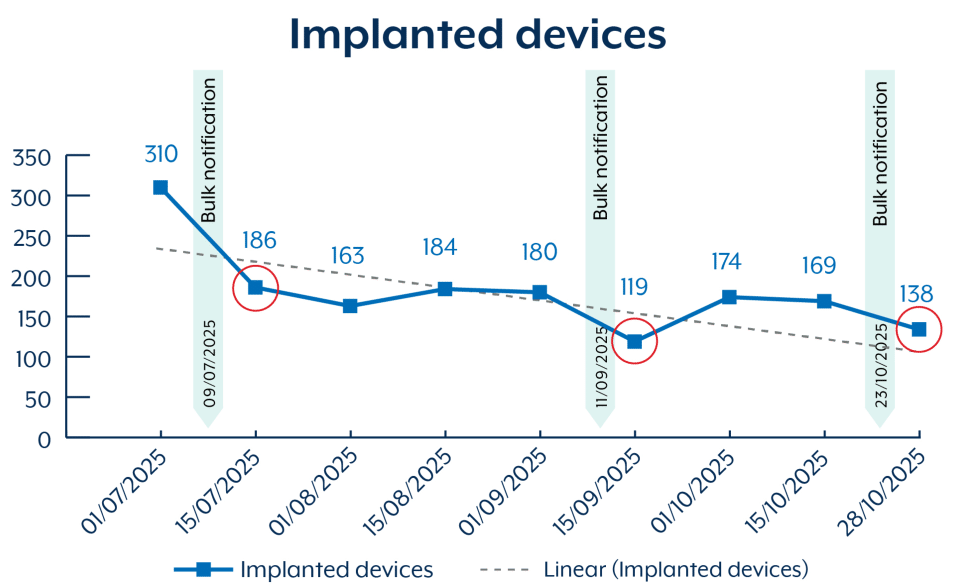
BadCandy

This 24-month window between patch availability and persistent compromises indicates that affected organizations either lack visibility into their Cisco IOS XE deployments, face technical or operational barriers to patching, or haven’t prioritized remediation of this critical vulnerability.

Technical Indicators and Detection Methods

Organizations can detect BadCandy compromise through several technical indicators identified in ASD’s advisory:

Privileged Account Anomalies: Review running configurations for accounts with privilege level 15. Remove any unexpected or unapproved accounts, particularly those with random strings as usernames or accounts named “cisco_tac_admin,” “cisco_support,” “cisco_sys_manager,” or “cisco.” These account names have been observed in BadCandy campaigns and should trigger immediate investigation if not legitimately created.

Unknown Tunnel Interfaces: Review running configurations for unexpected tunnel interfaces. Tunnels appear in configurations as “interface tunnel[number]” followed by IP addresses, tunnel sources, and tunnel destinations. Unauthorized tunnels can provide covert communication channels for data exfiltration or command and control.

Configuration Change Logs: If TACACS+ AAA command accounting is enabled, review logs for unauthorized configuration changes. This provides forensic evidence of attacker activities and helps identify the scope of compromise.

Implant File Presence: Check for the presence of /usr/binos/conf/nginx-conf/cisco_service.conf, the file path where BadCandy is saved. While the implant is non-persistent and removed by reboots, its presence indicates active compromise.

Remediation Steps

Immediate Actions

  1. Apply patches for CVE-2023-20198 and CVE-2023-20273 according to Cisco’s security advisory
  2. Reboot affected devices to remove the non-persistent BadCandy implant
  3. Review and remove unauthorized privilege-15 accounts from running configurations
  4. Examine configurations for unexpected tunnel interfaces or other unauthorized changes
  5. Review TACACS+ logs (if available) for evidence of malicious configuration changes

Rebooting removes the BadCandy implant but does NOT reverse additional actions taken by threat actors and does NOT remedy the initial vulnerability. Organizations must address both the symptoms (implant and unauthorized accounts) and the root cause (vulnerability and improper hardening).

Hardening Requirements

Disable HTTP Server Feature: If the web UI isn’t required for operations, disable the HTTP server feature entirely. This eliminates the attack surface that enables CVE-2023-20198 exploitation.

Restrict Web UI Access: If the web UI must remain enabled, implement strict access controls limiting which IP addresses can reach the interface. Never expose management interfaces directly to the internet.

Follow Cisco Hardening Guidance: Implement the comprehensive hardening recommendations in Cisco’s IOS XE hardening guide, including disabling unnecessary services, implementing access control lists, and configuring proper logging.

Implement Edge Device Security Strategies: ASD recommends following its publication on securing edge devices, which provides comprehensive guidance for reducing vulnerabilities in critical network components.

Share this:

  • Click to share on LinkedIn (Opens in new window) LinkedIn
  • Click to share on Reddit (Opens in new window) Reddit
  • Click to share on X (Opens in new window) X
  • Click to share on Facebook (Opens in new window) Facebook
  • More
  • Click to email a link to a friend (Opens in new window) Email
  • Click to share on WhatsApp (Opens in new window) WhatsApp

Related

Tags: ACSCASDAustraliaBadCandyBadCandy Implant
Previous Post

India’s Cyber Security Skyrockets to $20 Billion, Fueled by 400+ Startups: CERT-In DG

Next Post

FCC Set to Reverse Course on Telecom Cybersecurity Mandate

Next Post
FCC, Federal Communications Commission, Cybersecurity Mandate

FCC Set to Reverse Course on Telecom Cybersecurity Mandate

Threat Landscape Reports 2025

❮ ❯
Cyble-Vision


Follow Us On Google News

Latest Cyber News

The Cyber Express Weekly Roundup
Firewall Daily

A Week That Set the Tone for 2026: Cyber Laws, Breaches, and Disinformation

January 2, 2026
La Poste, La Banque Postale
Firewall Daily

La Poste and La Banque Postale Hit by Cyberattack, Online Services Disrupted

January 2, 2026
China Cybersecurity law 2026
Firewall Daily

China’s New Cybersecurity Law Is Here — And It Changes Everything for Businesses

January 2, 2026
Shai-Hulud Supply Chain Attack Drained .5 Million from Trust Wallet Users
Cyber News

Shai-Hulud Supply Chain Attack Drained $8.5 Million from Trust Wallet Users

December 31, 2025

Categories

Web Stories

Do This on Telegram, Your Bank Account Will Become Zero
If You Install the iOS 18 Beta, Your iPhone Could Be Hacked
Cricket World Cup Ticketing Systems Under Cybersecurity
Cyber Threats and Online Ticket Scams During the NBA Finals
Biometric Data Security: Protecting Sensitive Information

About

The Cyber Express

#1 Trending Cybersecurity News and Magazine

The Cyber Express is a handbook for all stakeholders of the internet that provides information security professionals with the latest news, updates and knowledge they need to combat cyber threats.


Contact

For editorial queries: [email protected]

For marketing and Sales: [email protected]


Quick Links

  • About Us
  • Contact Us
  • Editorial Calendar
  • Careers
  • The Cyber Express by Cyble Vulnerability Disclosure Policy
  • Cyble Trust Portal

Our Address

We’re remote friendly, with office locations around the world:

San Francisco, Atlanta, Rome,
Dubai, Mumbai, Bangalore, Hyderabad,  Singapore, Jakarta, Sydney, and Melbourne


Headquarters:

The Cyber Express LLC
10080 North Wolfe Road, Suite SW3-200, Cupertino, CA, US 95014


India Office:

Cyber Express Media Network
HD-021, 4th Floor, C Wing, Building No.4. Nesco IT Park, WE Highway, Goregaon East, Mumbai, Maharashtra, India – 4000063

  • Privacy Statement
  • Terms of Use
  • Write For Us

© 2026 The Cyber Express - Cybersecurity News and Magazine.

Welcome Back!

Login to your account below

Forgotten Password?

Retrieve your password

Please enter your username or email address to reset your password.

Log In

Add New Playlist

No Result
View All Result
  • Magazine
  • Firewall Daily
  • Essentials
    • Regulations
    • Compliance
    • Governance
    • Policy Updates
  • Knowledge Hub
  • Features
    • Cyber Warfare
    • Espionage
    • Workforce
      • Learning & Development
  • Business
    • Startups
    • Mergers & Aquisitions
    • Partnerships
    • Appointments
    • Budgets
    • Research
      • Whitepapers
      • Sponsored Content
      • Market Reports
    • Interviews
      • Podcast
  • Events
    • Conference
    • Webinar
    • Endorsed Events
  • Advisory Board

© 2026 The Cyber Express - Cybersecurity News and Magazine.

Are you sure want to unlock this post?
Unlock left : 0
Are you sure want to cancel subscription?
-
00:00
00:00

Queue

Update Required Flash plugin
-
00:00
00:00
Do This on Telegram, Your Bank Account Will Become Zero If You Install the iOS 18 Beta, Your iPhone Could Be Hacked Cricket World Cup Ticketing Systems Under Cybersecurity Cyber Threats and Online Ticket Scams During the NBA Finals Biometric Data Security: Protecting Sensitive Information