



























RansomHouse, a notorious ransomware group, has struck again. This time, their alleged target is the Bank Pembangunan Daerah Banten Tbk, a regional development bank owned by the government of Banten province, Indonesia.
While the full extent of the cyberattack on Banten Regional Development Bank remains undisclosed, the implications could be significant given the nature of the institution and its focus on micro-enterprises and small and medium enterprises (SMEs).
The claim made by RansomHouse regarding the cyberattack on Banten Regional Development Bank raises serious concerns about data security and the vulnerability of financial institutions to cyber threats.
Implications of Cyberattack on Banten Regional Development Bank
With a reported revenue of $27 million, the potential impact of such an attack could be far-reaching, not only in terms of financial losses but also in terms of customer trust and market stability.
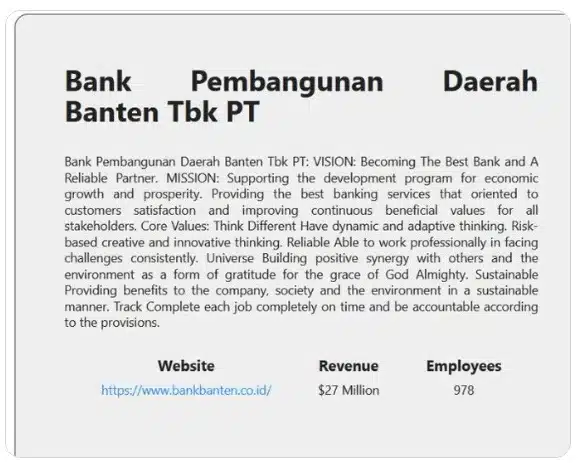
However, the authenticity of the ransomware group claim remains uncertain. Despite the announcement of the Banten Regional Development Bank cyberattack by the ransomware group, the bank’s official website appears to be fully functional, raising doubts about the validity of the ransomware group’s assertion.
The lack of an official response from the bank further complicates the matter, leaving the claim unverified.

RansomHouse: Modus Operandi
RansomHouse, which emerged in March 2022, is known for its multi-pronged extortion tactics. Unlike traditional ransomware groups, RansomHouse claims to focus solely on extortion, threatening to publicly disclose stolen data rather than encrypting it.
This modus operandi is designed to maximize pressure on victims to pay the ransom. The group portrays itself as a ‘force for good’, aiming to expose companies’ vulnerabilities and shortcomings.
The group primarily targets large enterprises and high-value entities through phishing and spear-phishing emails. They often utilize sophisticated third-party frameworks like Vatet Loader, Metasploit, and Cobalt Strike to infiltrate their targets’ networks. This ransomware group typically demands payment in Bitcoin, enhancing the anonymity of transactions and making it difficult for law enforcement agencies to track.
Recent Claims by RansomHouse
This recent cyberattack on Banten Regional Development Bank follows a pattern of similar incidents targeting prominent organizations. In April, RansomHouse allegedly targeted Lopesan Hotels, claiming to have obtained sensitive data amounting to 650GB, including details of hotel revenue and employee information.
Before that, in February, the group targeted Webber International University and GCA Nederland, adding them to their list of victims on the dark web portal.
The rise of ransomware attacks highlights the urgent need for organizations to strengthen their cybersecurity measures. With cybercriminals becoming increasingly sophisticated, traditional security protocols may no longer be sufficient to defend against such threats.
For financial institutions like Banten Regional Development Bank, protecting sensitive customer data is paramount. Beyond financial losses, a cyberattack can severely damage a bank’s reputation and erode customer trust. Therefore, investing in cybersecurity should be a top priority for such organizations.
In conclusion, the alleged cyberattack on Banten Regional Development Bank by Ransomware group underlines the growing threat posed by ransomware groups to organizations worldwide. While the authenticity of the claim remains unverified, the incident serves as a wake-up call for businesses to enhance their cybersecurity defenses.
Media Disclaimer: This report is based on internal and external research obtained through various means. The information provided is for reference purposes only, and users bear full responsibility for their reliance on it. The Cyber Express assumes no liability for the accuracy or consequences of using this information.