






















• About Us
  • Contact Us
  • Editorial Calendar
  • Careers
  • The Cyber Express by Cyble Vulnerability Disclosure Policy
  • Cyble Trust Portal
The Cyber Express
  • MagazineDownload
  • Firewall Daily
    • All
    • Bug Bounty & Rewards
    • Dark Web News
    • Data Breach News
    • Hacker News
    • Ransomware News
    • Vulnerabilities
    APT28, Russia, Microsoft Office, Word, CERT-UA, Backdoor, SVR Exploiting Unpatched Vulnerabilities, Russia SVR, SVR, Vulnerabilities, Vulnerability Management, Patch Management

    Russian APT28 Exploit Zero-Day Hours After Microsoft Discloses Office Vulnerability

    Japanese cybersecurity

    Britain and Japan Join Forces on Cybersecurity and Strategic Minerals

    online piracy

    U.S. and Bulgaria Shut Down Three Major Piracy Websites in EU Crackdown

    CrossCurve

    CrossCurve Bridge Hacked for $3M After Smart Contract Validation Vulnerability Exploited

    Default Credentials, Vulnerable Devices Exploited in Polish Energy Grid Attack

    Default Credentials, Vulnerable Devices Exploited in Polish Energy Grid Attack

    The Cyber Express

    The Cyber Express Weekly Roundup: Threats, Regulations, and Digital Security Trends

    Data Privacy Week 2026-Interview

    Ad Fraud Is Exploding — Dhiraj Gupta of mFilterIt Explains How Brands Can Respond

    Ivanti Connect, Ivanti, JPCERT, Malware, Ivanti EPMM, CVE-2026-1281, CVE-2026-1340, Ivanti Sentry, Zero-Day, CISA

    Ivanti Patches Two Zero-Days in Mobile Manager After Attackers Exploit Vulnerable Systems

    CNIL fine on France Travail

    CNIL Fine on France Travail After Hack Exposes 20 Years of Job Seekers’ Personal Data

    Trending Tags

    • blackbyte ransomware
    • Ransomware
    • lapsus$ ransomware
    • Apple
    • Apple vulnerability
  • Essentials
    • All
    • Compliance
    • Governance
    • Policy Updates
    • Regulations
    Japanese cybersecurity

    Britain and Japan Join Forces on Cybersecurity and Strategic Minerals

    online piracy

    U.S. and Bulgaria Shut Down Three Major Piracy Websites in EU Crackdown

    Data Privacy Week 2026-Interview

    Ad Fraud Is Exploding — Dhiraj Gupta of mFilterIt Explains How Brands Can Respond

    Proxy Network, Google, Google Threat Intelligence, Nation-State Actors,

    Google Dismantles Massive Proxy Network That Hid Espionage, Cybercrime for Nation-State Actors

    Data Privacy Week 2026

    Canada Marks Data Privacy Week 2026 as Commissioner Pushes for Privacy by Design

    European Commission investigation into Grok AI

    European Commission Launches Fresh DSA Investigation Into X Over Grok AI Risks

    Phishing Toolkits, Vishing, Okta, Okta Threat Intelligence

    Phishing Kits Now Sync With Live Phone Scammers to Defeat Multifactor Authentication

    social media ban for children

    UK Turns to Australia Model as British Government Considers Social Media Ban for Children

    Grok AI Image Abuse

    Grok Image Abuse Prompts X to Roll Out New Safety Limits

    • Regulations
    • Compliance
    • Governance
    • Policy Updates
  • Knowledge Hub
    • All
    • How to
    • What is
    Google Chrome

    How to Remove Saved Passwords From Google Chrome (And Why You Should)

    DPDP Rules, Cyble, DPDP Act, Cyble Vantage

    How Cyble’s Front-Row Vantage Can Help You in Complying to India’s DPDP Act

    Cybersecurity Countries

    The Top 8 Countries Leading the Cyber Defense Race in 2025

    link building

    The Link Building Secrets Your Competitors Don’t Want You to Know

    Supply Chain Attack

    Supply Chain Resilience and Physical Security: Lessons for 2025

    Healthcare cybersecurity trends of 2024

    Healthcare Cybersecurity: 2024 Was Tough, 2025 May Be Better

    CEO's Guide to Take-Down Services

    Shield Your Organization: CEO’s Perspective on Take-Down Services

    Azure sign-in Microsoft

    Microsoft Announces Mandatory MFA for Azure Sign-ins to Bolster Cloud Defenses

    Signal Proxy, Signal, Signal Ban in Russia, Signal Ban in Venezuela, Bypass Signal Ban, How to Activate Signal Proxy, Signal Proxy Server

    How to Set Up Signal Proxy to Help Bypass Censorship in Russia and Venezuela

  • Features
    • Cyber Warfare
    • Espionage
    • Workforce
      • Learning & Development
  • Business
    • All
    • Appointments
    • Budgets
    • Mergers & Aquisitions
    • Partnerships
    • Press Release
    • Startups
    The Cyber Express cybersecurity roundup

    The Cyber Express Weekly Roundup: FortiOS Exploits, Ransomware, Hacktivist Surge, and EU Telecom Rules

    Nicole Ozer appointment

    Nicole Ozer Joins CPPA to Drive Privacy and Digital Security Initiatives

    National Security Agency (NSA) appointment

    NSA Appoints Timothy Kosiba to Oversee Strategy and Cybersecurity Operations

    Shinhan Card data breach

    South Korea’s Shinhan Card Data Breach Affects 192,000 Merchants

    Cyble's Beenu-Recognized-by-ET-Edge-as-an-Impactful-CEO-2025_

    Beenu Arora, CEO & Co-Founder of Cyble, Recognized by ET Edge as an Impactful CEO 2025

    LastPass UK

    Password Manager LastPass Penalized £1.2m by ICO for Security Failures

    Coupang CEO Resigns

    Coupang CEO Resigns After Massive Data Breach Exposes Millions of Users

    Black Friday

    Black Friday Cybersecurity Survival Guide: Protect Yourself from Scams & Attacks

    Cyble and BOCRA Sign MoU

    Cyble and BOCRA Sign MoU to Strengthen Botswana’s National Cybersecurity Framework

    • Startups
    • Mergers & Aquisitions
    • Partnerships
    • Appointments
    • Budgets
    • Research
      • Whitepapers
      • Sponsored Content
      • Market Reports
    • Interviews
      • Podcast
  • Events
    • Conference
    • Webinar
    • Endorsed Events
  • Advisory Board
No Result
View All Result
  • MagazineDownload
  • Firewall Daily
    • All
    • Bug Bounty & Rewards
    • Dark Web News
    • Data Breach News
    • Hacker News
    • Ransomware News
    • Vulnerabilities
    APT28, Russia, Microsoft Office, Word, CERT-UA, Backdoor, SVR Exploiting Unpatched Vulnerabilities, Russia SVR, SVR, Vulnerabilities, Vulnerability Management, Patch Management

    Russian APT28 Exploit Zero-Day Hours After Microsoft Discloses Office Vulnerability

    Japanese cybersecurity

    Britain and Japan Join Forces on Cybersecurity and Strategic Minerals

    online piracy

    U.S. and Bulgaria Shut Down Three Major Piracy Websites in EU Crackdown

    CrossCurve

    CrossCurve Bridge Hacked for $3M After Smart Contract Validation Vulnerability Exploited

    Default Credentials, Vulnerable Devices Exploited in Polish Energy Grid Attack

    Default Credentials, Vulnerable Devices Exploited in Polish Energy Grid Attack

    The Cyber Express

    The Cyber Express Weekly Roundup: Threats, Regulations, and Digital Security Trends

    Data Privacy Week 2026-Interview

    Ad Fraud Is Exploding — Dhiraj Gupta of mFilterIt Explains How Brands Can Respond

    Ivanti Connect, Ivanti, JPCERT, Malware, Ivanti EPMM, CVE-2026-1281, CVE-2026-1340, Ivanti Sentry, Zero-Day, CISA

    Ivanti Patches Two Zero-Days in Mobile Manager After Attackers Exploit Vulnerable Systems

    CNIL fine on France Travail

    CNIL Fine on France Travail After Hack Exposes 20 Years of Job Seekers’ Personal Data

    Trending Tags

    • blackbyte ransomware
    • Ransomware
    • lapsus$ ransomware
    • Apple
    • Apple vulnerability
  • Essentials
    • All
    • Compliance
    • Governance
    • Policy Updates
    • Regulations
    Japanese cybersecurity

    Britain and Japan Join Forces on Cybersecurity and Strategic Minerals

    online piracy

    U.S. and Bulgaria Shut Down Three Major Piracy Websites in EU Crackdown

    Data Privacy Week 2026-Interview

    Ad Fraud Is Exploding — Dhiraj Gupta of mFilterIt Explains How Brands Can Respond

    Proxy Network, Google, Google Threat Intelligence, Nation-State Actors,

    Google Dismantles Massive Proxy Network That Hid Espionage, Cybercrime for Nation-State Actors

    Data Privacy Week 2026

    Canada Marks Data Privacy Week 2026 as Commissioner Pushes for Privacy by Design

    European Commission investigation into Grok AI

    European Commission Launches Fresh DSA Investigation Into X Over Grok AI Risks

    Phishing Toolkits, Vishing, Okta, Okta Threat Intelligence

    Phishing Kits Now Sync With Live Phone Scammers to Defeat Multifactor Authentication

    social media ban for children

    UK Turns to Australia Model as British Government Considers Social Media Ban for Children

    Grok AI Image Abuse

    Grok Image Abuse Prompts X to Roll Out New Safety Limits

    • Regulations
    • Compliance
    • Governance
    • Policy Updates
  • Knowledge Hub
    • All
    • How to
    • What is
    Google Chrome

    How to Remove Saved Passwords From Google Chrome (And Why You Should)

    DPDP Rules, Cyble, DPDP Act, Cyble Vantage

    How Cyble’s Front-Row Vantage Can Help You in Complying to India’s DPDP Act

    Cybersecurity Countries

    The Top 8 Countries Leading the Cyber Defense Race in 2025

    link building

    The Link Building Secrets Your Competitors Don’t Want You to Know

    Supply Chain Attack

    Supply Chain Resilience and Physical Security: Lessons for 2025

    Healthcare cybersecurity trends of 2024

    Healthcare Cybersecurity: 2024 Was Tough, 2025 May Be Better

    CEO's Guide to Take-Down Services

    Shield Your Organization: CEO’s Perspective on Take-Down Services

    Azure sign-in Microsoft

    Microsoft Announces Mandatory MFA for Azure Sign-ins to Bolster Cloud Defenses

    Signal Proxy, Signal, Signal Ban in Russia, Signal Ban in Venezuela, Bypass Signal Ban, How to Activate Signal Proxy, Signal Proxy Server

    How to Set Up Signal Proxy to Help Bypass Censorship in Russia and Venezuela

  • Features
    • Cyber Warfare
    • Espionage
    • Workforce
      • Learning & Development
  • Business
    • All
    • Appointments
    • Budgets
    • Mergers & Aquisitions
    • Partnerships
    • Press Release
    • Startups
    The Cyber Express cybersecurity roundup

    The Cyber Express Weekly Roundup: FortiOS Exploits, Ransomware, Hacktivist Surge, and EU Telecom Rules

    Nicole Ozer appointment

    Nicole Ozer Joins CPPA to Drive Privacy and Digital Security Initiatives

    National Security Agency (NSA) appointment

    NSA Appoints Timothy Kosiba to Oversee Strategy and Cybersecurity Operations

    Shinhan Card data breach

    South Korea’s Shinhan Card Data Breach Affects 192,000 Merchants

    Cyble's Beenu-Recognized-by-ET-Edge-as-an-Impactful-CEO-2025_

    Beenu Arora, CEO & Co-Founder of Cyble, Recognized by ET Edge as an Impactful CEO 2025

    LastPass UK

    Password Manager LastPass Penalized £1.2m by ICO for Security Failures

    Coupang CEO Resigns

    Coupang CEO Resigns After Massive Data Breach Exposes Millions of Users

    Black Friday

    Black Friday Cybersecurity Survival Guide: Protect Yourself from Scams & Attacks

    Cyble and BOCRA Sign MoU

    Cyble and BOCRA Sign MoU to Strengthen Botswana’s National Cybersecurity Framework

    • Startups
    • Mergers & Aquisitions
    • Partnerships
    • Appointments
    • Budgets
    • Research
      • Whitepapers
      • Sponsored Content
      • Market Reports
    • Interviews
      • Podcast
  • Events
    • Conference
    • Webinar
    • Endorsed Events
  • Advisory Board
No Result
View All Result
The Cyber Express
No Result
View All Result
Home Cyber News

Inside the 2026 Business Blast Radius: Dr. Amit Chaubey on Why Cyber Disruption Is Now a Sovereign Risk

Ashish Khaitan by Ashish Khaitan
January 13, 2026
in Cyber News, Firewall Daily, Interviews
0
TCE-Exclusive-interview-with-Dr-Amit-Chaubey
614
SHARES
3.4k
VIEWS
Share on LinkedInShare on Twitter

In an exclusive interview with The Cyber Express, Dr. Amit Chaubey, Managing Director and Board Chair of Chakra-X, Founder & CEO of NIAD Technologies, and Board Director for Yirigaa – An Aboriginal Business, provides new insight into what he calls the “2026 Business Blast Radius”, a rapidly expanding risk landscape where cyber incidents spill far beyond IT and into national, economic, and societal consequences. 

Over the course of his career, Dr. Amit has held influential leadership roles across the industry. These include Chair of the AISA NSW branch, and Cyber Ambassador for Investment NSW & multiple advisory board member roles.

The Expanding Blast Radius in 2026 

According to Dr. Amit, the most dangerous cyber events facing large organizations in 2026 will not necessarily originate inside corporate networks. Instead, the greatest risk comes from outside dependencies failing simultaneously, such as power, connectivity, cloud platforms, identity systems, and core suppliers, forcing organizations to operate with reduced visibility, coordination, and control. 

This is the new “business blast radius”: a disruption that may begin as a cyber incident or geopolitical shock but rapidly becomes a continuity, safety, legal, and trust crisis. Dr. Amit describes it as a sovereign resilience challenge, one that can escalate into national consequences across critical infrastructure and essential services. Crucially, this blast radius is expanding faster than most boards and executives realize. 

When “the lights go out,” whether due to a cyberattack, cascading technology failure, or deliberate containment action, organizations don’t just lose IT systems. They lose coordination itself: approvals, communications, trusted records, customer service, logistics, payroll, and the ability to make confident decisions.

Threat Activity Accelerating in 2025 

This expanding risk is reinforced by threat intelligence. According to Cyble’s Global Cybersecurity Report 2025, new data highlights a sharp escalation in cyber activity across sectors and regions: 

report-ad-banner
  • Ransomware attacks increased by 50% year over year, with telecom, government, and financial services among the hardest hit. 
  • Over 6,000 data breaches were observed, with government (16.5%) and BFSI (10.5%) sectors the most frequently targeted. 
  • Dark web activity surged nearly 30%, including sales of stolen data, initial access, and discussions of zero-day exploits. 
  • Top targets remain government, banking and finance (BFSI), and IT/technology organisations due to the value and leverage of their data. 
  • Most impacted geographies include the United States, India, Indonesia, Brazil, and the United Kingdom. 

Threat actors are using expanding social engineering, zero-day vulnerabilities, and underground forums for extortion. Ransomware groups such as Qilin, Akira, and Play continue to dominate, while access brokers and infostealer operators fuel a growing underground economy designed for both financial gain and strategic advantage. 

Dr. Amit Chaubey Speaks with The Cyber Express 

TCE: How should enterprises and boards rethink the ‘blast radius’ of a cyberattack in 2026, considering operational, reputational, and regulatory impacts, and how do common misconceptions about cyber resilience expand that risk? 

Given today’s geopolitical volatility, the rapid adoption of AI, and an expanding external attack surface driven by heavy reliance on third parties, managing security and resilience is becoming increasingly complex. Organizations and leadership teams need to recognize that these factors make cyber risk a shared problem – one that can’t be managed internally alone. To reduce exposure and strengthen resilience, they must work in close partnership with both internal stakeholders and external providers, aligning controls, responsibilities, and response plans across the broader ecosystem. 

TCE: In the first critical hour of a cyberattack that shuts down core systems, what do executives most often underestimate about keeping the business running? 

In the first critical hour of a cyberattack, executives often underestimate how quickly the organization loses operational certainty – and how hard it becomes to keep the business moving when the digital foundations disappear. Core systems don’t fail neatly; they fail in unexpected, interdependent ways. Teams can’t immediately tell whether they’re dealing with a simple outage, an active compromise, or deliberate containment shutdowns, so decision-making slows while pressure rises. 

In that vacuum, people default to improvisation- switching to personal devices, using unofficial channels, bypassing controls, or actioning requests without verification. This is the moment when consequence management becomes essential. While technical teams work to understand what has failed, executives must immediately stabilize the organization – protecting people, operations, safety, regulatory obligations, and public trust before the technical diagnosis is complete. In modern incidents, the first hour is not just about containment; it’s about preventing cascading consequences.

That’s where business impact multiplies, not because teams are incompetent, but because the organization hasn’t rehearsed how to operate safely and compliantly without the digital scaffolding that it normally depends on. 

TCE: If digital systems are unavailable for days, which non-technical capabilities, people, processes, and decision-making structures truly determine whether a business survives? 

If systems are down for days, survival depends less on cyber tools and more on strong leadership and command structure. It begins with a clear crisis operating model: one accountable incident leader supported by empowered deputies across critical functions.

A disciplined decision of cadence keeps everyone aligned, reduces confusion, and prevents competing priorities. The business must also be ready to run in degraded mode, with minimum viable operations clearly defined and rehearsed manual or offline workarounds available – rather than relying on ad hoc fixes.

The next determinant is people’s readiness and role clarity; in prolonged disruption, fatigue, uncertainty, and fear become operational risks that must be actively managed through shifts, support, and clear escalation paths. Finally, trust is sustained through communication discipline – consistent, verified updates internally and externally – so the organization maintains credibility while it stabilizes, recovers, and meets its obligations. 

TCE: Beyond ransomware, which newer cyber threats do you see as the most dangerous for 2026, and why are most organizations unprepared for them? 

While ransomware remains a key threat, the other cyber threats in 2026 are those that don’t need to encrypt anything to cause maximum business impact. AI-enabled identity attacks are accelerating – phishing, vishing, and executive impersonation are becoming more convincing and scalable, while infostealers and token theft let attackers walk in using legitimate sessions rather than “breaking” in. 

By 2026, this evolves further into Agentic AI – autonomous systems capable of navigating identity and cloud control planes at machine speed, compressing the time between compromise and consequence.’ At the same time, rapid exploitation of internet-facing edge systems is shrinking the window between vulnerability discovery and compromise, and cloud/SaaS control-plane attacks can create enterprise-wide blast radius by disabling logging, creating new identities, or changing critical configurations. 

Add to this a rise in disruptive campaigns – wipers, sabotage, and denial-of-service used for pressure rather than profit – and the real pattern emerges that attackers are targeting high-leverage layers like identity, access, and shared services. Most organizations are unprepared because they still plan for technical recovery, not sustained “degraded mode” operations; they lack continuous visibility into identity and cloud admin behavior, and third-party concentration risk means a single provider compromise or outage can cascade straight into their own business.

TCE: How should executives approach personal accountability and regulatory obligations when a cyber event disrupts operations or public services? 

Executives should treat a disruptive cyber event as a personal governance obligation, not something to hand off to IT. Leaders must still make timely risk decisions and ensure everything is documented – timelines, approvals, and rationale – from the first hour for audit and review.

At the same time, they need to identify which regulatory regimes apply and meet notification obligations early where required, updating as facts are confirmed. Success depends on tight alignment across security, legal, risk, comms, and operations to keep actions and messaging accurate and consistent, while enforcing verification controls to prevent secondary fraud, unsafe workarounds, and further compliance exposure. 

TCE: In your experience, what’s the most surprising source of operational failure during a major cyberattack, something leaders never see coming until it hits? 

A surprisingly common operational failure is that many organizations don’t plan the restoration sequence – they simply assume that “backups exist” and everything will come back quickly. In reality, recovery is a dependency puzzle, not a restore button: you need to know which foundations come first (identity/AD, DNS, certificates, networking, core storage, virtualization, endpoint management), then which platforms (databases, middleware, messaging), and only then the business applications that sit on top. If that order isn’t mapped and tested, teams burn precious hours restoring systems that can’t function because their upstream services aren’t online yet, or because integrations and service accounts can’t authenticate. 

Without current architecture diagrams, CMDB accuracy, and integration maps, leaders often discover mid-crisis that “critical” systems rely on hidden components – SaaS connectors, API gateways, license servers, time synchronization, hinting services, or a single shared database instance. Recovery then stalls while teams scramble to identify missing dependencies, rebuild configurations, or recreate secrets and certificates. Even worse, cyber containment can deliberately break the very pathways you need to restore – segmentation blocks, disabled admin accounts, frozen IAM policies, or quarantined management networks – so recovery requires not just restoring data but re-establishing clean administrative control. 

The real twist is that even when backups are available, recovery can still fail if the backup environment isn’t usable. Access keys may be locked out, encryption keys may be unavailable, backup consoles may sit behind the same identity system that’s down, or the backup storage may be reachable only through networks you’ve isolated. In some cases, the backup platform itself is impacted – corrupted catalogues, compromised backup credentials, or insufficient compute to rehydrate at scale. That’s when leaders learn the hard lesson: “we have backups” doesn’t equal “we can restore,” and outages stretch far longer than expected unless restoration sequencing, access pathways, and recovery infrastructure have been designed, documented, and exercised in advance. 

Lastly, if you’re serious about managing cyber risk, you need a disciplined approach to “controls hygiene.” My parting message is to focus on three fundamentals: people, identity/authentication, and vulnerability management. Most attacks start with people – through deception that steals credentials – then use those identities to authenticate as if they’re legitimate, and finally exploit exposed or unpatched vulnerabilities to get into your “HOUSE” and move around undetected. 
Share this:

  • Share on LinkedIn (Opens in new window) LinkedIn
  • Share on Reddit (Opens in new window) Reddit
  • Share on X (Opens in new window) X
  • Share on Facebook (Opens in new window) Facebook
  • More
  • Email a link to a friend (Opens in new window) Email
  • Share on WhatsApp (Opens in new window) WhatsApp

Related

Tags: Amit ChaubeyBlast-RADIUSChakra-XThe Cyber ExpressThe Cyber Express News
Previous Post

84 Hrs and Counting as Internet Blackout in Iran Continues Amid Nationwide Unrest

Next Post

Attackers Targeting LLMs in Widespread Campaign

Next Post
Credit: Franz Bachinger/Pixabay

Attackers Targeting LLMs in Widespread Campaign

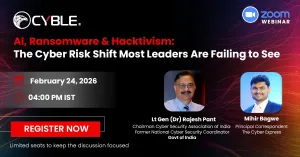
Upcoming Webinar

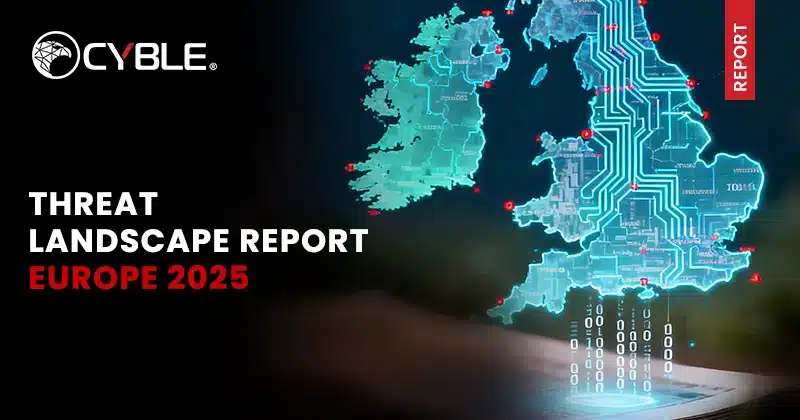
Threat Landscape Reports 2025

❮ ❯
Cyble-Vision


Follow Us On Google News

Latest Cyber News

executive monitoring platforms
Features

Benefits of Executive Monitoring Platforms for Business Growth

February 2, 2026
APT28, Russia, Microsoft Office, Word, CERT-UA, Backdoor, SVR Exploiting Unpatched Vulnerabilities, Russia SVR, SVR, Vulnerabilities, Vulnerability Management, Patch Management
Vulnerability News

Russian APT28 Exploit Zero-Day Hours After Microsoft Discloses Office Vulnerability

February 2, 2026
Japanese cybersecurity
Firewall Daily

Britain and Japan Join Forces on Cybersecurity and Strategic Minerals

February 2, 2026
Budget 2026
Cyber News

Union Budget 2026–27: India Bets Big on Cloud, AI, and Cyber Resilience

February 2, 2026

Categories

Web Stories

Do This on Telegram, Your Bank Account Will Become Zero
If You Install the iOS 18 Beta, Your iPhone Could Be Hacked
Cricket World Cup Ticketing Systems Under Cybersecurity
Cyber Threats and Online Ticket Scams During the NBA Finals
Biometric Data Security: Protecting Sensitive Information

About

The Cyber Express

#1 Trending Cybersecurity News and Magazine

The Cyber Express is a handbook for all stakeholders of the internet that provides information security professionals with the latest news, updates and knowledge they need to combat cyber threats.


Contact

For editorial queries: [email protected]

For marketing and Sales: [email protected]


Quick Links

  • About Us
  • Contact Us
  • Editorial Calendar
  • Careers
  • The Cyber Express by Cyble Vulnerability Disclosure Policy
  • Cyble Trust Portal

Our Address

We’re remote friendly, with office locations around the world:

San Francisco, Atlanta, Rome,
Dubai, Mumbai, Bangalore, Hyderabad,  Singapore, Jakarta, Sydney, and Melbourne


Headquarters:

The Cyber Express LLC
10080 North Wolfe Road, Suite SW3-200, Cupertino, CA, US 95014


India Office:

Cyber Express Media Network
HD-021, 4th Floor, C Wing, Building No.4. Nesco IT Park, WE Highway, Goregaon East, Mumbai, Maharashtra, India – 4000063

  • Privacy Statement
  • Terms of Use
  • Write For Us

© 2026 The Cyber Express - Cybersecurity News and Magazine.

Welcome Back!

Login to your account below

Forgotten Password?

Retrieve your password

Please enter your username or email address to reset your password.

Log In

Add New Playlist

No Result
View All Result
  • Magazine
  • Firewall Daily
  • Essentials
    • Regulations
    • Compliance
    • Governance
    • Policy Updates
  • Knowledge Hub
  • Features
    • Cyber Warfare
    • Espionage
    • Workforce
      • Learning & Development
  • Business
    • Startups
    • Mergers & Aquisitions
    • Partnerships
    • Appointments
    • Budgets
    • Research
      • Whitepapers
      • Sponsored Content
      • Market Reports
    • Interviews
      • Podcast
  • Events
    • Conference
    • Webinar
    • Endorsed Events
  • Advisory Board

© 2026 The Cyber Express - Cybersecurity News and Magazine.

Are you sure want to unlock this post?
Unlock left : 0
Are you sure want to cancel subscription?
-
00:00
00:00

Queue

Update Required Flash plugin
-
00:00
00:00
Do This on Telegram, Your Bank Account Will Become Zero If You Install the iOS 18 Beta, Your iPhone Could Be Hacked Cricket World Cup Ticketing Systems Under Cybersecurity Cyber Threats and Online Ticket Scams During the NBA Finals Biometric Data Security: Protecting Sensitive Information